

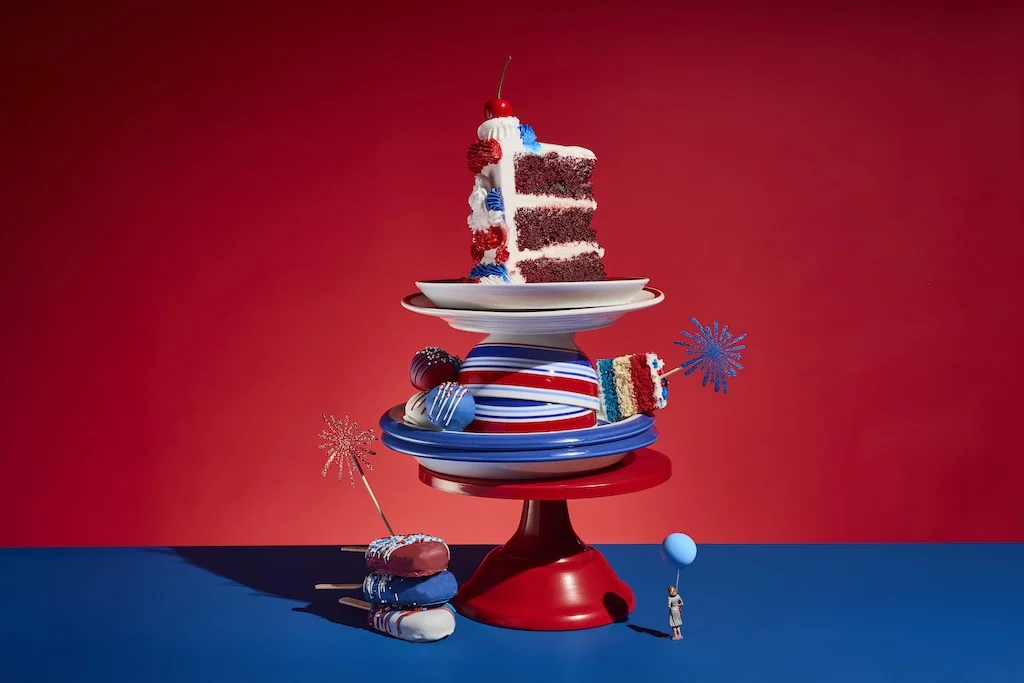
As the United States approaches its semiquincentennial—the historic 250th anniversary of the signing of the Declaration of Independence—the American retail landscape is undergoing a patriotic transformation. From the aisles of mass-market big-box retailers to the digital storefronts of gourmet marketplaces, the "America 250" branding is becoming a dominant theme. CPG (Consumer Packaged Goods) giants, including Coca-Cola and General Mills, are aggressively pivoting their marketing strategies, betting that a surge of national pride will provide a much-needed boost during a period defined by economic volatility and political polarization.
The Strategic Pivot: Merchandising for a Milestone
For the retail industry, the 250th anniversary is being treated as a "super-seasonal" event. Traditionally, brands rely on the Fourth of July to spike sales in the beverage, snack, and grilling categories. This year, however, the scope is expanding. General Mills, for instance, has committed to a massive rollout of limited-time patriotic packaging across 79 distinct products.
The strategy is simple: tap into the latent consumer desire for celebration. By leveraging the visual iconography of the United States—red, white, and blue color palettes, historic imagery, and "1776" branding—retailers are attempting to secure prime shelf space and drive consumer engagement during a summer that faces headwinds from persistent inflation and high fuel costs.
Chronology of the Celebration: A Year-Long Activation
While the crescendo of this celebration is set for July 4, 2026, the marketing "ramp-up" began in earnest earlier this year.
- Early 2024: National organizations and corporate partners began aligning their 2025 and 2026 marketing calendars to incorporate America 250 messaging.
- May 2025: Brands like Yoggies launched their "From Sea to Shining Sea" packaging, signaling the move from static shelf presence to dynamic, theme-based seasonal placement.
- Summer 2025: The current window, which serves as a testing ground for limited-edition SKUs (Stock Keeping Units). Brands like La Colombe are rolling out commemorative tins and cold brew bottles, monitoring consumer sentiment to refine their strategies ahead of the 2026 climax.
- Ongoing (2025-2026): Goldbelly’s year-long "Taste of America 250" campaign is currently underway, serving as a marathon rather than a sprint to celebrate the country’s culinary evolution.
Data-Driven Optimism: Why Consumers Are Buying In
Despite the prevailing narrative of a fractured nation, market research suggests that the 250th anniversary remains a powerful, unifying marketing hook. According to a study by M Booth, 62% of Americans categorize the 250th anniversary as "personally important." Perhaps more crucially for the retail sector, eight out of 10 respondents view the milestone as an essential moment to celebrate national history, values, and achievements.
The economic sentiment is bolstered by data from CivicScience, which found that two-thirds of American adults—spanning the entire political spectrum—are at least "somewhat open" to purchasing products from brands that align themselves with the America 250 movement. This cross-partisan appeal is a rare commodity in today’s marketing environment, providing brands with a "safe harbor" to engage with consumers without necessarily triggering the "cancel culture" or political blowback often associated with brand activism.
Case Studies in Brand Awareness
For emerging or niche brands, America 250 is serving as a ladder to reach mainstream audiences.
The Yoggies Strategy
Aiden Mould, senior brand manager for Nature’s Garden, notes that the "From Sea to Shining Sea" pack was a calculated risk. While the Yoggies brand has generated over $250 million in sales since its inception three years ago, it still lacks deep brand recognition in mass retail. By adopting seasonal, America 250-themed packaging, Yoggies successfully negotiated placements in the "seasonal summer" sections of retailers like Target. This is a critical win; it moves the product from the crowded, conventional snack aisle to high-traffic areas surrounded by lawn furniture and summer essentials.
The La Colombe & Chobani Synergy
Chobani’s parent company has leveraged the anniversary to push its La Colombe Liberty Blend. By utilizing commemorative red tins and "1776" branding, they have secured distribution across major retailers, including Albertsons and Walmart. The results are quantifiable: at one national retailer, the introduction of the American Blueberry Dairy Coffee Creamer resulted in a 10-20% boost in category sales, proving that patriotic packaging is not just aesthetic—it is a high-performing conversion driver.
Official Responses and the Role of Non-Partisan Curation
The official engine behind these celebrations is "America250," a nonpartisan organization established by Congress to oversee the semiquincentennial. The organization has successfully recruited heavy hitters like Walmart, Amazon, and Anheuser-Busch as official sponsors.
The strategy involves "Food as a Unifying Force." Joe Ariel, founder and CEO of Goldbelly and the official Food Curator for the program, is leading the "250 Dishes That Made America" initiative. This project aims to showcase the culinary diversity of the United States, effectively positioning the brand not as a political entity, but as a cultural archivist.
"I’m a very patriotic person," Ariel stated. "My dad was an immigrant who loved the country and really showed his love through food." By framing the celebration through the lens of culinary heritage, Goldbelly is navigating the "touchy" political climate by focusing on shared experiences rather than partisan rhetoric.
Implications for the Future of Retail Marketing
The America 250 phenomenon holds several implications for the future of the retail industry:
1. The Rise of "Heritage Marketing"
Brands are increasingly realizing that their origin stories—especially those involving immigration or the American Dream—resonate deeply with consumers. Xochitl, the tortilla chip brand founded by Mexican-American immigrant Carlos Salinas, is using the 250th anniversary to amplify its narrative. By connecting their personal history to the national milestone, they are building brand equity that goes beyond the price point of a bag of chips.
2. Seasonal Placement as a Growth Engine
The success of Yoggies and others proves that seasonal, thematic packaging is one of the few remaining ways to disrupt the "shelf blindness" that affects modern grocery shopping. Retailers are increasingly willing to dedicate floor space to "event-based" displays, provided the brand can tie the product to a larger cultural narrative.
3. Navigation of the Political Minefield
The most significant takeaway for retail executives is that the American public is still capable of collective celebration. While political polarization remains high, the "America 250" brand provides a neutral, positive framework for consumption. Brands that prioritize "unification through food and tradition" are finding that they can drive sales across all demographic and political segments.
4. The Sustainability of the "Limited-Edition" Model
While limited-edition SKUs are effective, they present a logistical challenge. Brands must balance the cost of special packaging and supply chain adjustments against the duration of the "hype." As the 250th anniversary approaches, the market may become saturated with red, white, and blue products. The winners will be those—like Chobani or Xochitl—that provide a compelling, authentic story behind the packaging, rather than simply relying on national colors to do the heavy lifting.
Conclusion: A Milestone of Opportunity
As the U.S. turns 250, the retail industry is proving that patriotism remains a potent marketing catalyst. Despite economic uncertainty and the daily noise of political debate, the retail sector is betting on a "summer of unity." Whether through the release of commemorative coffee blends, the storytelling of immigrant-led brands, or the tactical placement of snacks in summer aisles, CPG companies are transforming a national birthday into a multi-billion dollar promotional engine. For the consumer, it is an opportunity to participate in a historic celebration; for the retailer, it is the ultimate test of brand relevance in a changing, yet deeply rooted, America.
