

By Sara Karlovitch | June 18, 2026
Uber’s transformation from a simple ridesharing app to a formidable advertising powerhouse has reached a new milestone. As the company continues to aggressively scale its advertising business—which surpassed $2 billion in annual revenue in 2025—it has unveiled a suite of new, high-intent ad formats designed to capture consumer attention during the "downtime" of transit and the "decision-making" moments of food delivery.
These new tools, which include "Destination Offers," "Ride Offers on Journey," and comprehensive brand takeovers for Uber Eats, represent a pivot toward performance-based marketing. By leveraging the granular location data and behavioral insights inherent in the Uber ecosystem, the company is positioning itself as a primary destination for brands looking to drive immediate, measurable consumer action.
The Evolution of Uber Advertising: A Chronology
Uber’s journey into the advertising space has been rapid, systematic, and highly lucrative. What began as a logistical utility has been meticulously re-engineered into a massive media network.
- 2022: The Launch. Recognizing the untapped potential of its captive audience, Uber officially launched "Uber Advertising." The initial phase focused on simple, high-visibility placements, signaling to the industry that the rideshare giant was serious about competing with traditional digital media platforms.
- 2024: The Programmatic Leap. Uber expanded its capabilities by granting programmatic buyers access to "Journey Ads." This allowed marketers to automate their ad spend across the platform, targeting users based on their trip status and destination.
- April 2026: The CPG Strategic Alliance. In a move to capture a larger share of the lucrative Consumer Packaged Goods (CPG) market, Uber announced a deep integration with Instacart’s "Carrot Ads" platform. This interoperability allowed brands to leverage the retail-media prowess of Instacart within the Uber ecosystem.
- June 2026: Performance-First Formats. The current expansion introduces interactive, promotion-heavy formats that prioritize click-through rates and physical store visits, moving beyond brand awareness into the realm of direct-response marketing.
Decoding the New Ad Ecosystem
The latest suite of offerings is designed to address two distinct environments: the passenger in the backseat and the user browsing for their next meal.
For the Rideshare Passenger
Uber is banking on the fact that 81% of its users are receptive to receiving offers while in transit. The new formats are designed to monetize this "downtime":
- Destination Offers: Perhaps the most ambitious of the new formats, this feature bridges the gap between digital intent and physical commerce. Data suggests that over 50% of Uber users are willing to alter their route or make a detour if the incentive is right. Advertisers can now track the success of these campaigns through verified arrivals and in-store activity.
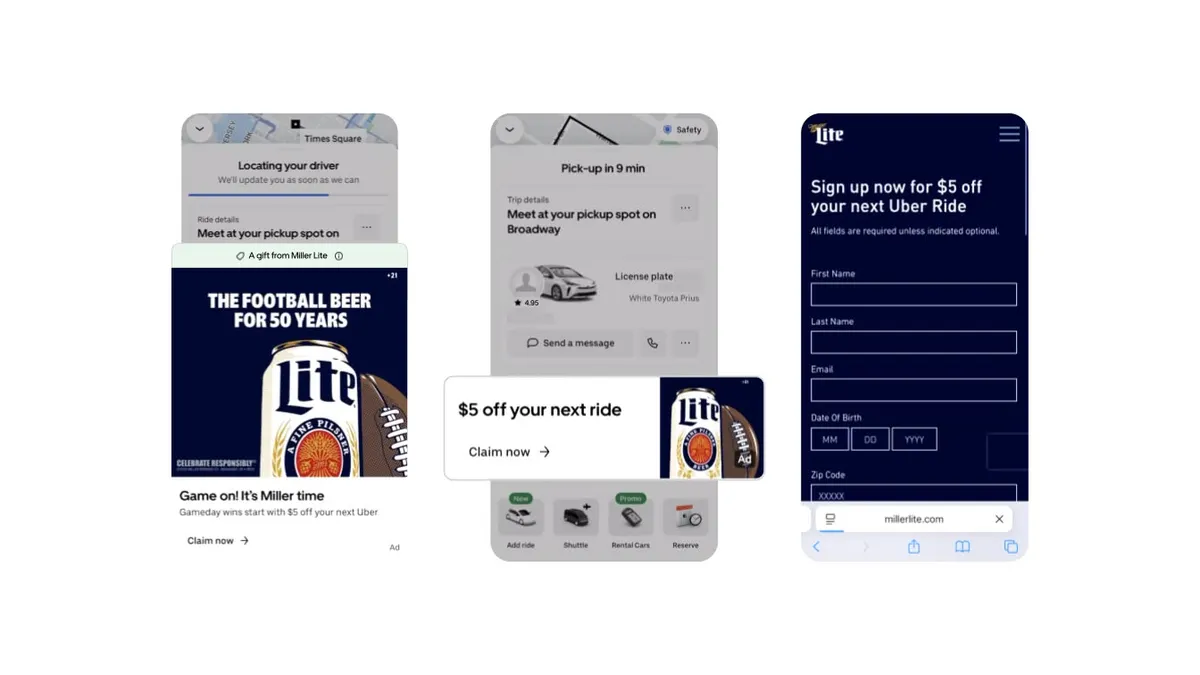
- Ride Offers on Journey: This mid-ride format is designed to combat ad blindness through interactivity. By presenting users with specific, redeemable offers, Uber encourages active engagement. Early testing by Molson Coors for its Miller Lite brand demonstrated the effectiveness of this approach: the campaign saw a click-through rate nearly 45% higher than non-offer creatives, particularly during major sporting events.
- Homescreen Ride Offers: These ads appear before the ride begins. By coupling a branded message with an immediate incentive—such as a discount on the ride itself—Uber creates a positive association between the brand and the service, with 64% of riders reporting that discounts increase their positive sentiment toward a brand.
For the Uber Eats Consumer
Uber Eats is shifting from a standard discovery platform to a dynamic retail media space:
- Brand Takeovers: A high-impact pop-up that appears the moment the app is opened, ensuring immediate brand visibility.
- Item Showcase: This carousel-style format allows brands to highlight specific products, enabling users to add items directly to their delivery carts with a single tap.
- Offer Spotlight: A full-screen, personalized advertisement that connects promotional deals with the users most likely to engage, optimizing for conversion rather than just reach.
Supporting Data: Why Brands Are Investing
The data supporting this pivot is compelling. Uber’s recent Q1 2026 earnings report paints a picture of a platform operating at massive scale. The company reported $13.2 billion in revenue for the first quarter, a 14% year-over-year increase. More importantly for advertisers, total trips taken during the quarter jumped 20% to 3.6 billion, fueled by a 17% growth in monthly active users.
The efficacy of these ads is rooted in the "captive" nature of the audience. Unlike a banner ad on a webpage, which is easily ignored, Uber’s formats are integrated into the user’s primary navigation and consumption tasks. When users are already in a "spending mindset"—whether they are commuting to a dinner reservation or ordering lunch—they are statistically more likely to engage with relevant offers.
Implications for the Advertising Landscape
The rise of Uber as a media giant has profound implications for the industry.

1. The Rise of "Contextual Commerce"
Uber is moving the industry toward a model where advertising is not just "seen," but "acted upon." By offering rewards that require a physical action (a detour, a purchase, or a click), Uber is providing marketers with a clear ROI that is increasingly difficult to achieve on open-web platforms plagued by privacy restrictions and cookie depreciation.
2. Direct Competition with Retail Media Networks
With the integration of Carrot Ads and the expansion of Uber Eats advertising, Uber is effectively becoming a Retail Media Network (RMN). It is now competing directly with the likes of Amazon and Walmart for the attention of CPG marketers. The difference is the mobility data; Uber knows where you are going, what time you are traveling, and what you are craving, providing a level of predictive targeting that few other platforms can match.
3. Measuring the "Verified Arrival"
One of the most significant shifts is the move toward "verified arrivals." By tracking whether an ad leads to an in-store visit, Uber is offering a level of attribution that bridges the online-to-offline gap. This is a "holy grail" for brick-and-mortar retailers and quick-service restaurants (QSRs), who have long struggled to attribute digital ad spend to physical foot traffic.
Challenges and Future Outlook
Despite the growth, Uber faces the ongoing challenge of user experience. As the app becomes more "cluttered" with advertisements, there is a risk of alienating power users who prioritize speed and efficiency. The company must balance its advertising revenue goals with the seamless user experience that originally made it a dominant market force.
Furthermore, as regulatory scrutiny on data privacy continues to intensify globally, Uber’s ability to utilize location data will be under a microscope. The company’s success will depend on its ability to maintain user trust while delivering the highly personalized experiences that advertisers demand.

However, if current trends continue, Uber is well-positioned to remain a dominant player in the digital advertising landscape for the foreseeable future. By turning every trip and every delivery into a potential marketing touchpoint, the company has successfully monetized the modern consumer’s movement through the world, proving that in the digital age, the journey is just as valuable as the destination.
"Our goal is to be the platform where consumers not only manage their movement but discover the brands that matter to them in the moments that count," a company representative noted. With $2 billion in annual ad revenue as a foundation, that goal is no longer a distant ambition—it is the company’s new operating reality.
