

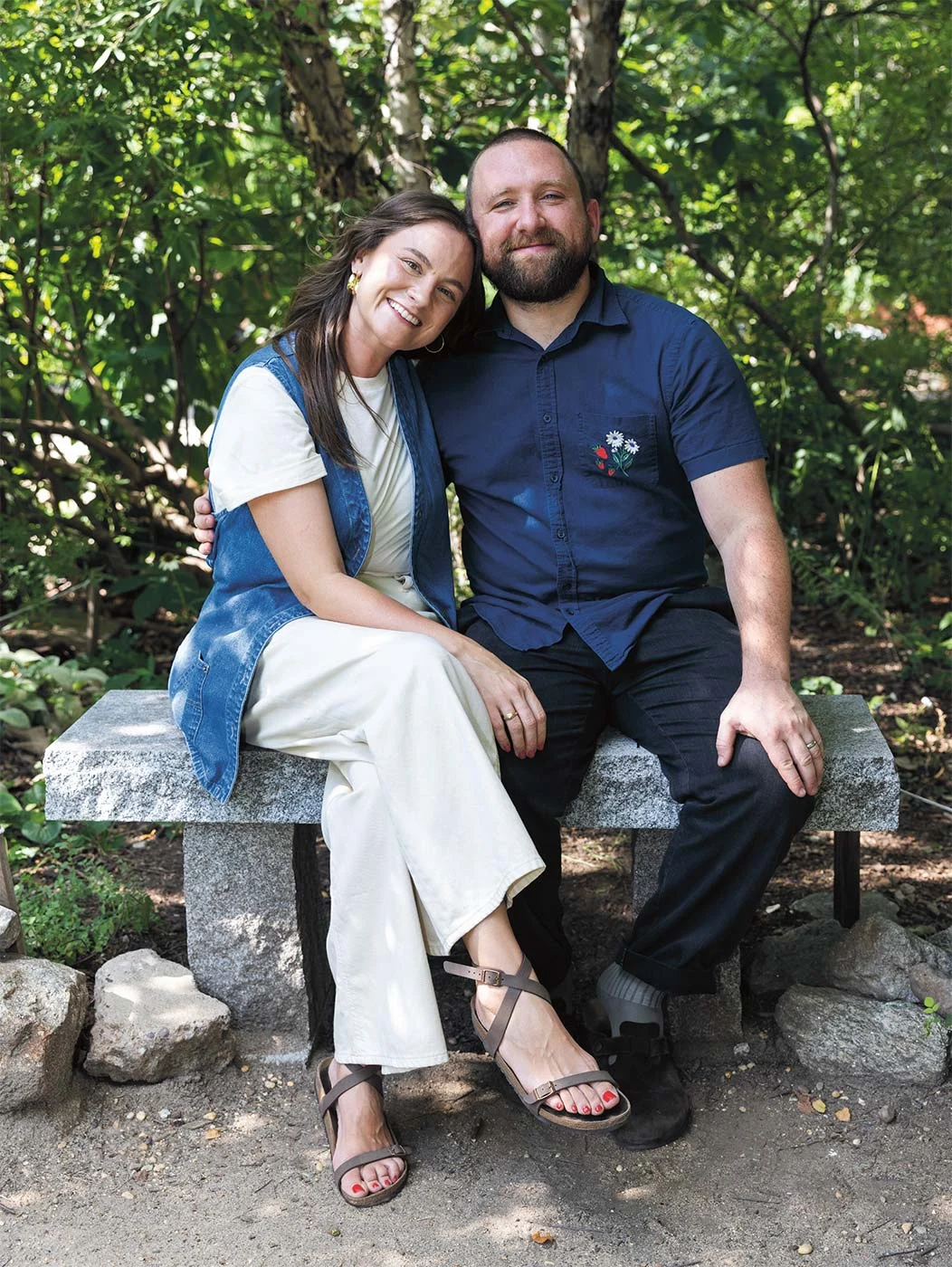
Just across the Delaware River, in the vibrant, historic streets of Northern Liberties, Philadelphia, a new culinary landmark is preparing to take root. Field Day, the highly anticipated cocktail bar from New Jersey-based pioneers Danny and Katie Childs, is set to open its doors this fall. More than just a place to grab a drink, Field Day serves as the physical manifestation of the “Slow Drinks” movement—a philosophy that marries the academic rigor of ethnobotany with the soulful, seasonal bounty of the Mid-Atlantic.
For Danny Childs, this journey was never the intended path. A trained ethnobotanist, Childs spent years studying the complex relationships between human cultures and the plant world, conducting fieldwork in South America that would eventually serve as the intellectual foundation for his unique approach to mixology. His transition from the laboratory to the bar top was born of happenstance, grit, and a profound respect for the land.
The Genesis: From Ethnobotany to the Bar Top
In 2014, while living on a farm on the Marlton-Medford border, Childs found himself at a crossroads. He was seeking a way to integrate his background in botany with his local environment. His initial foray into the hospitality world was a pragmatic decision: he wanted the local restaurant, Farm & Fisherman Tavern in Cherry Hill, to purchase his farm’s vegetables.

“I needed money, and I thought maybe Farm & Fisherman would buy some of our vegetables,” Childs recalls. The restaurant did indeed buy his produce, but his application for a bartending position was initially met with an offer to work as a server. That humble beginning sparked a nine-year tenure at the farm-to-table establishment, where the confluence of his academic research and his hands-on experience with the soil began to take shape.
Under the tutelage of owners Josh Lawler and Todd Fuller, Childs was given the creative freedom to experiment. He began bringing in preserves, ferments, and foraged botanicals from his own garden. What began as a simple experiment in flavor profiles quickly evolved into an entirely new bar program—and eventually, the Slow Drinks movement.
Chronology of a Movement
The evolution of Danny Childs’ career is a study in patient craftsmanship. Following his time at Farm & Fisherman, his influence began to ripple outward, gaining national attention.

- 2014–2023: A nine-year residency at Farm & Fisherman Tavern, where Childs transitioned from server to the architect of a revolutionary bar program rooted in local agriculture.
- 2018: Childs launches a recurring beverage column for Edible Jersey, providing a platform to articulate his philosophy of sustainability and biodiversity in liquid form.
- 2022/2023: The publication of Slow Drinks, a comprehensive guide to seasonal, garden-to-glass mixology, which would go on to win a prestigious James Beard Award.
- 2024–2025: Conceptualization and development of Field Day, a collaborative effort between Danny and Katie Childs to create a dedicated space for regional cocktail innovation.
- Fall 2026: Official opening of Field Day at 923 N. Second St., Northern Liberties, Philadelphia.
Central to this timeline was the mentorship of the late Edible Jersey editor, Teresa Politano. Childs credits her with helping him distill his complex ideas into a coherent narrative. “Teresa was a huge part of helping me define my voice and drink approach, and coaching me to put together a book proposal,” he notes. This support helped propel his work from a local curiosity to a national benchmark for sustainable beverage programs.
Supporting Data: The Geography of Flavor
Field Day is uniquely positioned to capitalize on a diverse geographic radius. By sourcing ingredients from the Jersey Shore, the Pine Barrens, the Pocono Mountains, and the agricultural hubs of Lancaster County, the bar acts as a hub for regional identity.
Childs has spent the last decade cultivating deep-rooted relationships with local purveyors. In New Jersey, his supply chain includes D&V Organics in Swedesboro and the storied Robson’s Farm in Wrightstown. Across the river in Pennsylvania, he collaborates with Teddy Moynihan of Plowshare Farms to cultivate heirloom ingredients specifically for the bar’s needs. The team also utilizes wild-foraged goods and grapes sourced from Blind Fox Vineyards in Bucks County, ensuring that every glass poured at Field Day tells a story of the surrounding landscape.

The infrastructure of the bar itself supports this mission. The property features an on-site garden, allowing for a hyper-local supply of fresh herbs and botanicals. This is augmented by a dedicated "Director of Fermentation and Preservation," a role that underscores the scientific rigor applied to the menu. Experiments with beeswax, fermented fruits, and house-made shrubs are not merely garnishes; they are the core components of the bar’s identity.
Official Responses and Culinary Partnerships
Perhaps the most significant development in the lead-up to the opening is the partnership with Chef Melissa McGrath of Sweet Amalia Market & Kitchen. McGrath, herself a James Beard Award-nominated culinary talent, was a frequent regular at Farm & Fisherman, where her shared ethos with Childs became clear.
“I’ve always loved her food because it is both exceptional and unfussy,” Childs says. “Excellent ingredients, bright flavors.”

McGrath’s role as a consulting chef partner will see the implementation of a menu that defies the typical, greasy "bar food" trope. Instead, she is developing a selection of elevated bites designed to complement the cocktails. These include Pennsylvania Dutch-inspired dishes like a Lebanon bologna sandwich with house-fermented chowchow, red beet eggs, and a refined take on Philadelphia tomato pie. For the coastal influence, the menu will feature baked clams—a nod to the Jersey Shore traditions Childs holds dear.
Implications: The Future of "Slow Drinks"
The launch of Field Day carries significant implications for the hospitality industry, particularly in the Philadelphia area. It represents a shift away from the mass-produced, high-fructose syrup-laden cocktails of the past and toward a model of "culinary mixology."
By treating the bar as a kitchen, Childs is challenging the industry to reconsider what it means to be a "neighborhood bar." The goal is to create a space that is high-concept enough to attract critics and cocktail enthusiasts, yet comfortable enough for locals to visit on a Tuesday night.

The drinks list, which will feature upwards of 30 unique creations, is a testament to this ambition. Take, for example, the "Birch and Bourbon." This cocktail is a complex synthesis of homemade birch beer, wintergreen, black birch bark, sassafras root, and hibiscus, fortified with Appalachian Fernet and high-quality bourbon. It is an unapologetic expression of the local terroir.
Furthermore, the integration of "boozy gelato"—a refined, adult take on the classic Philadelphia water ice and soft-serve culture—suggests a playful, accessible approach to high-end ingredients.
A Canvas for the Region
"After years of studying and seeing culinary beverages and traditions proudly represented in their places, I thought it would be really cool to do that here," Childs explains. Field Day is designed as a canvas, where each season dictates the menu, and each ingredient serves as a tether to the land.

As the industry grapples with questions of sustainability and the environmental impact of long-distance supply chains, Field Day offers a compelling, localized solution. By bridging the gap between the farm and the glass, Danny and Katie Childs are not just opening a bar; they are establishing a precedent for how urban spaces can honor and support the regional ecosystems that sustain them.
When the doors open this fall in Northern Liberties, it will be the culmination of a decade of research, foraging, and relationship-building. For the patrons of Field Day, it promises to be more than a cocktail—it will be an invitation to taste the landscape of the Mid-Atlantic, one carefully preserved, boundary-pushing sip at a time.
