

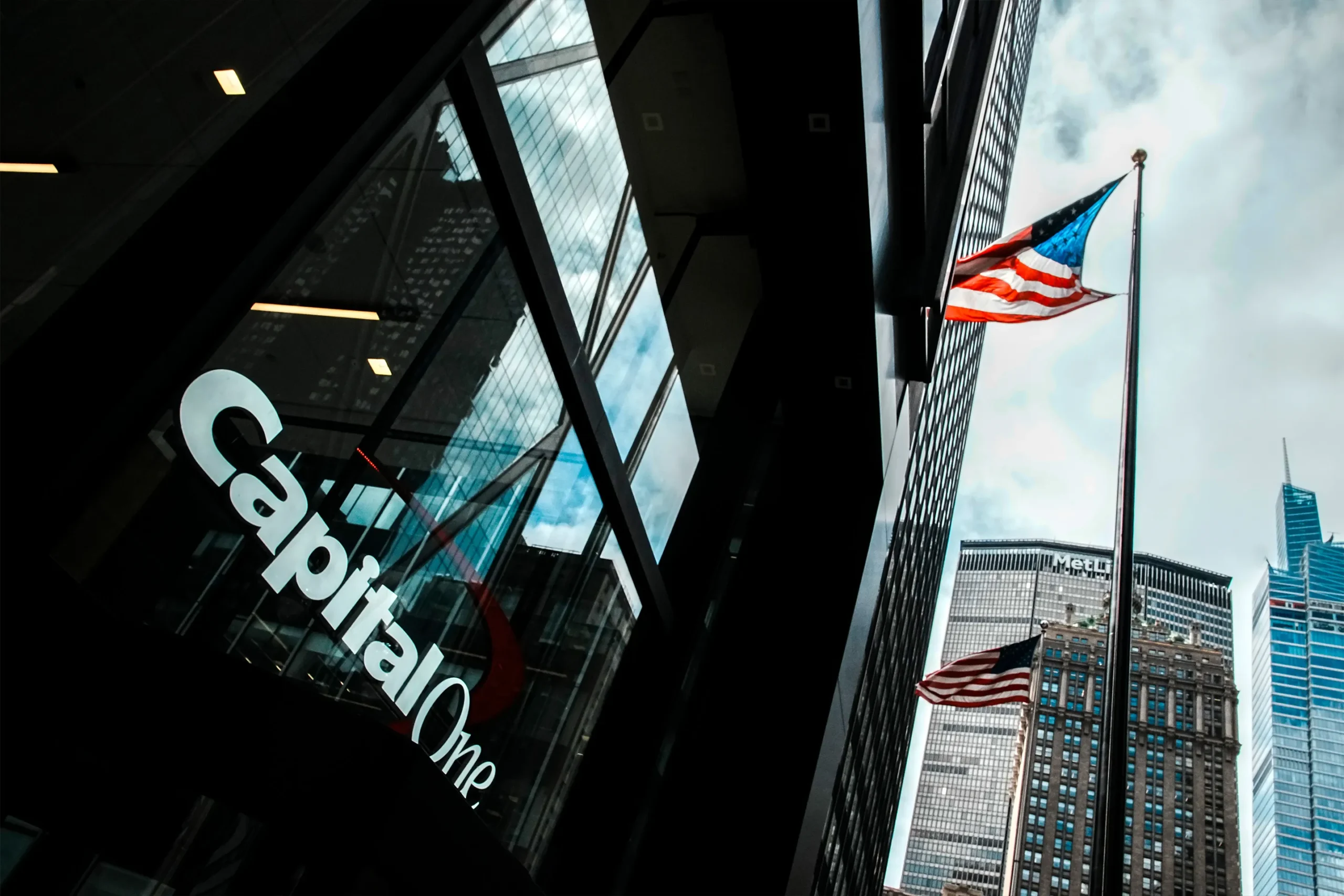
For more than five million Capital One customers, the promise of a long-awaited financial recovery has hit a significant legal roadblock. A $425 million class-action settlement, intended to compensate account holders for years of underpaid interest, has been stalled by a lone objector. This unexpected appeal threatens to keep settlement funds locked in limbo for a year or longer, transforming what was supposed to be a moment of restitution into an exercise in patience.
The settlement, which stems from allegations that Capital One systematically underpaid interest on legacy "360 Savings" accounts, was designed to rectify a multi-year disparity in Annual Percentage Yields (APYs). While the distribution of payments was scheduled to commence this week, the settlement administrator has officially notified class members that the legal process has been effectively frozen, pending the outcome of an appeal filed by Michelle Coles, a Washington, D.C.-based attorney and class member.
The Core Conflict: Why Capital One Was Sued
The origins of this massive litigation date back to September 2019, when Capital One introduced its "360 Performance Savings" accounts. The new product featured significantly higher interest rates than the existing "360 Savings" accounts. According to the plaintiffs, the two accounts were fundamentally identical in function, yet holders of the older 360 Savings accounts were relegated to drastically lower yields.
As the Federal Reserve began its aggressive cycle of interest rate hikes in 2022 and 2023, the gap between the two account types widened into a chasm. Data cited in the settlement filings reveal that during a peak period from April 2024 to September 2024, the 360 Performance Savings accounts were paying 4.35% APY, while the legacy 360 Savings accounts were yielding a meager 0.3%.
By June 2024, the mounting frustration among customers culminated in the filing of at least six separate class-action lawsuits across California, New Jersey, New York, Ohio, and Virginia. These complaints alleged that Capital One had engaged in deceptive practices by shifting marketing focus to the new accounts while allowing existing customers to languish in low-yield vehicles without clear notification of the alternative. These cases were eventually consolidated in the U.S. District Court for the Eastern District of Virginia, setting the stage for the landmark $425 million settlement agreement.
A Chronology of the Legal Battle
The timeline of this litigation reflects the complex nature of modern class-action settlements:
- September 2019: Capital One launches 360 Performance Savings accounts, creating the initial yield disparity.
- 2022–2024: Federal Reserve rate hikes exacerbate the gap in APY between the two account types.
- June 2024: Multiple class-action lawsuits are consolidated in the Eastern District of Virginia.
- April 20, 2025: Judge David Novak grants final approval of the $425 million settlement agreement.
- June 17, 2025: Michelle Coles files a notice of appeal, effectively halting the distribution of funds.
- Present: Settlement administrators warn of potential delays exceeding one year while the appeal moves through the U.S. Court of Appeals for the Fourth Circuit.
The Appeal: A One-Woman Stand Against the Settlement
The delay is the result of a single appeal filed by Michelle Coles, who argues that the settlement is fundamentally inadequate. Coles, a former Department of Justice attorney, contends that the $425 million fund is a fraction of the actual damages sustained by the class.
"Capital One and class counsel have reached an agreement to settle this litigation worth as much as $9 billion for a mere $425 million," Coles argued in court filings. She maintains that the settlement represents, at best, 15% of the total damages owed to customers, meaning the bank is effectively retaining 85% of the interest it should have paid out.
Coles, who held an average balance of approximately $70,000 in her 360 Savings account during the period in question, estimated her own losses at roughly $10,000. Her decision to challenge the settlement was not made lightly; she posted a $25,000 appeal bond to ensure the challenge could proceed. While other class members expressed interest in challenging the settlement, Coles remained the sole individual willing to commit the financial resources to sustain the appeal.
During the final approval hearing, Judge David Novak addressed Coles’ concerns directly. While acknowledging that he personally believed the bank’s actions were "wrong"—a sentiment underscored by the fact that the bank agreed to write a "big check"—he emphasized the legal realities of class-action litigation. Citing the inherent risks of trial, Judge Novak remarked that litigation is rarely about getting everything one wants, but rather securing a balanced outcome that avoids the total loss of a trial verdict.
Official Responses and Perspectives
The legal team representing the class has characterized the appeal as "meritless," asserting that the settlement is objectively favorable to the 5 million affected customers. According to the settlement website, the $425 million fund is intended to represent between 38% and 57% of what could have been recovered had the case gone to a full jury trial.
Furthermore, the settlement includes non-monetary provisions that analysts suggest add significant value. Capital One has committed to matching the 360 Performance savings rate on the legacy 360 Savings accounts and has pledged to continue offering both products for at least two years. When accounting for these commitments, a special master estimated the total value of the settlement to be in excess of $1 billion.
However, the perspective from the objector remains firm. Coles argues that she is acting in the best interest of the class. "I am acting in the class’s interest," she stated in an interview. "We’ve already been waiting six years for Capital One to pay us the interest that they owe us." She contends that the perceived "deception" regarding the fairness of the settlement necessitates a longer wait to ensure that the eventual payout is equitable.
Implications for Class Members
For the five million individuals identified as class members—those who held a 360 Savings account at any point between September 18, 2019, and June 16, 2025—the current situation requires extreme patience.
What happens next?
- The Waiting Game: Because the settlement is under appeal, the court-mandated distribution process is suspended. There is no immediate action required from account holders.
- No Action Required: Unlike many settlements that require the submission of claim forms or proof of purchase, the Capital One settlement qualification process was automatic for those meeting the criteria. If you were a customer during the specified window, you are already in the system.
- The Timeline: The U.S. Court of Appeals for the Fourth Circuit has yet to establish a briefing schedule. Coles expects to file her primary appeal documents by September, but legal experts suggest that even in a best-case scenario for the defense, the appellate process typically lasts at least 12 months.
- Verification: Class members should continue to monitor the official settlement website. The site remains the primary source for updates regarding the status of the fund and any potential changes to the distribution schedule.
The Complexity of Class-Action Settlements
This case highlights a broader, often misunderstood aspect of class-action law: the role of the objector. While appeals are common in large-scale settlements, they are frequently viewed by proponents of the settlement as tactical obstructions that serve the interests of few at the expense of many.
However, the "merit" of an appeal is subjective. To the class counsel, the goal is to secure a certain, albeit partial, recovery for the maximum number of people. To an objector like Coles, the goal is to hold a major financial institution fully accountable for what she perceives as systemic fraud.
As the matter heads to the Fourth Circuit, both sides remain entrenched. The bank, having denied all wrongdoing despite the settlement, waits for the legal storm to pass. The class counsel continues to defend the integrity of their negotiation. And five million customers, who were promised relief from a six-year-old financial dispute, find themselves once again waiting for a resolution that now seems destined for the courtroom rather than the bank account.
For now, the lesson for participants in such large-scale legal actions is clear: finality is rarely guaranteed until the last appeal has been exhausted. In the case of the Capital One 360 Savings settlement, the road to compensation has simply become much longer.
