

Introduction: A New Star in the Maranello Constellation
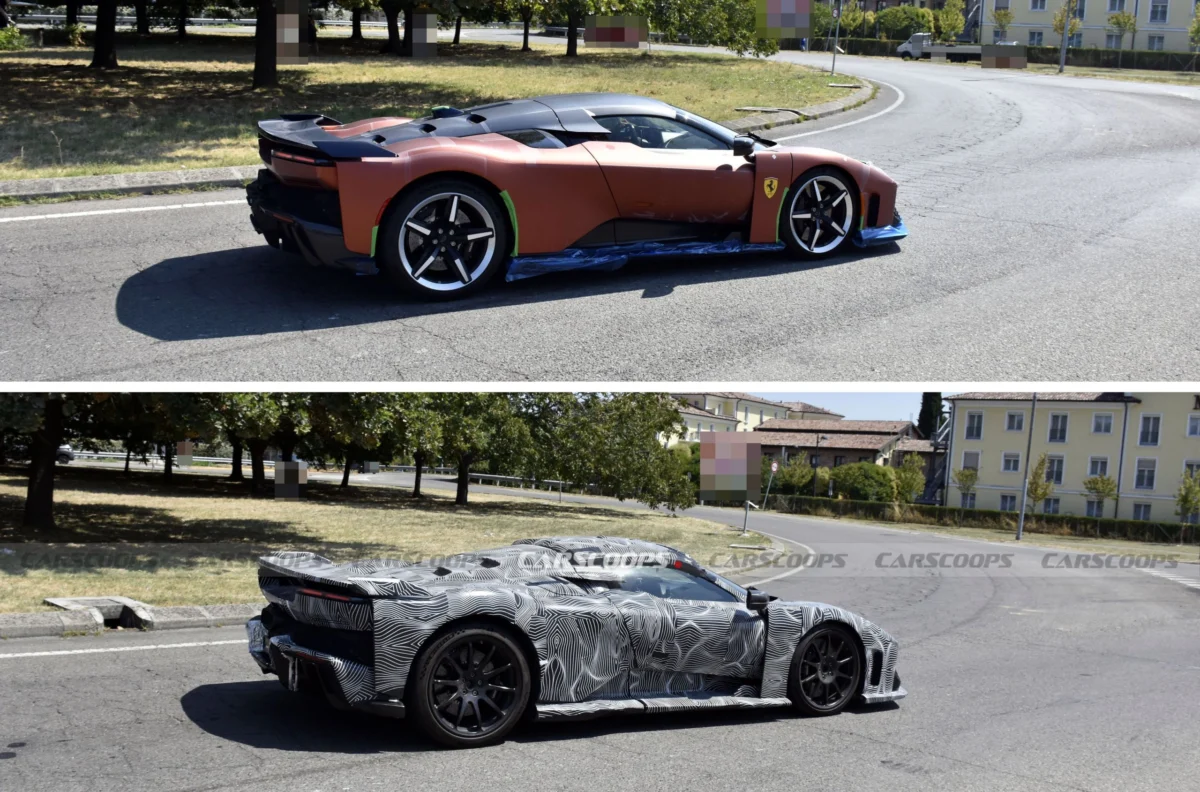
Ferrari has long mastered the art of the "Aperta"—the Italian designation for its open-top masterpieces. Following the footsteps of the legendary LaFerrari Aperta, the Prancing Horse is officially readying a roofless iteration of its latest technological tour-de-force, the F80. Recently caught by spy photographers undergoing rigorous testing near the Maranello factory, the upcoming F80 open-top is already generating seismic waves in the collector community. While the standard F80 Coupe is a marvel of hybrid engineering, the introduction of an Aperta variant suggests that Ferrari is looking to offer the same 1,184-horsepower experience with an added layer of visceral, open-air intensity.
Main Facts: The Anatomy of the F80 Aperta
The prototype currently circulating in Maranello wears a heavy cloak of camouflage, yet the underlying silhouette is unmistakably F80. At its heart, the vehicle remains faithful to the core philosophy of its fixed-roof sibling.
Powertrain Excellence
The F80 Aperta will retain the groundbreaking 3.0-liter twin-turbocharged V6 engine. This powerplant, a marvel of modern combustion technology, is mated to a sophisticated tri-motor hybrid system. Together, this combination delivers an eye-watering 1,184 horsepower. Power is routed through an eight-speed dual-clutch transmission, ensuring that the transition from a standing start to triple-digit speeds happens in the blink of an eye.
Structural and Design Adjustments
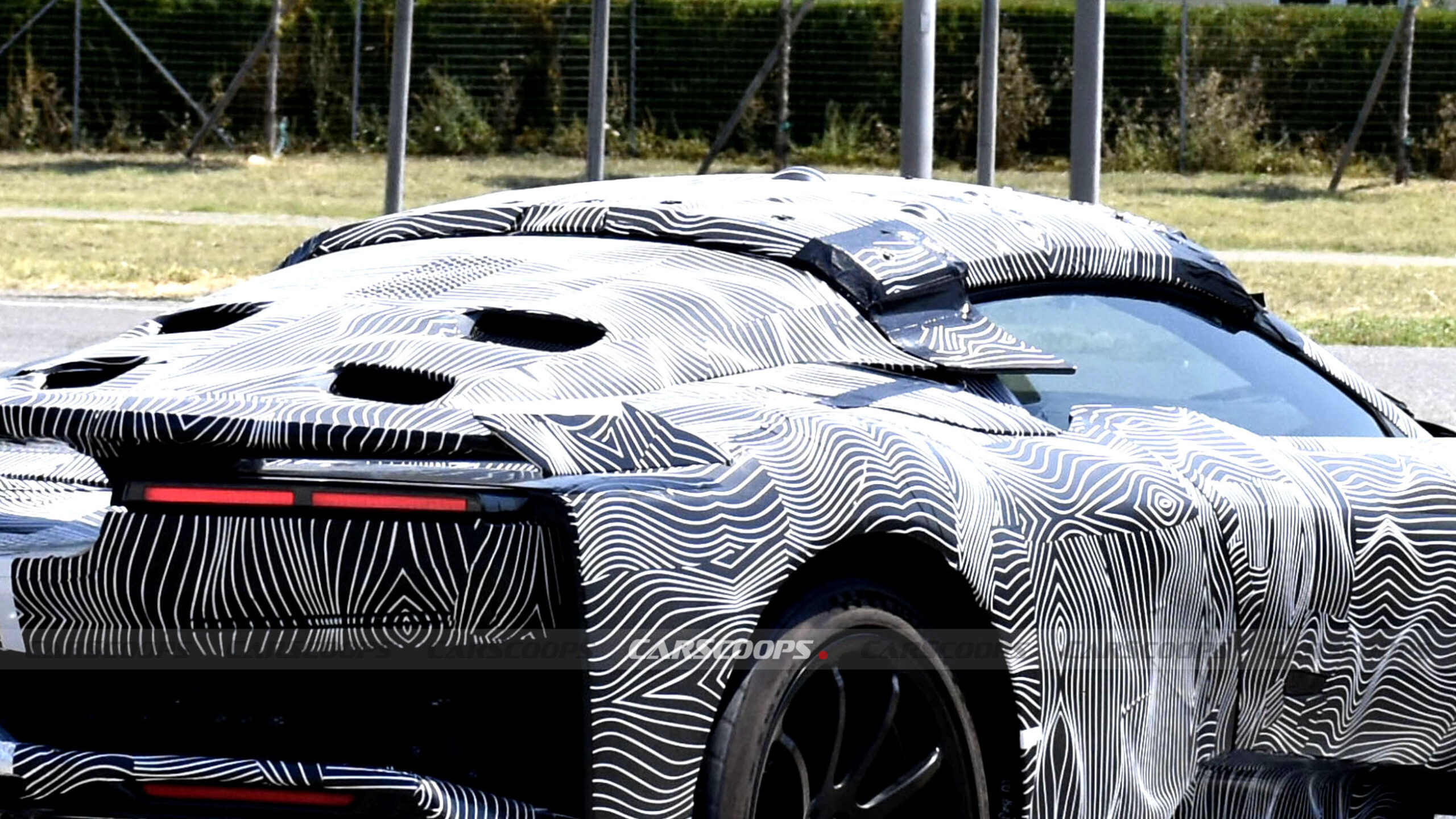
The most significant changes lie in the chassis and bodywork. Because the F80 utilizes an advanced butterfly-door configuration—which integrates part of the roof architecture into the door assembly—the hinges and structural mounting points must be completely re-engineered for the Aperta.
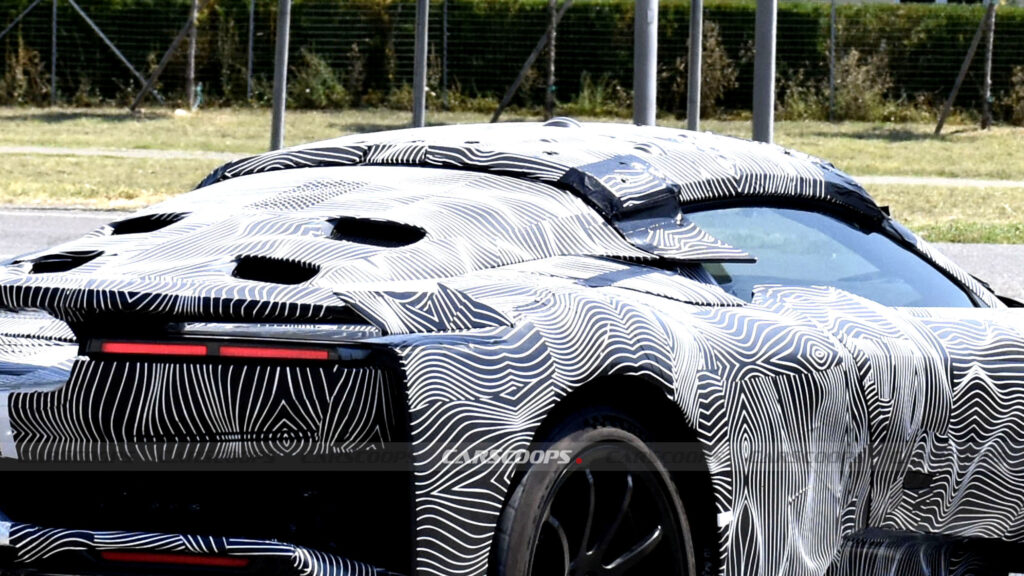
Furthermore, the roof panel itself is believed to be a removable hardtop. Unlike the automated folding mechanisms found in mass-market convertibles, Ferrari is expected to stick to a manual, lightweight carbon-fiber panel. This design choice serves two purposes: it saves critical weight and maintains the structural rigidity required for a car with such immense output. Interestingly, given the dense packaging of the F80’s cooling and aero-vents, it is unlikely that the vehicle will offer onboard storage for the roof. Owners will essentially be committing to "open-air only" driving once they leave their garage, a traditional sacrifice for the sake of performance purity.
Chronology: The Road to the Aperta
The lineage of Ferrari’s "Big Five" hypercars—the 288 GTO, F40, F50, Enzo, and LaFerrari—has always prioritized track-focused performance. However, the modern era has seen a shift toward inclusivity in terms of the driving experience.

- 2024: The global unveiling of the F80 Coupe sets a new benchmark for hybrid hypercars, with a limited production run of 799 units.
- Early 2026: Speculation mounts as Ferrari files new trademarks for the "F80 Targa" and "F80 Roadster," signaling that the R&D team is finalizing the open-top architecture.
- Mid-2026: The first spy shots emerge of an F80 test mule featuring a distinctively modified roofline and camo-covered B-pillars, confirming that development has moved from the simulator to the tarmac.
- Future Outlook: Expectations are high for a formal reveal, likely scheduled for the 2027 calendar year, coinciding with the brand’s push to solidify its dominance in the hybrid hypercar sector.
Supporting Data: Engineering and Scarcity
The F80 Aperta is not merely a "chopped" version of the coupe; it is an exercise in managing weight and airflow.
Weight Management
Engineers face the challenge of adding reinforcements to the chassis to compensate for the loss of the roof as a structural element. The current estimate is an increase of approximately 50 lbs (23 kg). While this may seem negligible, in the world of hypercars, where every millisecond on a lap timer counts, this is a significant hurdle that Ferrari’s dynamic suspension and torque-vectoring systems will need to address.
The Rarity Factor
If historical trends hold, the F80 Aperta will be substantially rarer than the Coupe. While 799 Coupes were allocated for production, industry insiders and spy reports suggest that the Aperta will be capped at 399 units. This scarcity ensures that the vehicle will remain a "unicorn" in the automotive world, with prices expected to far exceed the $4 million mark—a figure that already reflects the entry-level price for the base model.
Official Responses and Strategic Implications
While Ferrari has remained tight-lipped regarding the specific release date or the exact nature of the roof mechanism, the trademark filings provide a clear window into their strategic thinking. By registering multiple names—Targa vs. Roadster—Ferrari is playing with the concept of heritage. A Targa-style roof would align with some of the brand’s classic models, while a full Roadster design would offer a more aggressive, track-oriented aesthetic.
Why the Aperta Matters
The move to launch an Aperta version is a strategic masterstroke for several reasons:
- Market Diversification: It allows Ferrari to cater to two distinct types of high-net-worth individuals: the "purist" who wants the track-optimized Coupe, and the "enthusiast" who values the sensory experience of the V6 soundtrack combined with the open sky.
- Brand Equity: By limiting production to 399 units, Ferrari ensures that the F80 Aperta remains an asset that appreciates in value, further cementing the "F80" nameplate as a cornerstone of automotive history.
- Technological Showcase: The Aperta acts as a rolling laboratory. By pushing the limits of structural rigidity in an open-top, high-horsepower hybrid, Ferrari gathers data that will inevitably trickle down to its future V8 and V12 models.
Implications for the Future of Hypercars
The F80 Aperta represents a bridge between the analog past and the electrified future. In an era where many manufacturers are moving toward fully electric platforms, the F80’s reliance on a high-revving, twin-turbocharged V6 hybrid system is a bold statement. It suggests that Ferrari is not yet ready to abandon the visceral, mechanical connection between the driver and the engine.

Furthermore, the design constraints—such as the potential lack of roof storage—demonstrate a refusal to compromise on performance for the sake of convenience. Ferrari is betting that its clientele prefers a vehicle that is unapologetically uncompromising.
As we look toward the final stages of the F80’s development, the automotive world remains captivated by the mystery of the roof. Will it be a removable panel that requires a two-person operation? Will it feature a sophisticated latching system that maintains the car’s aerodynamic profile at speeds exceeding 200 mph? These questions remain unanswered, but one thing is certain: the F80 Aperta will be one of the most significant and sought-after vehicles of the decade.
Conclusion: A New Chapter in Maranello
The F80 Aperta is shaping up to be more than just a car; it is a testament to Ferrari’s resilience and its ability to innovate within the confines of its own high standards. By combining the raw, unbridled power of the F80 Coupe with the emotional resonance of an open-top cabin, Ferrari is creating a driving experience that is increasingly rare in the modern automotive landscape. For the lucky few who will secure a build slot, the F80 Aperta will not just be a vehicle, but a piece of history—a final, roaring tribute to the internal combustion engine, electrified and elevated to the status of art. As testing continues in Maranello, the world watches with bated breath, waiting for the day the camouflage finally comes off, revealing the masterpiece underneath.
