

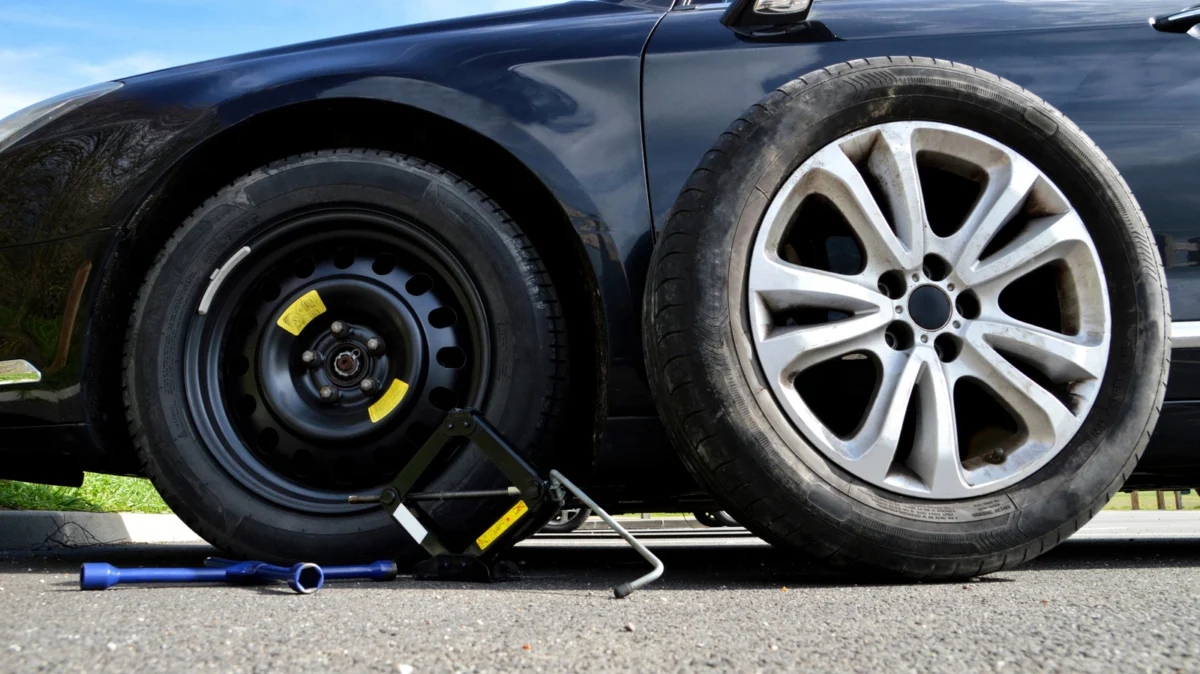
It is a scenario every driver dreads: the sharp pop of a sidewall puncture, the rhythmic thumping of a failing tire, and the eventual reality of being stranded on the shoulder of a highway. You reach into your trunk, hoist out the compact, rubbery intruder known as the "doughnut" spare, and finally manage to mount it. But as you head to the nearest service station to ensure it’s properly inflated, you encounter a number that seems almost comical: 60 PSI.
Most modern passenger cars operate with tire pressures hovering between 30 and 35 PSI. Seeing a recommendation that is nearly double that amount can feel like a typo, or worse, a recipe for a blowout. Yet, that 60 PSI figure is not only accurate—it is a vital engineering requirement for the temporary spare’s survival. To understand why, we must look beyond the rubber and delve into the physics of load-bearing capacity and structural integrity.
Main Facts: The Physics of the Contact Patch
The fundamental reason behind the high pressure of a space-saver spare tire lies in the simple, elegant physics of fluid mechanics and load distribution.
Tire pressure—measured in pounds per square inch (PSI)—is a metric of how much force is being exerted against the internal walls of the tire by the compressed air inside. When a vehicle sits on its tires, the weight of the car is transferred to the ground through the "contact patch," the specific area of the tire tread that makes physical contact with the pavement.
For a vehicle to remain stable and move safely, the pressure inside the tire must be sufficient to support the weight of the car without allowing the sidewalls to collapse. Because a space-saver spare is significantly narrower and smaller in volume than a standard full-size tire, it possesses a much smaller total surface area for that contact patch.
To support the exact same weight as a full-size tire—perhaps a quarter of a 3,500-pound vehicle—the smaller contact patch of the doughnut requires a significantly higher internal pressure to maintain the necessary structural stiffness. If you were to inflate a space-saver to the standard 32 PSI used for your main tires, the reduced volume and surface area would result in the tire sagging under the car’s weight, leading to excessive heat buildup, sidewall deformation, and an eventual, catastrophic failure.
Chronology: The Evolution of the "Space-Saver"
The history of the temporary spare tire is a study in automotive packaging and weight reduction.
The Era of the Full-Size Spare
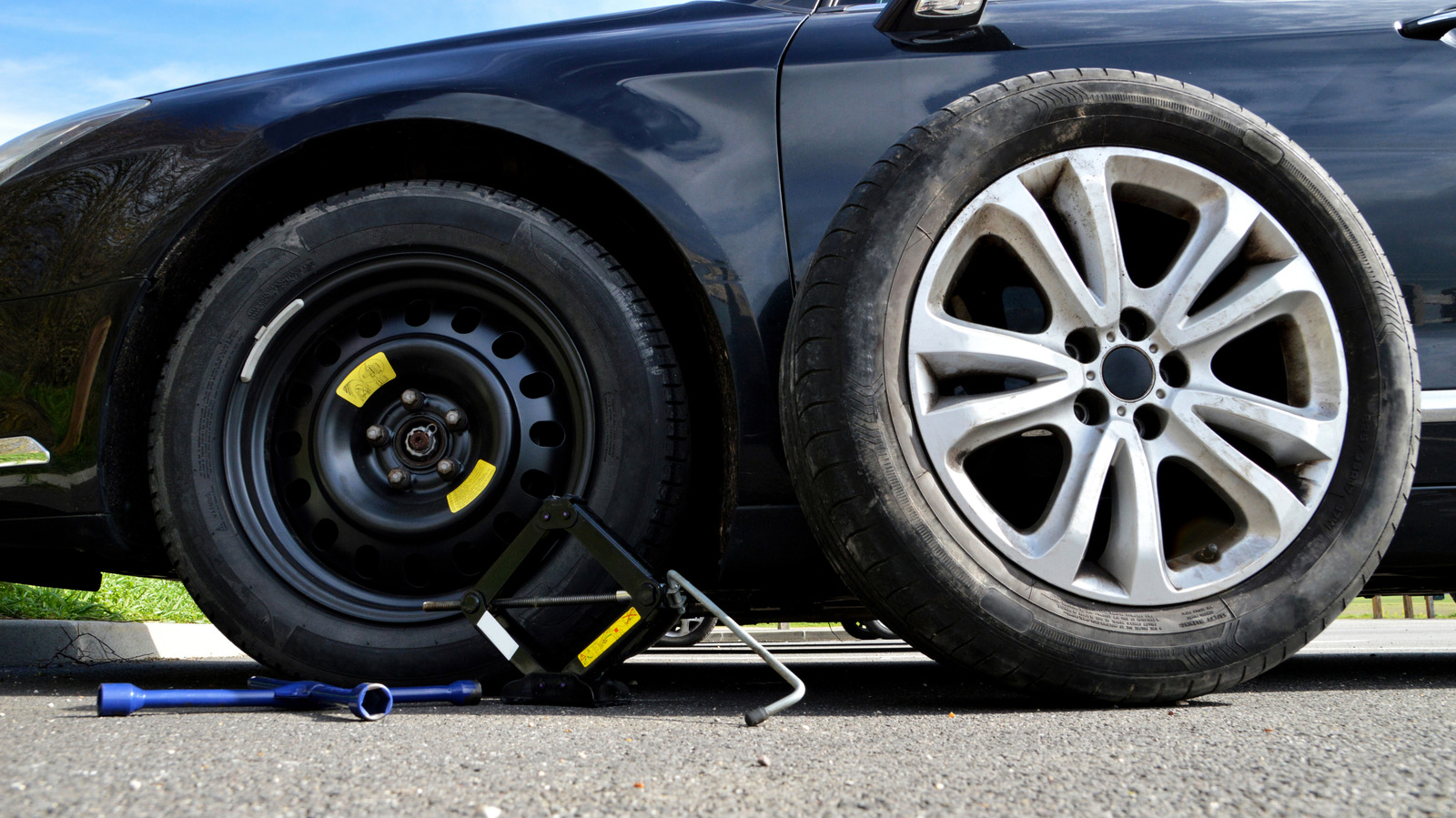
Prior to the late 1970s, vehicles were almost universally equipped with a full-size spare. These tires were identical in size, construction, and load capacity to the four tires already on the road. While this provided maximum safety and allowed for normal driving speeds, it came with a significant cost: trunk space and vehicle weight.
The Rise of the "Space-Saver" (1970s–1980s)
As the fuel crises of the 1970s pushed manufacturers toward greater efficiency, every pound shed from a vehicle became critical. Simultaneously, consumers demanded larger trunks for luggage and groceries. Automotive engineers began developing the "compact" spare tire. These were designed not to be driven on for long distances, but to get a driver to the nearest service station. By sacrificing durability and tread life, manufacturers were able to create a tire that occupied roughly half the volume of a standard wheel.
The Modern Era
Today, the doughnut spare is ubiquitous, though it is currently facing a new challenge. Many modern vehicles are ditching the spare entirely in favor of "tire inflator kits" (sealant and a portable compressor) to save even more weight and accommodate large hybrid battery packs. However, for those vehicles that still carry a spare, the engineering remains standardized around the high-pressure, narrow-rim configuration.
Supporting Data: Understanding Load and Pressure
To grasp the necessity of 60 PSI, one must understand the relationship between load capacity and tire volume.
A tire’s ability to carry a load is a function of the air pressure inside it. If you reduce the volume of the tire (by making it thinner), you must increase the pressure to ensure that the tire remains rigid enough to prevent the rim from bottoming out against the pavement.
The Load-Inflation Table
Tire manufacturers utilize "Load-Inflation Tables" to determine the safe operating pressures for various tire sizes. A standard P225/60R16 tire, for example, is designed to carry a specific load at 32 PSI. A T125/70D16 (a common "T-type" temporary spare) has a much smaller air volume. If the internal pressure were dropped to 32 PSI, the tire would lack the tension required to keep its shape.
- Pressure and Heat: Tires generate heat through internal friction as the sidewalls flex. At low pressures, a tire flexes excessively. Because the space-saver has very little rubber to dissipate that heat, it would reach temperatures capable of melting the rubber compound in a matter of miles if not properly inflated to the recommended 60 PSI.
- The "Double Pressure" Myth: Drivers often fear that 60 PSI is "too much" for a tire. However, the structural reinforcement of a space-saver (often using steel belts and reinforced sidewalls) is specifically engineered to contain this pressure. The tire is designed for this specific, temporary duty cycle.
Official Responses and Safety Warnings
Automotive manufacturers and the National Highway Traffic Safety Administration (NHTSA) have issued clear, consistent guidelines regarding the use of these spares. These warnings are not merely suggestions; they are safety requirements.
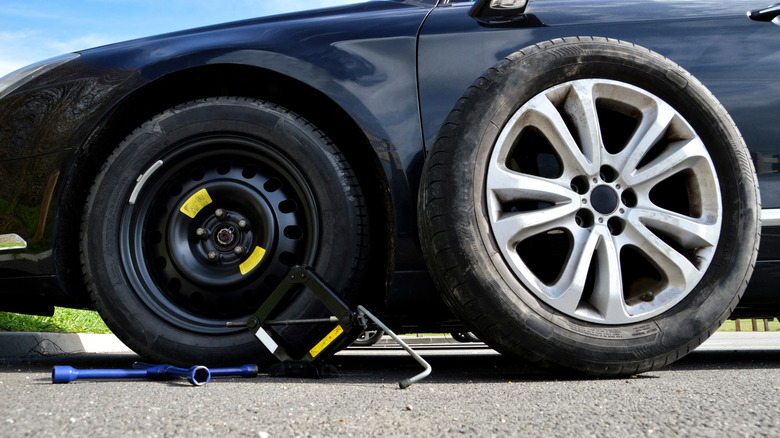
- Speed Limitations: Almost every space-saver spare is stamped with a "Max Speed: 50 MPH" (or 80 km/h) warning. This is because the high-pressure, narrow-profile tire offers significantly less traction and cornering stability than a standard tire.
- Distance Limitations: These tires are not designed for long-term use. They are meant to bridge the gap between a breakdown and a tire repair facility. Driving on them for hundreds of miles risks not only the spare itself but also the vehicle’s drivetrain, particularly in All-Wheel Drive (AWD) vehicles where a significant difference in tire diameter can damage the differential.
- Pressure Maintenance: The most frequent failure of the space-saver is that it is ignored. Because it sits in a well under the trunk carpet, it is rarely checked. By the time a driver needs it, the tire may have lost 10–15 PSI due to natural seepage over the years.
Manufacturers emphasize that drivers should check their spare tire pressure whenever they rotate their main tires. Neglecting this maintenance can leave a driver stranded with a flat spare, turning a minor inconvenience into a major emergency.
Implications: The Reality of Emergency Repairs
The existence of the 60 PSI requirement has profound implications for the modern driver.
First, it highlights the importance of the owner’s manual. While the 60 PSI figure is a common industry standard, it is not universal. Some larger vehicles with heavier curb weights may require even higher pressures, while some smaller cars might require slightly less. Always consult the specific placard on the door jamb or the sidewall of the spare tire itself.
Second, it underscores the need for better roadside equipment. Most gas station air pumps are calibrated for standard tires and may not be accurate at high pressures, or they may have automatic cut-offs that stop at 40 PSI. Drivers are encouraged to invest in a high-quality digital tire pressure gauge and a portable 12-volt air compressor that can reliably reach the pressures required for a spare.
Finally, the existence of the doughnut spare serves as a reminder that temporary solutions require temporary behaviors. When driving on a spare, your car’s handling dynamics are fundamentally altered. The center of gravity, the braking distance, and the ability to navigate wet or icy roads are all severely compromised.
In conclusion, the 60 PSI recommendation is not an arbitrary number. It is a calculated, engineering-backed requirement that ensures a piece of safety equipment can perform its job under the immense pressure of a vehicle’s weight. While it may seem counterintuitive compared to the tires we drive on every day, respecting that figure is the only way to ensure that your "doughnut" gets you home safely, rather than leaving you stranded on the side of the road with a second flat.
