

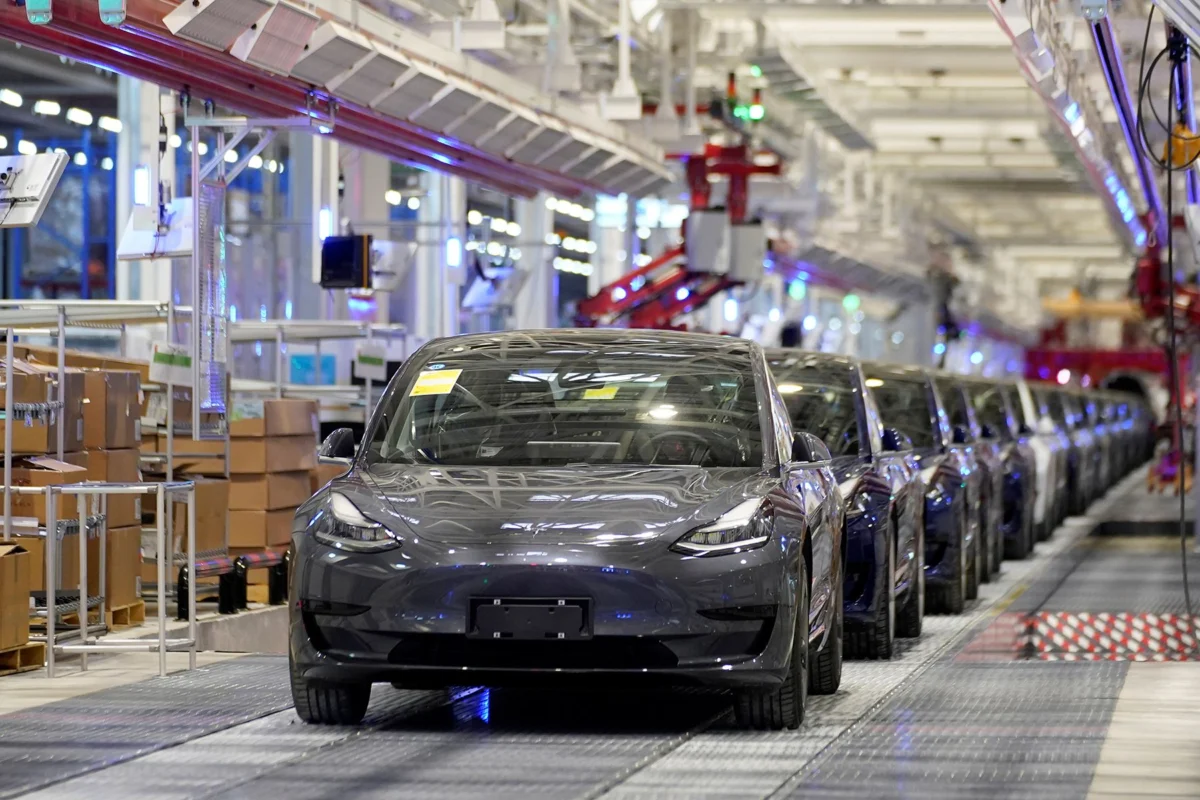
In the evolving landscape of the North American automotive market, few companies command as much attention—or generate as much controversy—as Tesla. As of mid-October 2026, Canadian consumers visiting the automaker’s online configurator for the Model 3 have been greeted by a pointed, confrontational banner. The message is clear: Tesla is accusing the Canadian federal government of actively “throttling” its vehicle sales.
This latest development serves as the latest flashpoint in the ongoing, complex relationship between the Ottawa administration and the world’s most valuable EV manufacturer. While the general public may see a simple supply chain dispute, industry analysts suggest that the reality is deeply rooted in Canada’s rigid, evolving quota system for Chinese-manufactured vehicles, and perhaps, a calculated attempt by Tesla to influence public sentiment through its high-visibility digital platforms.
The Context: Understanding the Import Quota System
To comprehend why Tesla is raising alarms, one must first look at the mechanics of Canada’s automotive import regulations. In a bid to protect domestic manufacturing interests and navigate the geopolitical sensitivities surrounding Chinese-made goods, the Canadian government implemented a strict quota system for the import of electric vehicles originating from China.
The system was originally designed as a "first-come, first-served" model. Under this structure, any automaker—including Tesla, which imports significant numbers of Model 3 units from its Gigafactory in Shanghai—could secure import licenses based on the speed at which they processed documentation. For a company like Tesla, which has mastered the art of high-volume logistics, this system was highly favorable. It allowed them to effectively "hoover up" the available permits, ensuring a steady stream of inventory into the Canadian market while competitors struggled to navigate the bureaucratic red tape.
A Chronology of Friction
The tension between Tesla and the federal government has been building for years, characterized by a series of aggressive public-facing actions by Tesla CEO Elon Musk.
- Early 2024: Concerns began to mount regarding the dominance of Tesla in the Canadian EV incentive space. The company faced scrutiny for its aggressive capture of government rebates, which effectively crowded out other manufacturers who were attempting to transition their portfolios to electric.
- Late 2025: The Canadian government announced that it would be reviewing its import license allocation strategy. The administration signaled that the “first-come, first-served” approach was no longer sustainable as domestic demand for EVs skyrocketed and other automakers demanded a more equitable distribution of import capacity.
- October 2026: As the review period reached a critical juncture, Tesla updated its Canadian ordering portal to explicitly blame the government for restricted inventory.
- The Present Day: The situation remains at a stalemate, with Global Affairs Canada—the department responsible for issuing these permits—notably delaying the release of updated import data, sparking speculation that a major policy shift is imminent.
The "Temperamental" Factor: Musk’s Influence
It is difficult to divorce the current corporate posturing of Tesla from the public persona of its CEO. Elon Musk has never shied away from using his influence to pressure policymakers. His recent public advocacy for the secession of three Canadian provinces—a stance that drew sharp rebukes from provincial leaders like Danielle Smith and Scott Moe—has colored the perception of Tesla’s complaints.
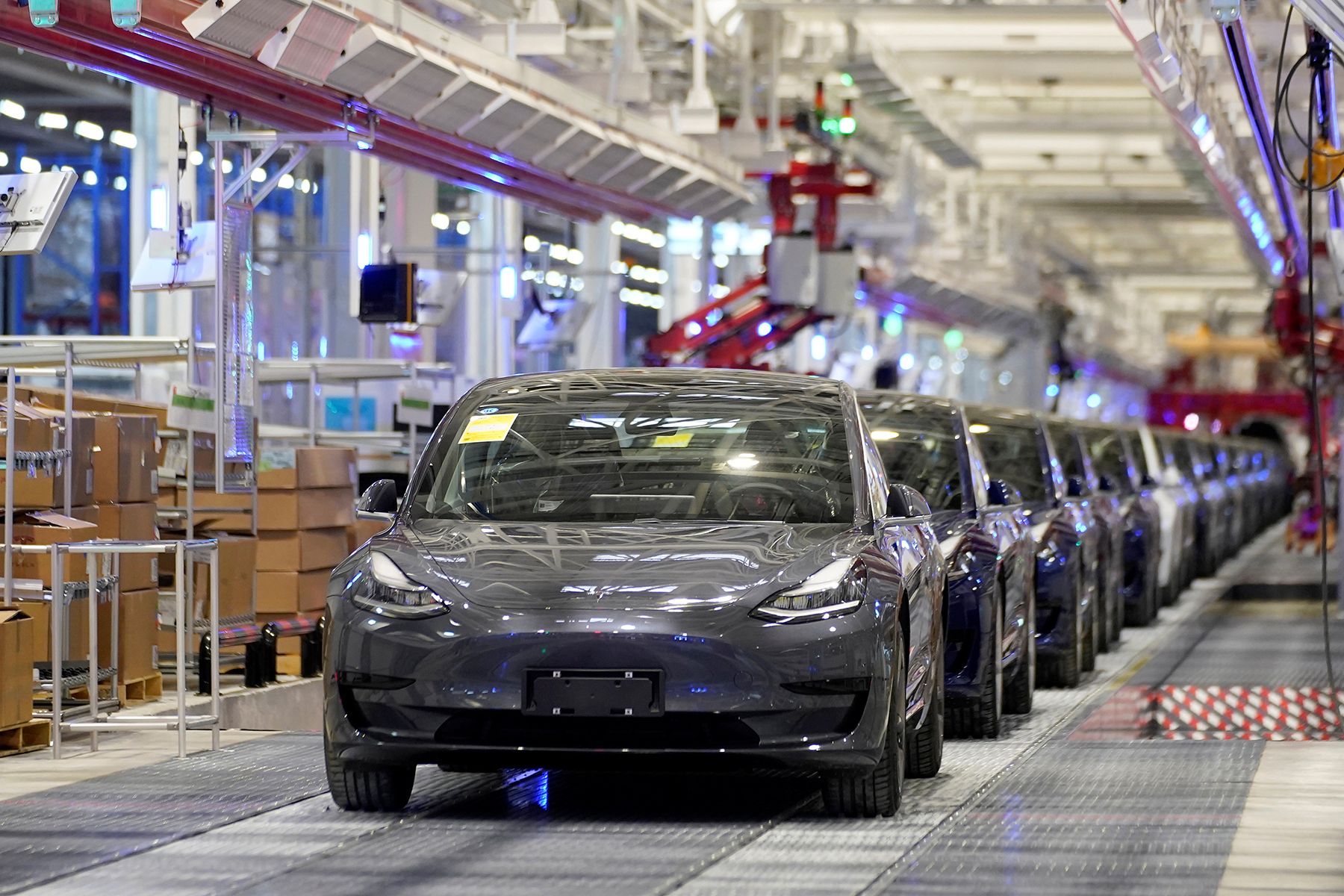
Critics argue that the banner on the Tesla website is less about legitimate regulatory concern and more about a standard "Muskian" tactic: creating a narrative of victimhood to mobilize a fan base. By casting the federal government as an impediment to consumer freedom, Tesla creates political pressure that might influence the Department of Transport or Global Affairs to rethink their allocation plans.
Is a Policy Shift on the Horizon?
The most compelling theory regarding the current bottleneck is that the government has, in fact, changed the rules of the game. Industry insiders suggest that Ottawa is moving away from the "first-come, first-served" model in favor of a "brand-balanced" allocation. Under such a system, the government would divide the total import quota among various manufacturers, preventing any single entity from monopolizing the market.
This would be a significant blow to Tesla’s current Canadian business model, which relies heavily on the low-cost production capabilities of its Chinese facilities. If Tesla is forced to source vehicles from other regions—such as its Fremont or Berlin plants—the costs of logistics and production will rise, potentially impacting the final price tag for Canadian consumers.
Furthermore, the silence from Global Affairs Canada is telling. Earlier in 2026, the department was diligent in providing prompt, monthly updates regarding import volumes and license statuses. The recent two-week delay in reporting suggests that behind closed doors, a new framework is being finalized, one that may not favor the current, Tesla-dominated status quo.
Implications for the Canadian Consumer
For the average Canadian car buyer, the implications of this dispute are twofold. First, there is the immediate risk of restricted availability. If Tesla’s claims of "throttling" are true, wait times for the Model 3 could extend significantly as the company manages a shrinking pool of import permits.
Second, there is the question of price. Tesla’s ability to offer competitive pricing in Canada has been predicated on the efficiency of its global supply chain. Should the government force a shift in sourcing, the "Premium RWD" model currently displayed on the site could see price adjustments to reflect the higher costs of non-Chinese manufacturing hubs.

Moreover, the broader automotive industry is watching closely. If the government succeeds in reallocating quotas to allow other manufacturers—such as domestic producers or European brands—to enter the market with more favorable conditions, it could lead to a more diversified EV market in Canada. However, the risk is that the market becomes less efficient, with consumers potentially facing higher costs for fewer choices in the short term.
The Lack of a Traditional Response
One of the most profound challenges in analyzing this situation is the lack of a traditional corporate communications channel from Tesla. For years, the automaker has operated without a press relations department, choosing instead to rely on the direct communication of its CEO and its website interface to disseminate information.
This leaves journalists and analysts in a position where they must decode the "intent" behind website banners and social media posts rather than receiving verified data from a spokesperson. When asked for comment, there is no one to answer. This vacuum of official information is precisely what allows speculation to run rampant, and it plays directly into the company’s strategy of controlling the narrative completely.
Conclusion: A Test of Regulatory Will
The standoff between Tesla and the Canadian government is a microcosm of the global struggle to balance international trade, local manufacturing, and the rapid transition to electric vehicles.
Tesla’s confrontational approach is, in many ways, a test of Canadian regulatory resolve. If the government caves to the pressure and maintains the status quo, it signals that the largest players can effectively dictate the terms of market entry. If Ottawa holds its ground—or formalizes the transition to a more equitable quota system—it represents a significant assertion of state power over one of the world’s most powerful corporations.
As we move toward the end of 2026, the focus will remain on the data. When Global Affairs finally releases its updated figures, the truth of the "throttling" accusation will likely be laid bare. Until then, the banner on Tesla’s website remains a reminder that in the modern automotive world, the road to the driveway is paved with more than just pavement—it is built on a foundation of international trade, political posturing, and, increasingly, the unpredictable nature of corporate giants acting as political actors.
