

As 2026 unfolds, North America is witnessing a transformative wave of investment in fixed-guideway transit. From high-capacity subways in Los Angeles and long-awaited light rail corridors in Toronto to innovative bus rapid transit (BRT) networks in the American South, the continent’s mobility landscape is undergoing a significant expansion. Data curated by Transit Explorer—which now catalogs over 13,700 lines and 62,300 stations globally—highlights that this year is not merely a collection of isolated openings, but a synchronized push toward more integrated, sustainable urban connectivity.

The State of North American Transit: A 2026 Overview
The projects opening in 2026 represent a mix of long-delayed mega-projects finally reaching completion and agile, cost-effective BRT solutions designed to address immediate transit gaps. Across the United States, Canada, and Mexico, city planners are prioritizing "fixed-guideway" systems—transit that operates in its own dedicated lane or right-of-way—to ensure reliability in an era of increasing road congestion.

This year’s developments are particularly notable for their focus on airport connectivity and regional integration. Whether it is the LAX Airport Connector in California, the link to Mexico City’s Felipe Ángeles International Airport (AIFA), or the extension to St. Louis’s MidAmerica Airport, there is a clear strategic mandate to bridge the "last mile" between regional rail networks and global aviation hubs.

Chronology of Key 2026 Openings
The rollout of these projects is staggered throughout the year, reflecting the complex logistical hurdles inherent in modern infrastructure construction.

Q1: Launching the Year
- South Shore Line (West Lake Corridor, USA): Marking a major advancement for Chicago-area commuters, this extension into Indiana provides a modern rail link to the Monon Corridor.
- Mexico City (El Insurgente & Lechería-AIFA): The final segment of El Insurgente (the Mexico-Toluca Interurban Train) is set to link with the city’s Metro system at Observatorio, while the 22 km Lechería-AIFA line establishes a critical commuter rail artery for airport access.
- Toronto (Line 5 Eglinton Crosstown): After years of delays since its original 2020 target, this 19 km light rail line finally enters service, promising to reshape east-west travel across Toronto.
Mid-2026: Mid-Year Milestones
- Los Angeles (LAX Airport Connector): Following the 2025 arrival of light rail to the airport perimeter, the June 2026 opening of the automated people mover will finally provide seamless transfer into the terminals.
- Baton Rouge (BRapid): A critical arterial rapid transit project connecting the North Transfer Center to Louisiana State University, proving that mid-sized cities are aggressively pursuing signal-priority transit.
- San Bernardino (West Valley Connector): This $320 million BRT project links the Inland Empire to the Los Angeles Metro A Line, significantly extending the reach of Southern California’s rail network.
Fall 2026: Final Pushes
- Atlanta (MARTA Rapid A-Line): With an eye on the World Cup, Atlanta will debut this 5 km BRT line, representing the city’s most significant new transit investment in decades.
- Las Vegas (Maryland Parkway BRT): A $378 million investment, this line will serve as a vital link between the Las Vegas Medical District, UNLV, and Reid International Airport.
- Mexico City (Mexicable Linea 3): This aerial tramway will add 9.5 km of capacity, serving 40,000 daily riders in the State of Mexico.
Supporting Data: The Scale of Investment
The financial scope of these projects reveals the high cost of modern infrastructure. The Eglinton Crosstown in Toronto has reached a staggering $13 billion CAD, while the D Line Extension in Los Angeles stands at $3.5 billion for Phase I alone. Conversely, projects like Baton Rouge’s BRapid demonstrate that meaningful improvements can be achieved at lower capital costs ($39 million) by utilizing arterial signal priority rather than heavy rail construction.

The Transit Explorer database, which serves as the backbone for this analysis, notes that these projects are critical to supporting a global network that now supports massive ridership across 62,300 stations. The 82,000 daily riders expected on the Lechería-AIFA line in Mexico City, for example, highlights the massive latent demand for regional rail in the world’s most populous metropolitan areas.

Official Responses and Strategic Implications
The "Cost of Delay" Narrative
A common theme across many 2026 openings—particularly the Eglinton Crosstown and the LA D Line—is the impact of inflation and project management challenges. Municipal agencies have faced significant public pressure regarding these delays.

In a recent statement, officials from Toronto’s Metrolinx acknowledged the frustration surrounding the Eglinton line, noting that the $13 billion figure includes comprehensive long-term maintenance contracts, which, while expensive, are intended to prevent the "deferred maintenance" cycles that have plagued legacy transit systems in the past.

The World Cup Catalyst
Atlanta’s MARTA Rapid A-Line serves as a case study in using global events to accelerate local transit policy. Originally slated for 2025, the project was pushed to meet the demands of the 2026 World Cup. Planners argue that this "event-based" urgency is often the only way to overcome the bureaucratic inertia that stalls urban transit projects.

Sustainability and the "Airport Connector" Trend
Urban planners are increasingly viewing airport rail links as the "low-hanging fruit" of transit policy. By connecting airports to the city center, agencies can capture tourist ridership—who are more likely to pay higher fares—to cross-subsidize daily local transit. The success of the LAX Connector and the Mexico City airport rail lines will likely serve as blueprints for cities like Denver, Chicago, and Dallas in the late 2020s.

Implications for Urban Development
The opening of these lines has immediate implications for real estate and urban density.

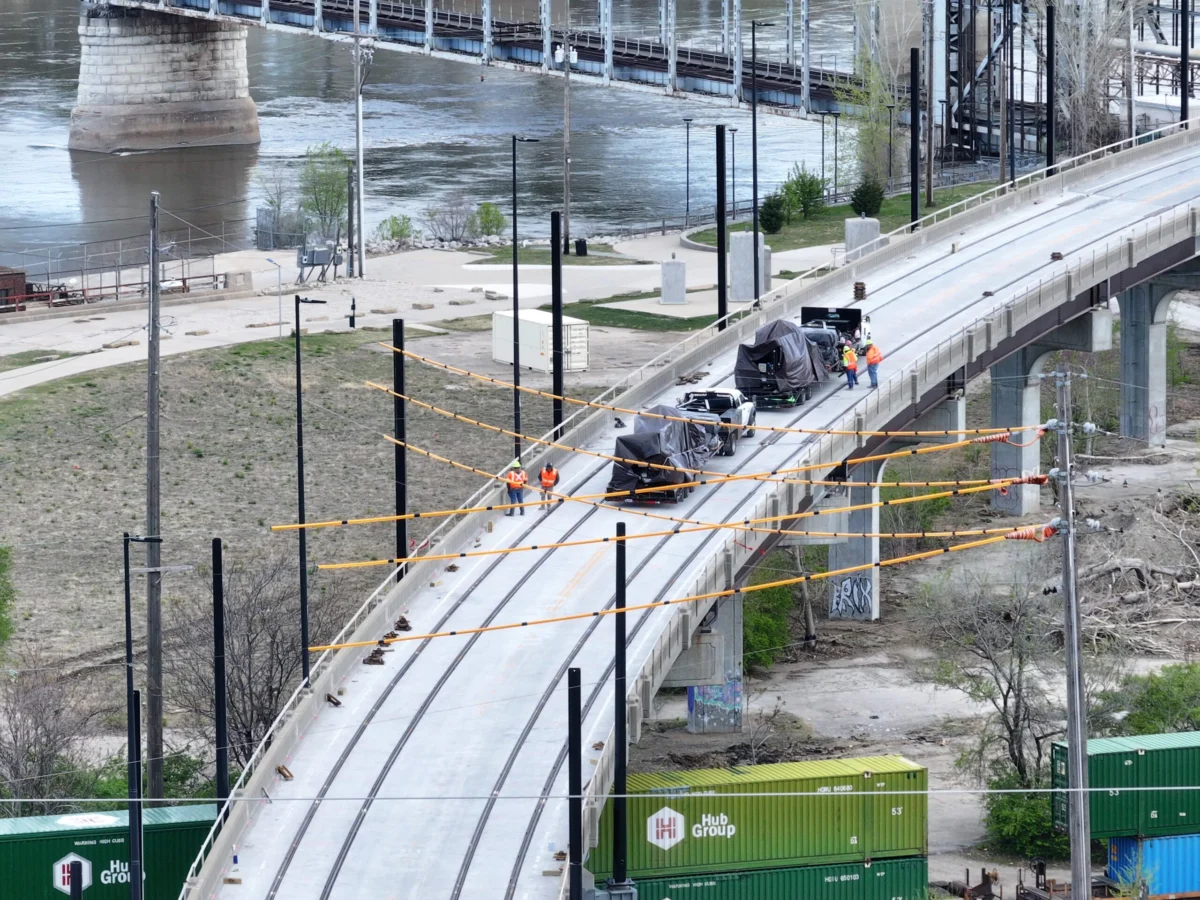
- Transit-Oriented Development (TOD): In cities like Kansas City, the Streetcar Waterfront Extension is intentionally designed to serve new development zones, including the area around CPKC Stadium. This confirms the trend that transit is no longer just a way to move people, but a tool for land-use policy.
- Equity in Transit: The focus on BRT in Baton Rouge, San Bernardino, and Atlanta reflects a shift toward serving underserved communities that were previously transit deserts. Unlike the massive subway projects in Los Angeles, these BRT lines focus on high-frequency, reliable service that can be implemented faster to improve the daily quality of life for the working population.
- Network Maturity: The completion of the REM Anse-à-l’Orme branch in Montréal and the Link 2 Line in Seattle demonstrates a move toward "network maturity." These cities are no longer building single lines; they are building systems that allow for multiple transfers and complex, multi-modal travel patterns.
Conclusion: Looking Beyond 2026
As 2026 closes, the lesson for North American transit is clear: despite the ballooning costs and frequent schedule shifts, the appetite for fixed-guideway transit remains robust. The 2026 class of projects shows a continent that is finally beginning to prioritize transit as a core component of its national infrastructure, rather than a luxury service.

While individual projects face scrutiny over budget overruns, the cumulative effect of these 13,000+ lines globally is a more connected, resilient urban future. As the focus shifts toward 2027 and beyond, the success of these 2026 openings will determine whether the current wave of transit investment remains a sustainable priority for future administrations or a temporary spike driven by pandemic-era funding and event-based milestones.

Data Source: This analysis is based on the 2026 update of the Transit Explorer, an interactive global mapping project by The Transport Politic. For full data sets and detailed station-level information, visit the Transit Explorer project page.
