


The automotive landscape is increasingly dominated by the paradox of the performance SUV—vehicles that defy the laws of physics to satisfy the desires of a specific, affluent demographic. Standing at the pinnacle of this segment is the 2027 Mercedes-AMG GLS63. Recently refreshed, this gargantuan three-row hauler has been updated to align with the brand’s broader design language and technological standards. While some may view it as an exercise in unnecessary indulgence, the GLS63 remains a technical marvel that bridges the gap between luxury executive transport and track-bred performance.
Main Facts: The Evolution of a Behemoth
The 2027 model year marks the second major facelift for the current generation of Mercedes-Benz’s flagship SUV. Positioned as the "S-Class of SUVs," the GLS has undergone significant aesthetic and mechanical revisions to keep pace with the high standards set by the W223 S-Class and the recently updated GLE lineup.

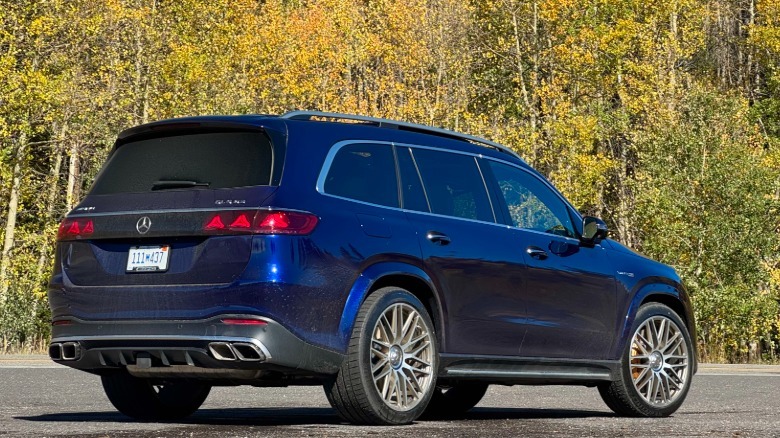
Visually, the 2027 GLS is characterized by a "star-studded" design philosophy. The headlamps now feature dual stacked, three-pointed star daytime running lights, and the taillights incorporate a similar tri-star motif. A controversial black plastic grille surround has been introduced, a design choice that has sparked debate among brand purists who favor the more understated, clean lines of the outgoing model.
Under the hood, the AMG GLS63 retains its legendary hand-built 4.0-liter twin-turbocharged V8, churning out a staggering 603 horsepower and 627 lb-ft of torque. While the raw output remains unchanged from previous iterations, internal revisions have been made to optimize efficiency and response. For the first time, the GLS63 gains a dedicated launch control system, allowing this 6,118-pound machine to catapult from 0 to 60 mph in a claimed 3.9 seconds.

Chronology of the Refresh
The rollout of the 2027 Mercedes-Benz SUV lineup has been methodical. It began with the standard GLE-Class, followed by the high-performance AMG GLE53 PHEV, and culminated in the reveal of the GLS flagship.
- Early 2027: Mercedes-Benz initiates the transition phase for the GLS, aligning its technical specs with the GLE refresh, including the integration of the "Superscreen" infotainment architecture and updated air suspension components.
- Mid-2027: The official press drive event takes place in the mountains of Colorado, providing journalists the first opportunity to test the limits of the revised powertrain and handling characteristics on diverse terrain.
- Late 2027: Full-scale production reaches dealerships nationwide, with the base GLS450 model entering the market at a starting price of $95,500, while the performance-focused AMG variants command a significantly higher premium, often exceeding $156,000 before options.
Supporting Data and Technical Specifications
To understand the GLS63, one must look at the numbers. It is a vehicle that weighs over three tons, yet it manages to out-accelerate most sports cars from a decade ago.

| Feature | Specification |
|---|---|
| Engine | 4.0L Biturbo V8 (Hand-built) |
| Horsepower | 603 hp |
| Torque | 627 lb-ft |
| 0-60 MPH | 3.9 seconds |
| Curb Weight | 6,118 lbs |
| Starting Price | ~$156,800 |
The powertrain is supported by the AMG Ride Control+ air suspension, which uses active roll stabilization to mitigate the natural body lean of such a tall, heavy vehicle. The optional carbon-ceramic brake package, featuring 15.8-inch front rotors, provides immense stopping power, though testing has shown these brakes to be highly sensitive and occasionally difficult to modulate in daily driving scenarios.
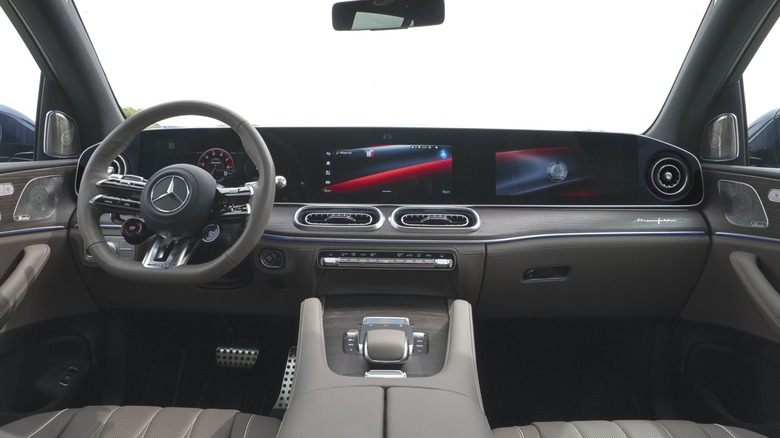
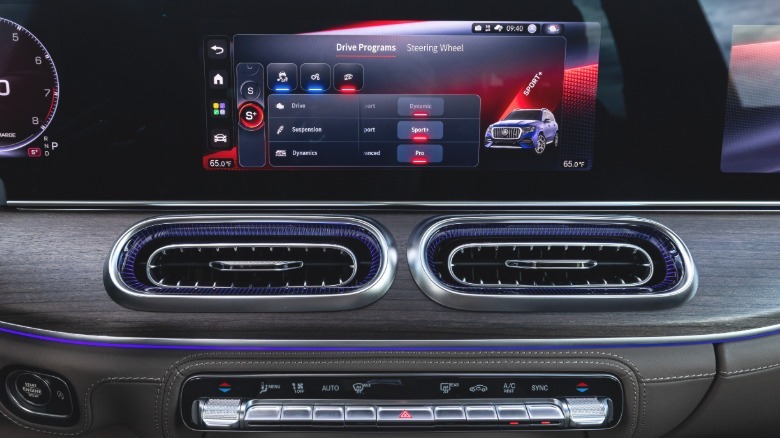
Inside, the cabin features the Mercedes "Superscreen"—three 12.3-inch displays housed behind a continuous glass panel. While visually impressive, the implementation has drawn criticism for its ergonomic shortcomings, particularly the squat nature of the center display and the lack of physical controls for essential seat adjustments, forcing users to navigate through sub-menus on a touch interface.
Official Responses and Engineering Rationale
Mercedes-AMG maintains that the refinements made to the 2027 GLS63 were driven by a need to keep the model relevant in an era of rapid electrification and digital integration. Engineers point to the new, cloud-based air suspension damper controls as a major step forward in ride comfort, claiming that the system can adapt to road imperfections in milliseconds.
Regarding the design changes, Mercedes designers argue that the new star-shaped lighting signatures and blacked-out trim elements are necessary to establish a cohesive "family face" across the brand’s global portfolio. When questioned about the size of the screens and the reliance on touch-sensitive controls, company representatives suggest that this is the future of the luxury interface, prioritizing a minimalist, glass-heavy aesthetic that appeals to younger, tech-forward buyers.
However, there is an underlying sense that the "competition" has influenced the direction of the GLS63. The presence of the Cadillac Escalade-V, with its supercharged 682-horsepower V8, has undeniably put pressure on the engineers in Affalterbach. By introducing launch control to the GLS63, Mercedes is clearly making a statement: despite its luxury focus, the GLS is still a member of the "Performance First" family.
Implications: The Future of the "Big Boy" SUV
The 2027 Mercedes-AMG GLS63 is not merely a car; it is a signal of status. The implications of this vehicle’s existence are twofold:
- The Persistence of Internal Combustion: Despite the industry’s pivot toward electric vehicles, the continued development of the M177 Evo V8 demonstrates that there remains a lucrative, albeit shrinking, market for high-performance internal combustion engines. Mercedes is catering to a segment of buyers who prioritize the emotional experience—the sound, the vibration, and the mechanical drama—over pure efficiency.
- The Digital Divide in Luxury: The interior of the 2027 GLS highlights a growing tension between traditional luxury and digital immersion. While the leatherwork, materials, and build quality are indisputably world-class, the reliance on a "Superscreen" that lacks intuitive functionality for basic tasks (like seat adjustments) suggests that technology is being implemented for the sake of novelty rather than user experience.
Ultimately, the GLS63 represents the pinnacle of excess. It is a vehicle that no one truly needs, which is exactly why it is so desirable. It is designed for the individual who views the world through the lens of capability—someone who demands that their family hauler be able to sprint like a drag racer and pamper like a limousine.
While the handling on wet, leaf-strewn mountain roads may reveal the limitations of its massive curb weight, the GLS63 remains a triumph of engineering. It manages to deliver a level of performance that is objectively ridiculous, yet subjectively exhilarating. Whether or not it is the "correct" choice in a world of tightening regulations and increasing environmental awareness is a question that the target market is likely to ignore. For the buyer who has the means to fuel a 603-horsepower V8 and the desire to make an impression at the private-school drop-off, the 2027 Mercedes-AMG GLS63 is, quite simply, the only vehicle that matters.
