

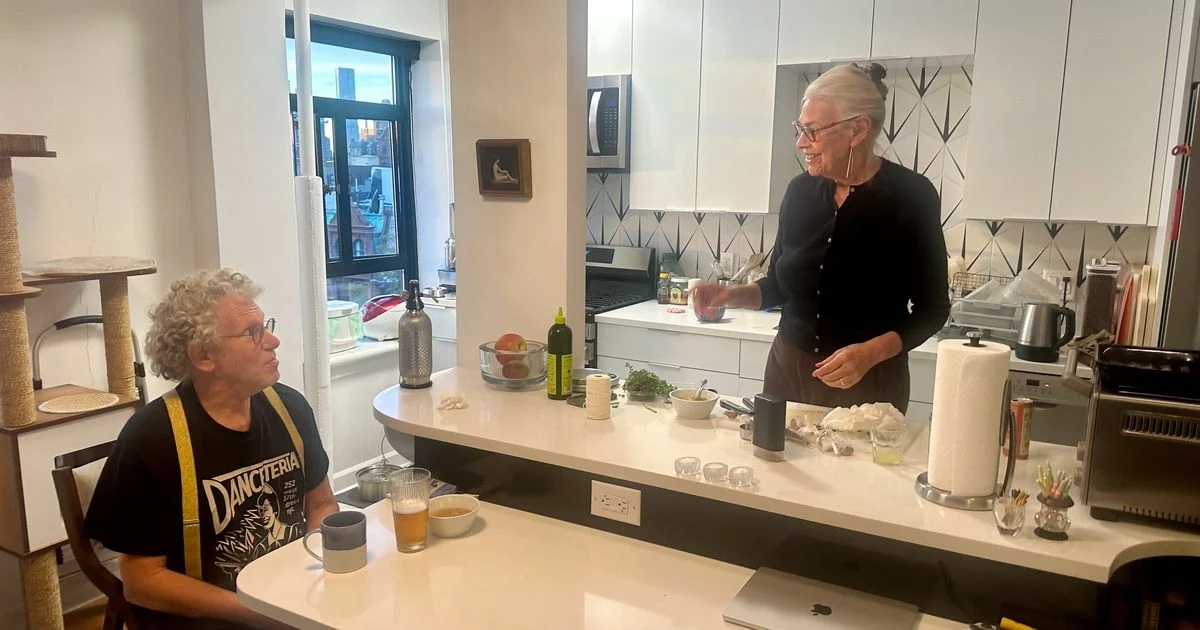
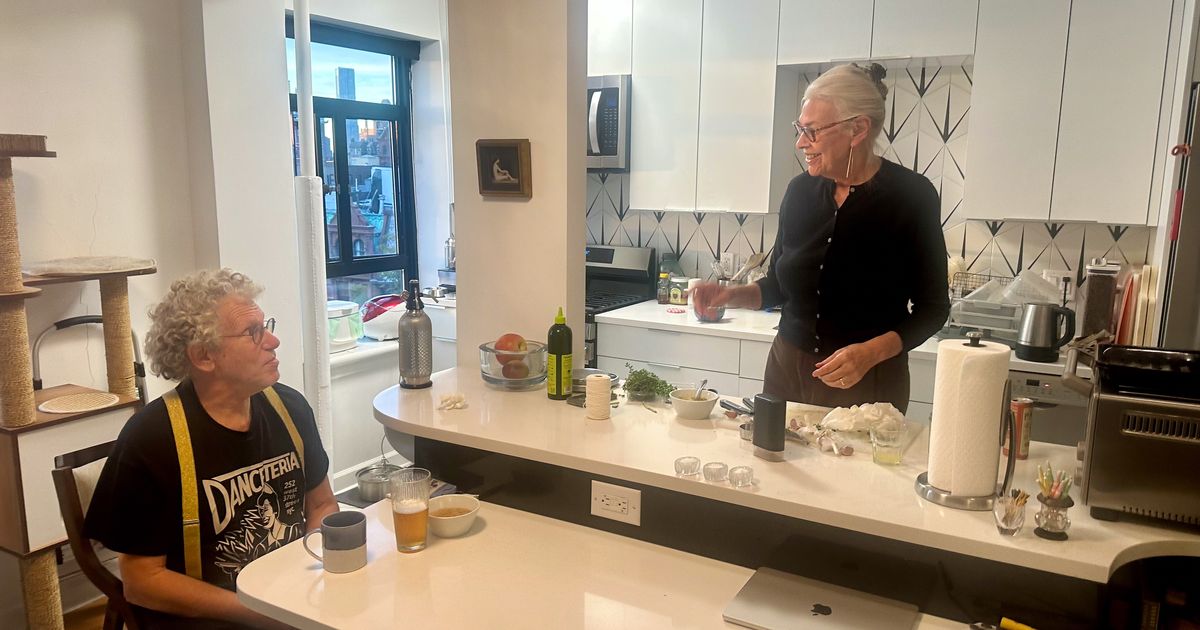
In the dense, competitive real estate landscape of New York City, the traditional markers of a successful marriage—shared space, synchronized schedules, and a unified aesthetic—are increasingly being challenged by a pragmatic, modern alternative. For Sarah Crichton, a book editor, and Len Berman, a retired IBM research scientist, the secret to marital bliss isn’t found in compromise, but in vertical separation. The couple, both divorcees in their 70s, maintain a unique living arrangement: they are married, yet they occupy two separate units in the same Brooklyn Heights co-op. Their home base consists of Unit 8J, where Len resides, and Unit 7G, just one floor below, where Sarah lives.
A Daily Routine of "Upstairs-Downstairs"
On any typical morning in Brooklyn Heights, the rhythm of their life begins at 6:30 a.m. Sarah wakes up and ventures out for a long morning walk. Upon her return, she checks on Len—who is often still lingering in bed—before heading down to her own seventh-floor sanctuary to prepare coffee for two. A short time later, Len descends the staircase, traversing the building’s spine to join his wife for their morning ritual: coffee and a spirited round of cards.
This "upstairs-downstairs" lifestyle is not the result of estrangement, but of deliberate design. It is a calculated response to the realities of merging two long-established lives in late adulthood. Their routine is fluid, characterized by an absence of formal knocking. They even installed the same lock on both front doors to ensure that a single key grants access to both worlds, solving the practical problem of Sarah’s penchant for misplacing her keys.
A Chronology of Converging Paths
The seeds of this arrangement were sown in January 2020, when the couple first met on OkCupid. At the time, Sarah was living in a Boerum Hill brownstone, and Len was navigating a transitionary period, subletting an apartment on the Upper West Side while his new Brooklyn Heights unit underwent a two-year renovation.
When the COVID-19 pandemic necessitated a citywide lockdown, the trajectory of their relationship accelerated. Len moved into Sarah’s brownstone to avoid isolation, but the living arrangement was fraught with the invisible ghosts of past relationships. Sarah notes that the space felt uncomfortable, as her ex-husband had previously resided there, and Len never quite felt that the environment was truly his own.
By the spring of 2022, Len’s eighth-floor unit was finally ready. He moved in with a sense of profound excitement, having spent decades in a previous marriage without ever having a space that was entirely his to curate. As the couple fell deeper in love and officially married later that fall, Sarah began spending the majority of her nights at Len’s place. However, the honeymoon phase hit a structural snag: the aesthetics of their respective lives were diametrically opposed.
Aesthetics and "The Grid"
The tension in their living situation is, at its heart, a matter of interior design philosophy. Len’s apartment is the physical manifestation of a mathematician’s mind. It is defined by stark white walls, an abundance of tile, and industrial shelving units sourced from Uline catalogs. The space features wire grid-wall panels—typically reserved for retail displays—that house an eclectic array of items: a Mad Hatter top hat, cartoonish paintings, bungee cords, retractable tape measures, and a surplus of dog biscuits for visiting pets.
To the outside observer, it resembles a gallery crossed with a Costco warehouse. It is an environment of intense personal expression, one that Len describes as "an orderly sort of apartment" that is, paradoxically, "totally unorderly."
Sarah’s tastes, by contrast, lean toward the traditional. As an editor, she surrounds herself with warm colors, Central Asian patterned rugs, and mid-century-modern furniture. Her home is "classic New York," characterized by a sense of calm and organization that contrasts sharply with the "mad scientist" laboratory one floor above.
Financial and Logistical Implications
The couple’s decision to maintain two apartments was not merely an aesthetic choice, but a logistical masterstroke facilitated by the unique real estate market in their neighborhood. Their co-op is subject to a complex land-lease agreement, which keeps property values at approximately half of what one would typically expect in Brooklyn Heights. Consequently, the combined cost of maintaining two units remains lower than the market rate for a single, equivalent two-bedroom apartment in the area.
Their financial management is as distinct as their living quarters: they maintain separate bank accounts for individual mortgages and maintenance fees, while pooling resources for groceries and a shared housekeeper through a joint account. Even their domestic labor is divided by aptitude—Sarah manages the laundry sorting, while Len handles the folding.
The Philosophical Case for Separate Spaces
When asked about their unconventional setup, the couple is quick to dismiss any notion of it being a sign of marital instability. On the contrary, they view it as the "most ideal situation" imaginable. "We both get to express ourselves without oppressing the other," Len observes.
Psychologically, the arrangement serves as a safety valve. While they maintain a strict rule—they never sleep apart—having the ability to retreat to one’s own space after a disagreement is, in their words, "fantastic." Sarah notes that when she feels frustrated, she finds comfort in being surrounded by the objects she loves—objects that simply don’t exist in Len’s industrial-themed eighth-floor unit.
The Inevitable Encroachment of Domesticity
Despite the initial goal of maintaining distinct identities, the two apartments are beginning to blend. Sarah’s influence is slowly permeating the eighth floor. A television has been installed in the bedroom, and the hallway is now lined with her favorite books. Perhaps most notably, her late mother’s Che Guevara poster now hangs in the entryway—a bold statement of personality in a space once defined entirely by geometric precision.
The negotiation continues. When Len recently proposed expanding his industrial grid system over the sofa, Sarah firmly put her foot down: "Enough with the grid!" She remains hopeful that they will eventually find a large-scale piece of art to anchor the living room. Len, ever the pragmatist, has a different vision, proposing a tripod and projector to turn the living room wall into a home cinema.
Implications for Modern Living
The Crichton-Berman marriage serves as an informal case study in the evolution of long-term partnership in the 21st century. By prioritizing individual autonomy alongside marital commitment, they have avoided the common trap of the "domestic compromise," where both parties end up dissatisfied with their shared environment.
Their arrangement highlights a growing trend among older, independent-minded couples who reject the notion that a singular, shared domicile is the only valid expression of love. By maintaining a literal "buffer zone" between their private lives, they have managed to preserve the novelty of their relationship. They are not merely housemates or neighbors; they are partners who choose to visit one another every day, effectively turning their marriage into a perpetual, yet comfortable, courtship.
As they move forward, the question of whether they will ever fully merge their lives into a single, larger home remains open. With another unit in the building—8G—currently on the market, the temptation to expand their footprint is present. However, for now, the "upstairs-downstairs" dynamic is working perfectly. It provides the intimacy of a shared life with the quiet sanctuary of individual autonomy, proving that in marriage, sometimes the best way to stay together is to have the space to occasionally be apart.
