

NEW YORK — In a move that blurred the lines between a corporate keynote and a revolutionary rallying cry, Ben Cohen, the co-founder of the iconic ice cream brand Ben & Jerry’s, took the stage at Advertising Week New York on October 6, 2026. However, he wasn’t there to celebrate the brand’s record-breaking sales or its latest flavor profile. Instead, Cohen issued a high-stakes "creative brief" to the world’s leading marketers and communicators: help save the activist soul of Ben & Jerry’s from its new corporate parent.
The address marked a significant escalation in a long-simmering tension between the brand’s founding vision and the realities of modern corporate governance. Cohen’s appearance at the premier advertising event served as a public indictment of the Magnum Ice Cream Company, the entity that now oversees Ben & Jerry’s following Unilever’s massive spin-off of its ice cream division.
Main Facts: A Brand at a Crossroads
At the heart of the controversy is the independence of Ben & Jerry’s board of directors—a unique structural safeguard established when Unilever acquired the company in 2000. Under that agreement, while Unilever (and now Magnum) owned the financial assets, an independent board retained the authority to protect the brand’s social mission and brand integrity.
According to Cohen, that agreement is being systematically dismantled. He alleges that Magnum, now a standalone public company, has moved to stifle the brand’s voice on sensitive geopolitical and domestic issues. Specifically, Cohen pointed to instances where the parent company allegedly blocked the brand from speaking out on the conflict in Palestine and the political maneuvers of the Trump administration.
"Ben & Jerry’s has spent decades proving a brand can take a stand and still sell a lot of ice cream," Cohen told the audience. "Now, that stand is at risk."
The conflict represents a landmark case in the world of Environmental, Social, and Governance (ESG) business models. It pits the founders’ "linked prosperity" philosophy against the fiduciary duties of a publicly traded company focused on shareholder returns and risk mitigation.
Chronology: From Gas Station to Global Activist
To understand the gravity of the current conflict, one must trace the evolution of Ben & Jerry’s from its humble beginnings in a renovated Burlington, Vermont, gas station in 1978.
The Birth of the "Peace Pop" (Late 1980s)
The brand’s foray into radical activism began in earnest during the waning years of the Cold War. In the late 1980s, the company launched the "Peace Pop," a chocolate-covered ice cream bar on a stick. Cohen noted that this was the moment the company realized its packaging was more than just a wrapper; it was a medium for mass communication.
"We decided that our packaging could be used as media," Cohen recalled. "We could use it to communicate with customers, instead of it just being a treat."
1% for Peace (1988)
Following the Peace Pop, the company launched the "1% for Peace" initiative. The goal was audacious: to redirect one percent of the U.S. national defense budget toward peace-promoting projects. At the time, the move was met with internal resistance. Upper-level management was divided, with some fearing that suggesting a cut to the Pentagon budget would alienate customers and damage the brand.
"This was before the ‘socially responsible business’ terms were even coined," Cohen explained. "Business did not do that back then."
The Unilever Acquisition (2000)
When Unilever purchased Ben & Jerry’s for $326 million in 2000, it was a first-of-its-kind deal. To preserve the brand’s identity, a legally binding agreement was reached that allowed Ben & Jerry’s to maintain an independent board of directors. This board was tasked with overseeing the company’s social mission, ensuring that the "activist" DNA remained intact even under the umbrella of a global conglomerate.
The Magnum Spin-off (2024-2025)
The current crisis was precipitated by Unilever’s decision to spin off its entire ice cream portfolio—including Ben & Jerry’s, Magnum, and Cornetto—into a standalone entity known as the Magnum Ice Cream Company. As Magnum sought to establish its own identity and stabilize its stock price, the friction with Ben & Jerry’s independent board intensified, culminating in the legal and public relations standoff seen today.
Supporting Data: The Value of Authenticity
The argument that activism hurts the bottom line is frequently refuted by Ben & Jerry’s financial performance. Cohen argues that the brand’s willingness to take "controversial" stands is exactly what drives its commercial success.
- Financial Growth: Despite—or perhaps because of—its outspoken nature, Ben & Jerry’s reported global sales of $1.1 billion in 2025.
- Brand Trust: The company ranked No. 2 on the 2023 Authenticity 500 brand index, trailing only Patagonia. This ranking suggests that consumers do not just buy the ice cream; they buy the perceived integrity of the company.
- The Three-Part Mission: The brand operates on a "tripartite" mission: Product, Economic, and Social. Cohen highlighted that these are laid out horizontally in company documents to signify they carry equal weight.
Cohen’s philosophy is rooted in the idea that emotional advertising is no substitute for real-world action. "Having a social mission, and then being attacked, yet doing it over and over—that’s what created this amazingly strong brand," he said. "That and some really great ice cream."
Official Responses: A War of Words
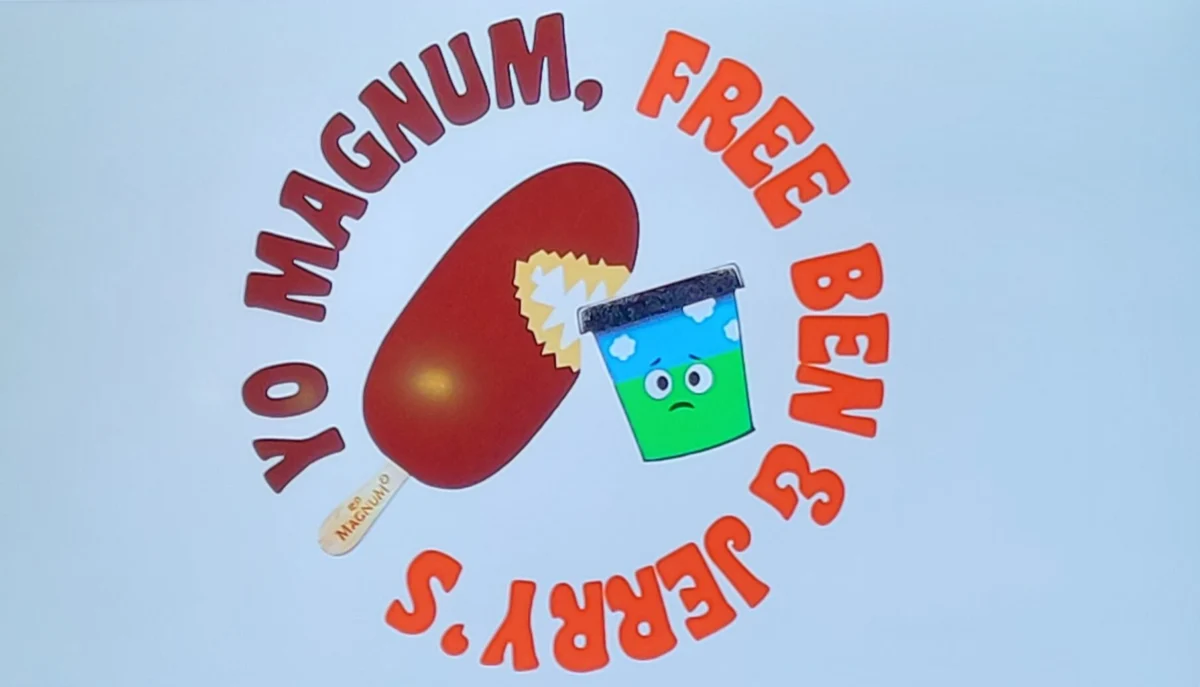
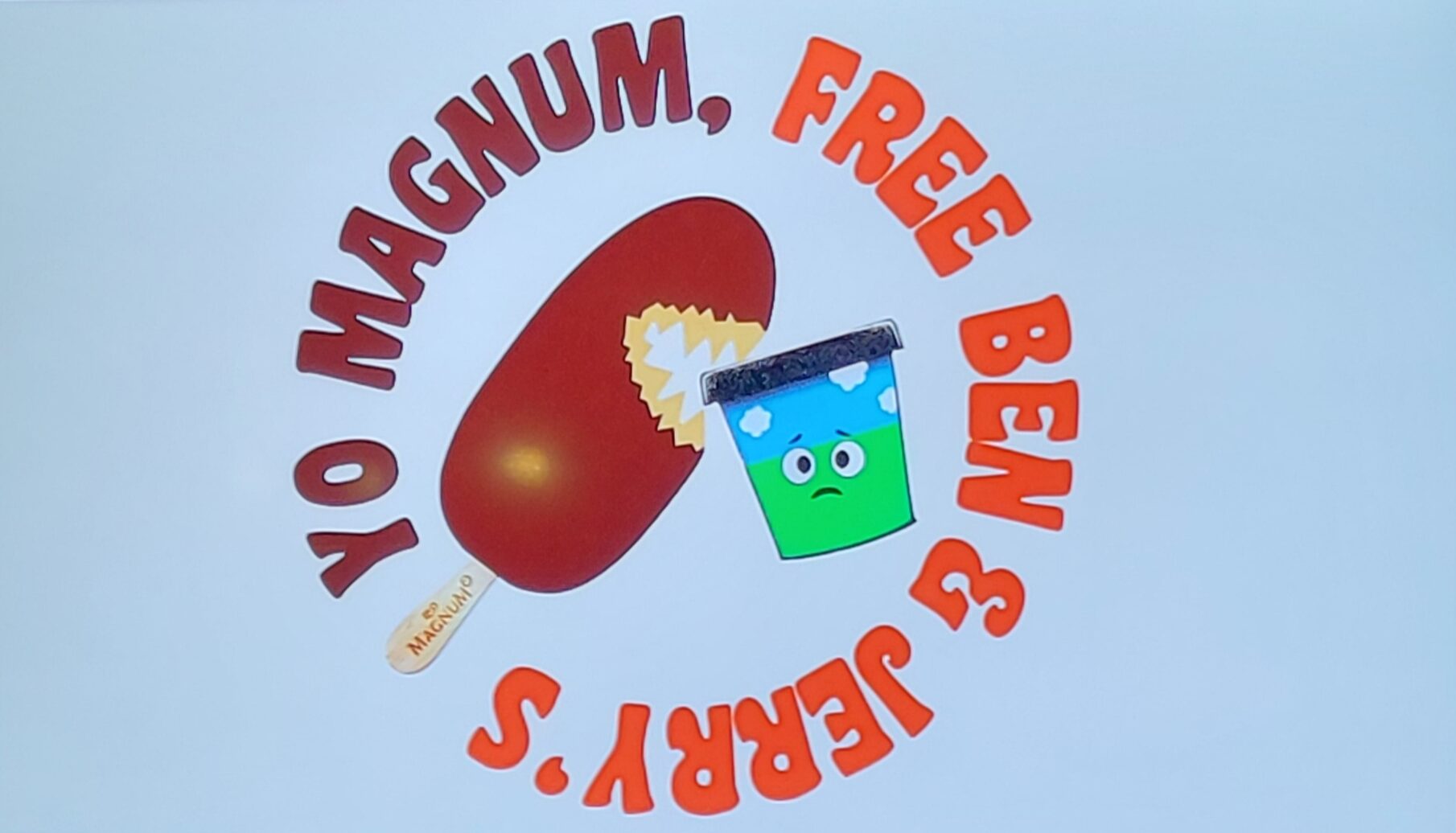
The tension has moved beyond internal boardrooms and into the public eye. Cohen has launched the "Free Ben & Jerry’s" campaign, a multi-pronged PR offensive designed to pressure Magnum into honoring the original 2000 independence agreement.
The Co-Founder’s Allegations
Cohen claims that Magnum’s leadership has "censored" the brand. He cited the parent company’s refusal to allow the board to issue statements regarding the humanitarian crisis in Gaza and its attempts to silence commentary on U.S. domestic policy. Cohen described the initial attempts to resolve these issues as "polite requests," which have now evolved into a "guerrilla marketing" war.
Magnum’s Rebuttal
A spokesperson for the Magnum Ice Cream Company has consistently denied these allegations in statements to the media. The company maintains that Ben & Jerry’s remains a core part of its portfolio and that they have "always respected" the brand’s social mission.
"Ben & Jerry’s is not for sale," the spokesperson stated. "We continue to support the brand’s commitment to its social mission while ensuring that we operate within the framework of a publicly traded company responsible to all its stakeholders."
The "Free Ben & Jerry’s" campaign has already garnered significant international attention, with over 200 articles in the U.S. and 80 in Europe. Cohen noted a particular focus on the Netherlands, where Magnum is incorporated. The campaign there utilizes the Dutch idiom, "De aap komt uit de mouw," which translates to "the monkey comes out of the sleeve"—a phrase used when a hidden truth or a person’s true character is finally revealed.
Implications: The Future of the Activist Brand
The battle over Ben & Jerry’s is more than just a dispute over ice cream; it is a bellwether for the future of corporate social responsibility.
A Threat to the Movement
Cohen’s primary concern is the precedent this sets for other "B-Corp" style businesses. "Ben & Jerry’s is a leader for socially conscious business," he warned. "If you cut down the leader, it harms the movement." If a brand as large and established as Ben & Jerry’s can have its voice silenced by a parent company, it suggests that "purpose-led" business models may only be tolerated as long as they don’t touch on truly divisive issues.
The "Guerrilla Marketing" Contest
In a final appeal to the Advertising Week audience, Cohen invited creative professionals to join the fight. He announced a contest for the best guerrilla marketing campaign to "Save Ben & Jerry’s." The prize—free ice cream for life and the "bragging rights for saving a movement"—is a tactical move to harness the power of the very industry that helped build the brand.
The PR Industry’s Role
For communicators and marketers, the Ben & Jerry’s saga offers a masterclass in brand resilience. It poses a difficult question: Is a brand’s "purpose" a marketing tool to be managed, or a core identity to be defended at all costs?
As the "Free Ben & Jerry’s" campaign continues to gain momentum, the marketing world is watching closely. The outcome will likely determine whether the "independent board" model is a viable way to protect brand integrity in an era of corporate consolidation, or if the "Velveteen Rabbit" of activist brands is destined to be stuffed back into the corporate toy box.
For now, Ben Cohen remains defiant. By taking the fight to the heart of the advertising industry, he is betting that the public’s hunger for authentic, outspoken brands will ultimately outweigh the corporate desire for silence.
