

In the high-stakes, multibillion-dollar landscape of the global energy drink market, the hierarchy has long been dominated by a handful of "Goliaths." Red Bull and Monster Energy have historically controlled the lion’s share of the shelf space, while Celsius has recently ascended to "heavyweight" status through its strategic partnership with PepsiCo. For any emerging brand, the barriers to entry are not merely financial but psychological; breaking through the noise requires more than just a functional product—it requires a radical approach to brand awareness and consumer loyalty.
Accelerator Active Energy, a rising "challenger brand," is currently navigating this crowded marketplace by leaning into a strategy defined by agility, authenticity, and equity-based partnerships. Led by Vice President of Marketing Zach Schotz, the brand is eschewing traditional, transactional advertising in favor of a more integrated model that leverages celebrity influence, regional retail precision, and a bold visual overhaul.
Main Facts: The Strategic Pivot of a Challenger Brand
The primary challenge facing Accelerator Active Energy is a fundamental one: low brand awareness. In an industry where consumers often reach for the most familiar logo, being the "unknown" option is a significant hurdle. "Our brand awareness is low. That’s just the truth of it," Schotz admitted in a recent industry discussion. "It makes every small decision big on how we can get more awareness."
To combat this, Accelerator has implemented a multi-pronged strategy:
- Equity-Based Endorsements: Moving beyond the standard "pay-for-post" ambassador model to offer celebrities a stake in the company’s success.
- Product Co-Creation: Involving high-profile partners in the actual development of flavors to ensure authentic marketing narratives.
- The "NIL" and Micro-Influencer Engine: Utilizing Name, Image, and Likeness (NIL) deals with collegiate athletes to drive localized content and retail "trial."
- Visual Identity Refresh: Transitioning from minimalist packaging to vibrant, high-contrast designs to increase "shelf pop" and sales velocity.
- Regional Focus: Prioritizing the "Central" United States (the "Madden Belt") where retail distribution is strongest, rather than attempting a diluted national campaign.
Chronology: From BodyArmor Roots to Accelerator’s Rise
The strategic DNA of Accelerator is deeply rooted in the previous successes of its leadership. Zach Schotz’s tenure at BodyArmor, the sports drink brand that famously challenged Gatorade before being acquired by Coca-Cola for $5.6 billion, provided the blueprint for Accelerator’s current trajectory.
At BodyArmor, the team discovered that the traditional celebrity endorsement was dying. Consumers, particularly Gen Z and Millennials, had become skeptical of stars holding products they clearly didn’t use. The solution was "equity shares." By giving athletes a piece of the company, the relationship shifted from a chore to a mission.
When Accelerator founder Lance Collins—a veteran of the beverage industry who previously created brands like Fuze and CORE—launched Accelerator, he brought this philosophy with him. The timeline of the brand’s recent growth can be traced through its high-profile signings:
- The Kelce Connection: Leveraging a pre-existing relationship between Collins and NFL star Travis Kelce, the brand secured a cornerstone partner just as Kelce’s cultural capital reached an all-time high.
- The Roster Expansion: Following Kelce, the brand quickly added Jalen Hurts (NFL), Aaron Judge (MLB), Paula Badosa (Tennis), and social media powerhouse Olivia Dunne (Gymnastics).
- The 2024 Pivot: Most recently, the brand expanded into the political-social sphere by partnering with Kai Trump, the granddaughter of President Donald Trump, to tap into a specific, highly engaged demographic.
This chronological expansion of the "Accelerator family" has been paired with a shift in physical appearance. The brand started with a clean, white-can aesthetic—a common trend in "clean energy" marketing. However, data soon showed that in the chaotic environment of a gas station cooler, "clean" often translated to "invisible." This led to the recent 2023-2024 package refresh.
Supporting Data: Measuring the "Pop" on the Shelf and the Screen
In the world of CPG (Consumer Packaged Goods), data is the ultimate arbiter of strategy. Accelerator’s recent shifts have yielded measurable results that validate their "creative and nimble" approach.
The Packaging Effect
The most striking data point comes from the brand’s visual redesign. By moving away from the white can to a color-coded, vibrant palette, Accelerator saw an immediate impact on the "velocity" (how fast a product moves off the shelf) of their SKUs.
- Overall Sales Increase: The brand reported a 4% to 10% year-over-year increase in sales across its flavor profile following the redesign.
- The Tropical Punch Case Study: This specific flavor underwent the most radical change, moving from a white can to a full-wrap vibrant green. It is now one of the brand’s top three sellers.
- Flavor Success: Other flavors like Peach Paradise and Cherry Limeade saw similar double-digit volume increases, proving that in a retail environment, visual "interruption" is as important as the liquid inside.
Digital and E-Commerce Performance
While retail is the long-term goal, Amazon serves as the brand’s laboratory.
- Blue Raz Slush (Kai Trump): The launch of this flavor on Amazon was described as "incredible," serving as a proof of concept for the "ambassador co-creation" model.
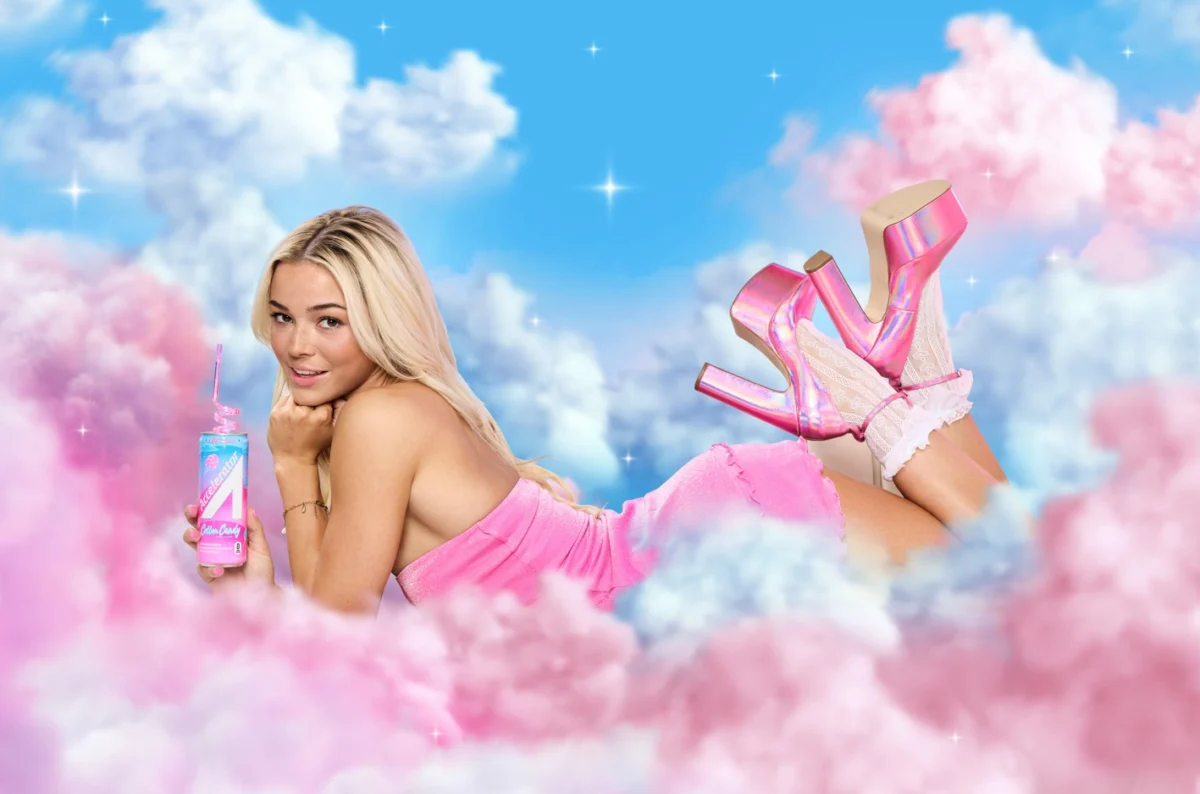
- Cotton Candy (Olivia Dunne): This flavor immediately became the No. 1 SKU on e-commerce platforms. Once it rolled out to physical retail, it maintained its status as the top-velocity SKU for the brand.
- National Olivia Day: A targeted campaign on June 11th offered $2 Venmo rebates to anyone named Olivia who purchased the drink. This "fun culture moment" directly drove retail trials and provided the brand with a surge of user-generated content (UGC).
Official Responses: Insights from Zach Schotz
Throughout the brand’s evolution, Zach Schotz has been vocal about the necessity of being "scrappy." His insights provide a window into the mind of a marketer fighting for oxygen in a category dominated by billion-dollar budgets.
On the importance of credibility, Schotz notes: "It’s this instant credibility that we’re able to get from these partners, especially if they’ve never heard of the brand before, but they know the partner. It’s not a coincidence that Kansas City is one of our most successful markets." (Referring to the Travis Kelce effect).
Regarding the authenticity of flavors, Schotz emphasizes that the athletes aren’t just faces; they are product developers. "The ambassadors co-create flavors with Accelerator, which helps to show consumers that the partnerships are authentic and not just transactional. Livvy [Dunne] leaned in and promoted [Cotton Candy] and we were able to see people go to the store and actually buy the product."
On the geographical strategy, Schotz is pragmatic. He acknowledges that Accelerator cannot be everywhere at once. The brand focuses on the "Central" region—Texas, Missouri, Kansas, Iowa, and Minnesota—utilizing retailers like QuikTrip, Hy-Vee, and Walmart. "That dictates a lot of our marketing… is this driving awareness to the right person specifically to consumers that can purchase at retail? If they can’t, then making sure it is Amazon, which has been our largest channel."
Implications: The Future of the Energy Drink Market
The success of Accelerator Active Energy offers several broader implications for the beverage industry and the future of influencer marketing.
1. The Death of the "Passive" Influencer
Accelerator’s success suggests that the era of the "celebrity holding a can" is over. To compete with established giants, challenger brands must offer equity. When an athlete owns a piece of the company, their social media posts become more frequent, their "behind-the-scenes" content becomes more genuine, and their motivation to see the brand succeed in their local market (like Kelce in Kansas City) becomes a powerful business driver.
2. The Power of the "NIL" Micro-Influencer
By tapping into collegiate athletes with 1,000 to 50,000 followers, Accelerator is pioneering a "content-first" strategy. These athletes are used as a "content engine" to create authentic videos at the point of sale (retail shelves). This bridges the gap between digital awareness and physical purchase—a notoriously difficult transition for most brands.
3. Regionalism vs. Nationalism
Accelerator’s decision to pull back from "national" digital ads in favor of "regional" paid media is a sophisticated move. It recognizes that marketing spend is wasted if the consumer cannot find the product at their local gas station. This "hyper-local" approach allows a smaller brand to feel like a "big brand" within specific territories (like the Midwest), creating a stronghold that can later be expanded to the coasts.
4. The "Loud" Aesthetic Trend
The 4-10% sales boost from the packaging refresh signals a shift in consumer psychology. While "minimalism" was the trend of the late 2010s, the "maximalism" of the 2020s is taking over the beverage cooler. Brands that want to stand out must use bold colors and high-contrast designs to win the "three-second war" at the shelf.
In conclusion, Accelerator Active Energy is proving that a "challenger" doesn’t need to outspend the giants to win; it simply needs to be more integrated into the lives of its partners and more precise in its geographic and visual execution. As the brand continues to scale, its "equity-and-authenticity" model will likely become the standard for any new player entering the fiercely competitive world of functional beverages.
