

Introduction: A Discovery in the Delta
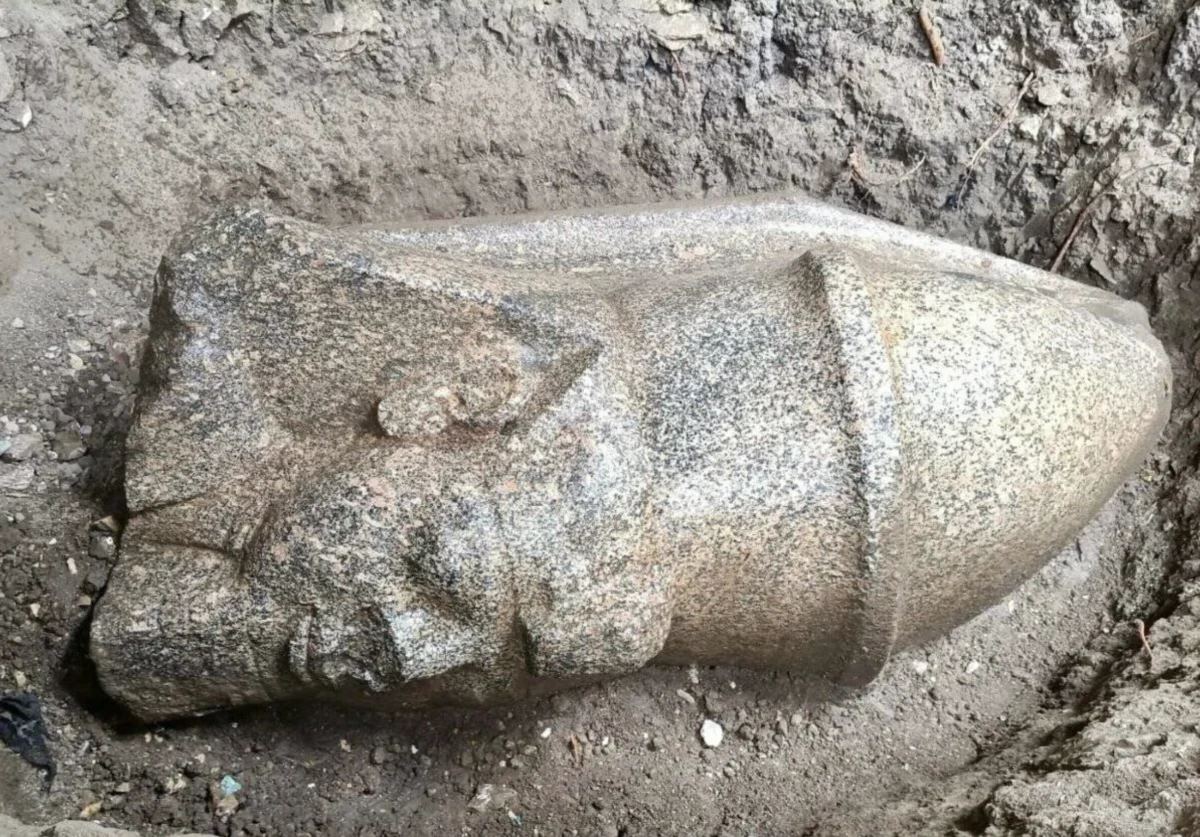
In a remarkable turn of events that underscores the enduring mystery of Egypt’s fertile Nile Delta, a routine excavation in the village of Behbeit El-Hagar has yielded a treasure trove of historical significance. A local landowner, while conducting work on his property, accidentally unearthed a monumental stone head, sparking an immediate intervention by the Egyptian Ministry of Tourism and Antiquities. What began as a singular discovery quickly escalated into a major archaeological campaign, revealing fragments of not one, but two massive statues representing Ramses II—the third pharaoh of the Nineteenth Dynasty and one of the most prolific builders in ancient history.
This discovery provides fresh insight into the architectural landscape of Behbeit El-Hagar, a site traditionally associated with the cult of the goddess Isis. As experts from the Supreme Council of Antiquities (SCA) continue to catalog the finds, the implications for our understanding of Pharaonic-era political and religious infrastructure in the Delta are profound.
The Main Facts: Anatomy of the Find
The initial discovery consisted of a colossal head carved from stone, measuring an imposing five feet and three inches in height. Upon closer inspection, archaeologists confirmed that the head wears the pschent—the iconic double crown of ancient Egypt. This crown, a dual-colored headpiece, served as a potent symbol of the unification of Upper and Lower Egypt, signifying the pharaoh’s absolute authority over the entire Nile Valley.
Preliminary analysis by the SCA suggests that the head is merely the tip of a much larger architectural project. Based on the proportions of the face and crown, experts estimate that the complete statue, once standing, would have reached a staggering height of approximately twenty-eight feet.
The site yielded further artifacts that solidify the connection to Ramses II, also known as Ramses the Great. Among the debris, researchers recovered a segment of a back pillar—a structural support common in Egyptian statuary—inscribed with the king’s Horus name: “Hor-ka-nakht-mery-maat” (The Strong Bull, Beloved of Ma’at). This specific titular nomenclature serves as an archaeological fingerprint, leaving little doubt as to the identity of the ruler depicted.
Chronology of the Excavation
The timeline of the discovery underscores the rapid mobilization of Egypt’s archaeological heritage experts.
- Initial Discovery: A landowner in Behbeit El-Hagar unearths a monumental head while clearing land. The report is promptly filed with local authorities.
- Assessment Phase: The Supreme Council of Antiquities dispatches a team of field archaeologists and Egyptologists to verify the provenance and period of the artifact.
- Expansion: Excavations are widened to encompass the surrounding area, leading to the identification of a second head and several architectural fragments.
- Documentation: Epigraphers and restorers begin the delicate process of cleaning and recording the inscriptions found on the pink granite blocks and the body segments.
- Ongoing Conservation: The fragments are currently being stabilized to prevent environmental degradation as the team prepares to transport them to a secure facility for further study and potential restoration.
Supporting Data: The Iconography of Ramses II
The sheer scale of the artifacts recovered at Behbeit El-Hagar offers a glimpse into the sophisticated artistic programs commissioned during the reign of Ramses II (c. 1279–1213 BCE). The recovery of a second head, this one adorned with the traditional nemes headcloth—the striped linen fabric associated with royalty—suggests that the site may have hosted a pair of colossal statues, perhaps flanking an entrance to a temple or a ceremonial precinct.
Furthermore, the discovery of an eight-foot body segment and a four-foot pink granite block provides essential context. The granite block, in particular, is a masterclass in royal propaganda. It bears the titles “Nesu-Bity” (King of Upper and Lower Egypt) and “Sa-Ra” (Son of Ra). The use of high-quality pink granite, a material transported over great distances from the quarries of Aswan, highlights the immense resources mobilized to construct these monuments in the Delta region.
Ramses II is famously documented as a ruler who engaged in a massive campaign of self-aggrandizement, erecting temples and colossal statues throughout his sixty-six-year reign. The presence of these monuments in Behbeit El-Hagar suggests that the pharaoh sought to extend his reach and divine legitimacy into the northern reaches of the Delta, mirroring his ambitious building projects in Thebes and Abu Simbel.
Official Responses and Administrative Oversight
Hisham El-Lithi, the secretary-general of the Supreme Council of Antiquities, has served as the primary spokesperson for the Egyptian government regarding the find. In official statements, El-Lithi praised the cooperation between the local landowners and the archaeological teams, emphasizing that the discovery is a testament to the ongoing importance of the Delta region in reconstructing the history of the New Kingdom.
The SCA has underscored that the site at Behbeit El-Hagar remains a top priority for conservation. Plans are being drafted to conduct a geophysical survey of the surrounding fields to determine if there are subterranean structures—such as temple foundations or pylons—that have yet to be uncovered. By employing ground-penetrating radar and other non-invasive technologies, the SCA hopes to create a complete map of the area before moving to more extensive physical excavations.
Implications: Re-evaluating the Temple of Isis
To fully grasp the magnitude of the Behbeit El-Hagar discovery, one must consider the site’s historical context. Behbeit El-Hagar is historically renowned for the Temple of Isis, a massive structure that, while largely in ruins, has long been recognized as a significant architectural feat of the Late Period. The temple is famous for its extensive use of granite, which deviates from the more common limestone construction found elsewhere in the Delta.
The emergence of two colossal Ramses II statues at this location presents a compelling historical puzzle. Did Ramses II initiate a monumental project here that was later expanded upon during the Ptolemaic period? Or were these statues moved to the site in antiquity to signify the pharaoh’s devotion to the goddess Isis?
The implication is that Behbeit El-Hagar may have been a more crucial religious and political hub than previously realized. If a significant temple complex dedicated to Ramses II existed here, it would alter the historical map of the Delta, suggesting that the region was not merely an agricultural breadbasket, but a site of intensive royal patronage and religious devotion.
The Future of the Find
As the excavation progresses, the international archaeological community is watching closely. The preservation of these statues offers a rare opportunity to study the manufacturing techniques of New Kingdom sculpture. Furthermore, the inscriptions on the back pillar and the granite blocks will undergo rigorous linguistic analysis, which may reveal new details about the local administrative structures of the time.
For the village of Behbeit El-Hagar, this discovery brings a renewed sense of pride and a potential shift in the local economy. The government has already signaled its intent to protect the site, and there is talk of establishing a local display or museum to house the fragments, ensuring that the history discovered in the fields remains accessible to the community.
Conclusion: The Persistence of History
The discovery in Behbeit El-Hagar serves as a potent reminder that the history of ancient Egypt is far from fully written. Every time the soil of the Nile Delta is disturbed, it risks revealing the silent giants of the past—statues that were designed to endure for eternity. The recovery of the Ramses II fragments is a victory for archaeology and a testament to the vision of a pharaoh who sought to cement his name in the annals of time.
As the dust settles on the excavation site, the focus now shifts to the long-term work of reconstruction and research. Whether these statues once stood as silent sentinels guarding a temple of Isis or as part of a sprawling royal complex dedicated to the king himself, they have succeeded in their original purpose: they have ensured that the name of Ramses the Great continues to be spoken, studied, and revered, thousands of years after his passing. The work in Behbeit El-Hagar will undoubtedly continue to yield answers, and perhaps, more questions, about the majesty of the Nineteenth Dynasty.
