

In the vibrant, evolving cultural landscape of Newark, New Jersey, few voices capture the intersection of personal narrative and societal commentary as poignantly as textile artist Patricia Dahlman. Featured in the latest installment of the Newark Museum of Art’s "Studio Snapshot" series—a digital initiative dedicated to highlighting the city’s thriving creative ecosystem—Dahlman’s work serves as a testament to the power of craft as a vehicle for political and emotional expression.
Through her intricate use of canvas, fabric, and thread, Dahlman transforms everyday objects and profound historical quotes into tactile sculptures that command attention. Her practice, deeply rooted in the materials of the domestic sphere, challenges viewers to reconsider their relationship with the world around them, particularly in an era defined by rapid change and intense social polarization.
The Intersection of Craft and Critique: Main Facts
Patricia Dahlman’s artistic output is characterized by a unique fusion of sculpture and textile art. By utilizing traditional sewing and embroidery techniques, she creates three-dimensional representations of items that range from mundane household objects to iconic textual citations. Her work is not merely decorative; it is a meticulous investigation of memory, language, and social justice.
The Newark Museum of Art has highlighted Dahlman as a cornerstone of its "Studio Snapshot" series, a curation designed to bridge the gap between the artist’s private workspace and the public eye. The series provides an intimate look at how local artists navigate the pressures of the contemporary art market while remaining tethered to their community roots.
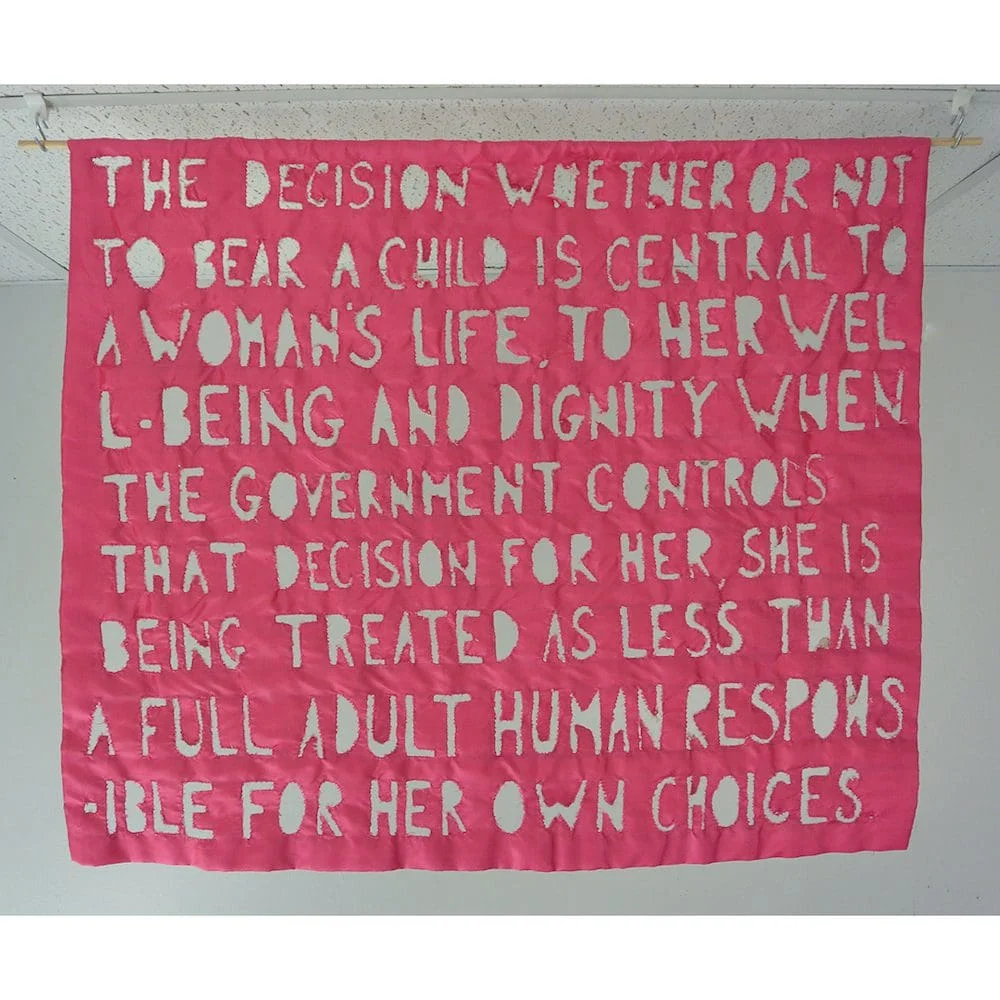
Dahlman’s creative process involves a deliberate slowing down of production. In a world saturated with digital ephemera, her insistence on the slow, laborious nature of hand-stitching acts as a form of resistance. Her pieces, such as the widely discussed "Quote from Ruth Bader Ginsburg" (2019), emphasize the weight of words and the significance of the individuals who speak them. By rendering historical or political sentiments in fabric, she elevates them from ephemeral soundbites to permanent, tangible artifacts.
A Legacy of Stitching: Chronology of an Evolving Practice
To understand the trajectory of Dahlman’s career, one must look at the evolution of her medium. Her work has moved from early explorations of domesticity to more overt engagements with public policy and the state of American discourse.
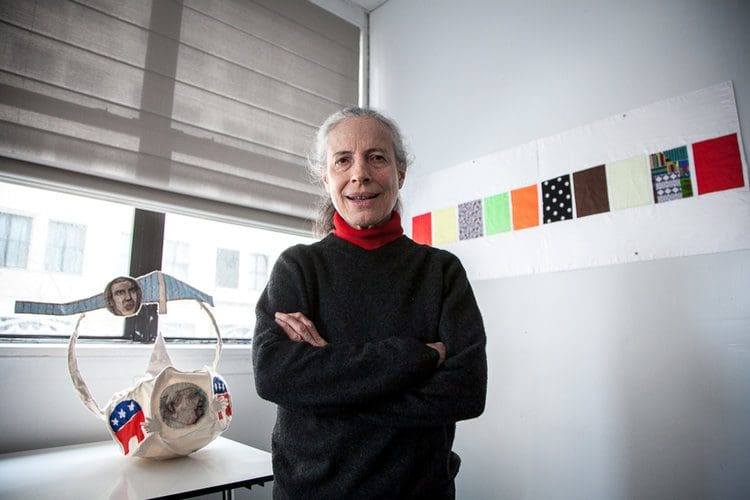
- Early Development: Dahlman’s foundational years were defined by an interest in the "domestic" as a site of power. She began by exploring the aesthetic of the everyday, questioning why certain objects—tools, appliances, and common utensils—are often relegated to the background of human experience.
- The Shift to Narrative: By the mid-2010s, her work began to integrate more complex textual elements. Recognizing the power of the written word, she transitioned from sculptural interpretations of objects to the literal transcription of influential quotes, using thread as her "ink."
- The 2019 Milestone: The creation of her Ruth Bader Ginsburg piece marked a significant pivot in her public recognition. The work, measuring 62" x 34" x 1", utilized canvas, fabric, and thread to immortalize the late Justice’s words. It became a focal point for viewers seeking art that engaged with the urgency of political discourse.
- The Newark Connection: Over the past several years, Dahlman has become an integral part of the Newark arts community. Her residency and continued presence in the city have influenced her perspective on urban resilience and the importance of localized creative hubs in fostering national conversations.
- Present Day: As of 2024, Dahlman continues to expand her repertoire, experimenting with scale and material density, further solidifying her reputation as a vital voice in American contemporary fiber art.
The Anatomy of the Work: Supporting Data and Materials
Dahlman’s process is as much about the physical toll of creation as it is about the intellectual labor. Her reliance on specific materials—canvas, industrial-grade thread, and wood backing—is intentional. She chooses these materials for their durability and their historical association with utility.
According to studio documentation, the average time investment for one of her medium-scale pieces is approximately 300 to 500 hours of labor. This "slow art" methodology is a direct response to the "fast fashion" and "fast content" cycles that currently dominate the global economy. By choosing to spend hundreds of hours hand-stitching a single quote, she imbues the text with a sense of gravity that would be impossible to achieve through mass-produced mediums.
The physical dimensions of her work are also significant. Her sculptures often occupy a space between 2D and 3D, protruding from the wall just enough to cast shadows, thereby creating an additional layer of depth. This creates an interactive experience for the viewer; as one moves around the piece, the text becomes distorted and re-aligned, mirroring the complexity of the political messages she explores.
Perspectives from the Studio: Official Responses
In the "Studio Snapshot" video, Dahlman reflects on the environment that nourishes her creativity. "Newark is a city of layers," she notes. "There is a history here that is both gritty and incredibly beautiful. When I am working, I feel that energy. It isn’t just about what I am sewing; it’s about the community that is surrounding me as I sew."
The Newark Museum of Art, in its curatorial notes, emphasizes the importance of providing a platform for local voices to define the cultural narrative. A spokesperson for the museum remarked, "Patricia Dahlman exemplifies the bridge between traditional craft and contemporary critical theory. By hosting this series, we aren’t just showing art; we are documenting the living history of Newark’s creative class."
The feedback from the art community has been largely focused on the accessibility of her work. Because her subjects—common objects and recognizable quotes—are familiar to the general public, her work avoids the elitist barrier often associated with abstract contemporary art. Critics have noted that Dahlman’s ability to make the "political personal" allows her to reach audiences who might otherwise feel disconnected from the gallery scene.

The Societal Impact: Implications of Textile Activism
The rise of fiber art in major galleries is not merely a trend; it is a fundamental shift in how we value labor and gendered creative practices. Historically, textile work was relegated to the realm of "craft" or "women’s work" and excluded from the "fine arts" canon. Dahlman’s success represents a reclamation of these techniques for high-level political discourse.
The Power of Domesticity
By using materials associated with the home to discuss the public square, Dahlman forces a confrontation between the private and the political. Her work suggests that the values we hold in our homes are the same values that dictate our national policy. When she stitches a quote, she is effectively "mending" the discourse, suggesting that the act of repair is both literal and metaphorical.
Sustaining the Local Ecosystem
Dahlman’s dedication to the Newark scene highlights the necessity of regional support structures for artists. In an era where many artists are priced out of major urban centers, Newark remains a beacon for creators looking to establish deep, meaningful roots. Her work serves as an advertisement for the city’s potential, proving that significant, nationally-recognized art can (and should) emerge from beyond the traditional boundaries of New York City or Los Angeles.
Future Trajectories
Looking ahead, the implications of Dahlman’s work suggest a broader trend in the art world toward "human-centric" creation. As artificial intelligence and digital art continue to proliferate, there is an increasing demand for the "mark of the maker." The inherent imperfections, the subtle variations in stitching, and the physical presence of thread will likely become even more valuable to collectors and museums seeking to preserve the history of human ingenuity.
Conclusion
Patricia Dahlman’s journey from a textile artist to a significant cultural observer in Newark is a compelling narrative of perseverance and skill. Through her contributions to the Newark Museum of Art’s "Studio Snapshot," she has invited us into a world where thread is more than a material—it is a voice.
As the viewer engages with her work, whether through a digital screen or in the physical space of a gallery, they are reminded that art is not just an object to be consumed. It is a process to be witnessed. Dahlman’s art asks us to pause, to look closer, and to recognize that the most powerful statements are often those that are hand-wrought, painstakingly assembled, and deeply connected to the humanity of the creator. In the tapestry of Newark’s future, Patricia Dahlman is undoubtedly one of the most vital threads.
