

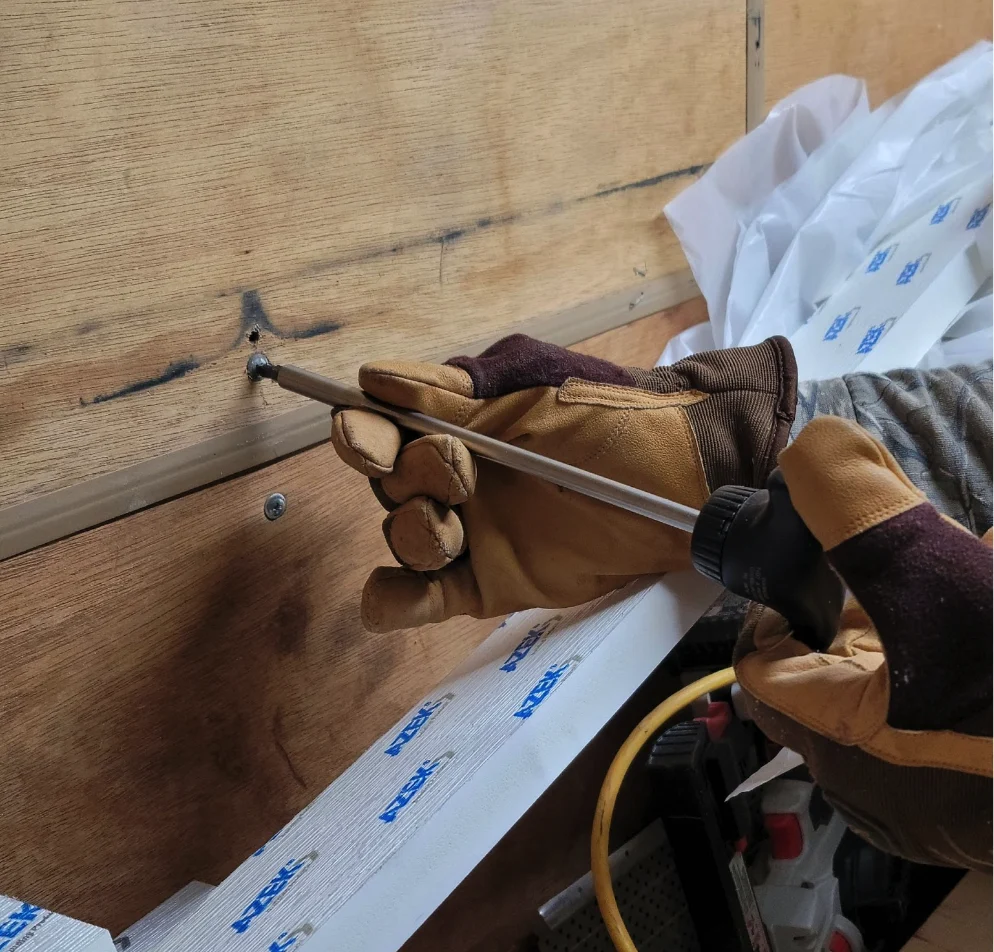
Whether you are performing precision automotive repairs, installing custom cabinetry, or simply driving a screw into dense hardwood, the right tool can make the difference between a seamless project and a frustrating ordeal. The best ratcheting screwdrivers are more than just manual hand tools; they are productivity boosters designed to maintain constant contact with fasteners, allowing users to apply significant torque without the need to reset their grip between every turn.
In this comprehensive evaluation, we tested the industry’s leading models—from ergonomic professional-grade drivers to compact, versatile kits—to determine which tools truly earn their place in your toolkit.
Main Facts: Why Ratcheting Screwdrivers Matter
The primary advantage of a ratcheting screwdriver is its efficiency. Traditional screwdrivers require the user to lift the tool, reposition the hand, and re-engage the screw head for every quarter or half-turn. This is not only time-consuming but can also lead to stripped screw heads and hand fatigue.
A ratcheting mechanism uses a gear-and-pawl system. When the user twists the handle forward, the pawl locks into the gear, driving the fastener. When the handle is twisted backward, the pawl skips over the gear teeth, allowing the handle to rotate while the bit remains stationary in the screw head. This "ratcheting" action allows for continuous driving, significantly reducing the physical effort required for high-torque applications.
Chronology of Our Testing Process
To ensure our findings reflect real-world performance, our team of testers conducted a rigorous, multi-stage evaluation over several weeks.
- Benchmarking Durability (Weeks 1-2): We subjected each screwdriver to high-torque stress tests by driving screws into various wood densities, including pine, ash, and dense walnut. We looked for mechanical failure, gear slippage, or handle degradation.
- Ergonomic Assessment (Weeks 3-4): Testers with varying hand sizes evaluated the comfort, grip texture, and the intuitive nature of the directional collar switches.
- Versatility and Storage Trials (Week 5): We assessed the ease of accessing onboard bit storage, the strength of magnetic retention, and the overall convenience of the bit-switching process.
- Specialized Application Testing (Week 6): We tested additional features, such as built-in wire strippers, loop benders, and low-profile capabilities in confined spaces.
Our Top Picks: Performance Data
1. Best Overall: Wera Kraftform Kompakt 27 RA 2 SB
The Wera Kraftform stands out for its exceptional engineering. The minimized ratcheting angle is a game-changer, requiring very little rotation to engage the next gear.
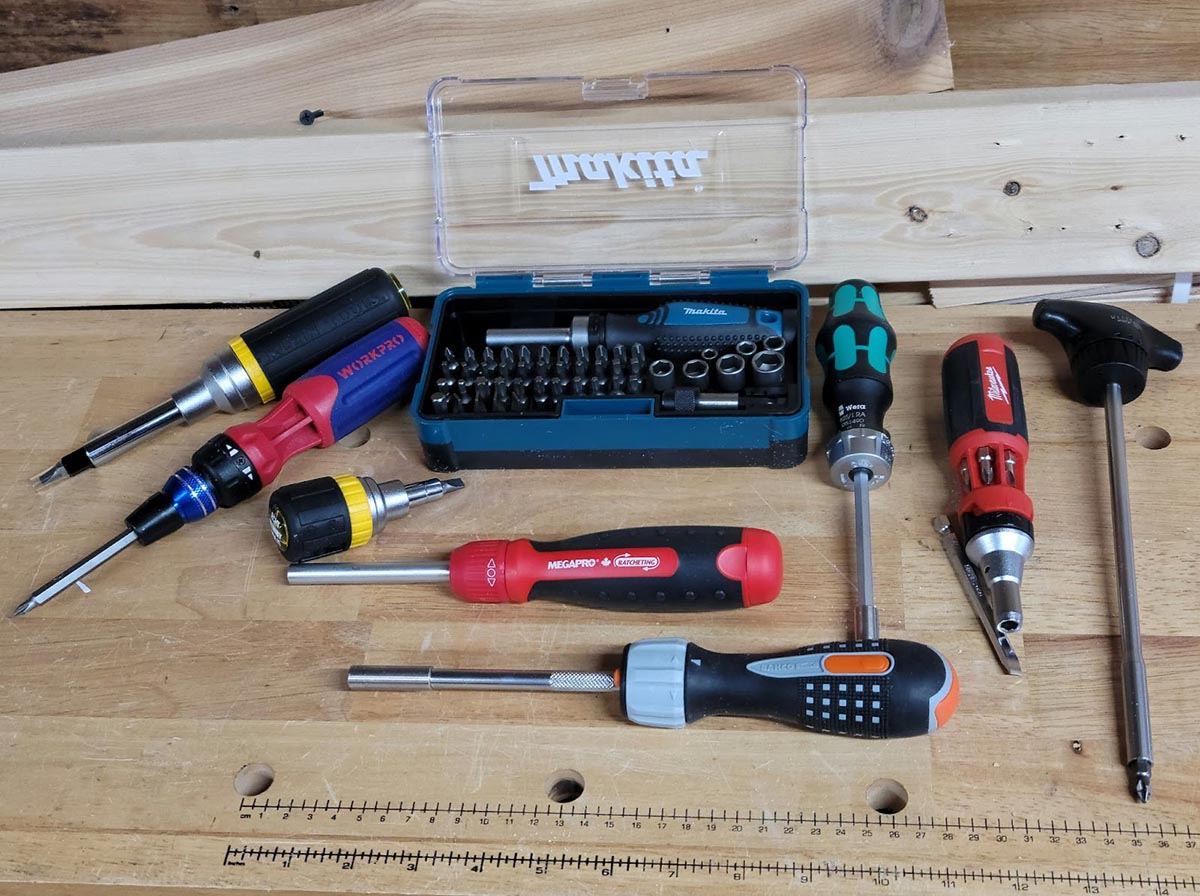
- Key Specs: 6 integrated bits, 1/4-inch nut driver shaft, ergonomic nonslip grip.
- Performance: It performed flawlessly in all wood densities. The strong magnet ensures bits stay firmly seated.
- Note: The directional collar is sensitive; users with larger hands may occasionally shift it inadvertently.
2. Runner-Up: Megapro Multi-Bit Ratcheting Screwdriver
For those who prioritize raw torque and heavy-duty use, the Megapro is unmatched.
- Key Specs: 12-bit capacity (6 double-ended bits), rotating end cap for palm pressure.
- Performance: The design allows for two-handed operation, applying massive downward force while twisting. It is a workhorse for professional contractors.
3. Best Multipurpose: Milwaukee 10-in-1 Square Ratcheting Driver
Milwaukee continues to dominate the job site with its multi-functional design.
- Key Specs: Integrated wire stripper, wire loop bender, and 6 long-reach bits.
- Performance: This is the ultimate "utility" driver. Its smooth ratcheting action and ability to prep electrical wires make it a favorite for DIY electricians.
4. Most Versatile: Makita 49-Piece Ratcheting Set
If you need a "do-it-all" solution, this kit is the gold standard.
- Key Specs: 49-piece set, including sockets and a wide array of Torx, Phillips, and slotted bits.
- Performance: While it lacks onboard storage, its compact carrying case fits easily into a drawer or glove box, providing unparalleled variety for household repairs.
5. Best for Tight Spots: MulWark 20pc Low Profile Mini
When you are working behind an appliance or in a cramped automotive bay, standard handles are useless.
- Key Specs: 20-piece bit set, ultra-low profile head.
- Performance: While not meant for high-torque "stuck screw" removal, it is the only tool that can navigate extreme spatial constraints.
Supporting Data and Technical Considerations
When analyzing these tools, we focused on several technical parameters:
- Torque Capacity: Durable models, such as the Wera and Megapro, are built to withstand approximately 50 Nm (36 ft-lbs) of force. Anything less can lead to internal gear stripping.
- Bit Storage vs. Accessibility: There is a constant trade-off between having bits "on the tool" versus "in a case." Our testing showed that while internal handle storage is convenient for quick swaps, it often limits the length and quantity of bits available.
- Material Quality: The best tools utilize hardened steel for bits and high-impact plastic or rubberized composite for the handle. We penalized models that used proprietary, non-standard bit locking mechanisms, as these reduce the tool’s long-term value.
Implications for the User
Choosing the right screwdriver depends heavily on your typical project scope.
- For the Homeowner: The Milwaukee 10-in-1 offers the best balance of utility and reliability. Its secondary features (wire stripping) mean you need to carry fewer tools to the job.
- For the Professional: The Wera Kraftform or Megapro are essential. Their superior grip geometry and mechanical resilience mean they will hold up under daily, high-volume use.
- For the Hobbyist: The Makita 49-piece set is the most cost-effective way to ensure you have the right bit for any unexpected screw head or nut size.
Why Some Tools Failed
During our testing, models from Klein Tools failed to meet expectations. Despite their reputation, the proprietary nature of their bit retention and the fragility of their directional collars under stress (leading to mechanism failure in walnut wood) prevented them from earning a recommendation. We believe these tools are currently over-engineered in terms of "proprietary features" at the expense of structural integrity.
Frequently Asked Questions (FAQs)
Q: How does a ratcheting screwdriver work?
A: It utilizes a pawl-and-gear mechanism. The pawl acts as a directional lock. When you twist one way, the teeth lock; when you twist the other, the pawl glides over the teeth, allowing the handle to return to the starting position without turning the fastener.
Q: Is a ratcheting screwdriver faster than a power drill?
A: For delicate work, absolutely. Power drills can easily over-torque or strip small fasteners. A ratcheting screwdriver provides the "feel" and control of a manual tool with the speed of a mechanical drive.
Q: How do I maintain my ratcheting screwdriver?
A: Keep the bits clean and lightly oiled. Avoid using the tool as a pry bar, as the ratcheting gear is not designed for lateral stress. If the ratcheting action becomes "gritty," a small drop of machine oil into the collar can restore smoothness.
Conclusion: The Path Forward
The landscape of hand tools is evolving. The 2026 "Tools of the Year" selections highlight a shift toward more ergonomic, modular, and multifunctional designs. Whether you are a professional tradesperson or a weekend DIY enthusiast, the investment in a high-quality ratcheting screwdriver is one that will pay dividends in time saved and reduced frustration.
Always prioritize tools that accept standard 1/4-inch bits; this ensures that your tool remains useful for decades, regardless of how your hardware needs change. With the proper care, these top-rated models will remain cornerstones of your toolkit for years to come.
