

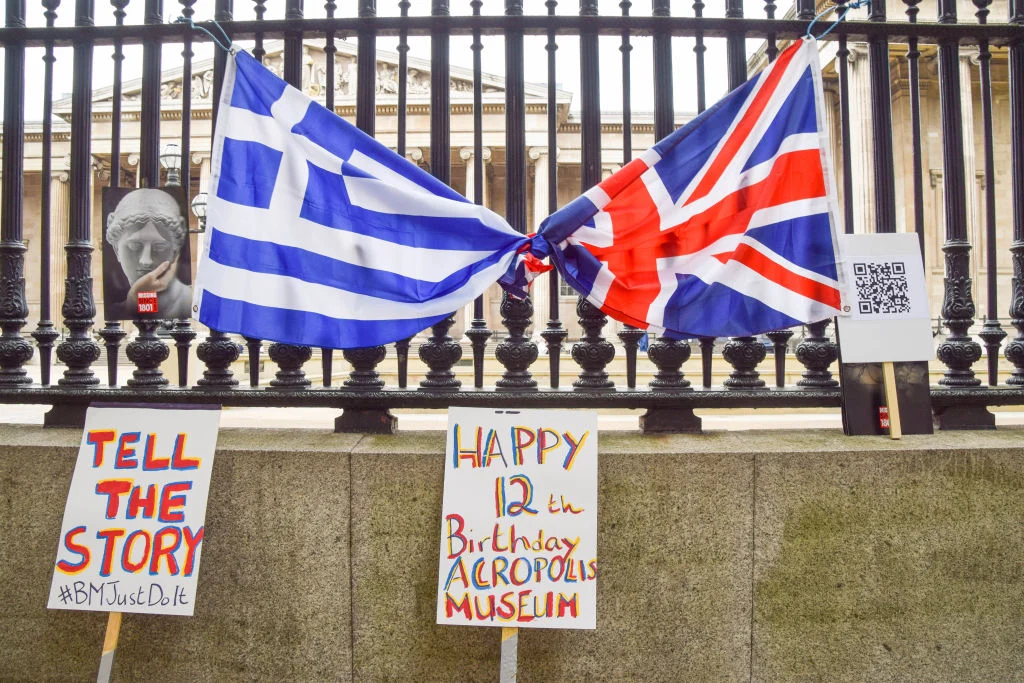
For over two centuries, the Parthenon Marbles—a collection of ancient Greek treasures of unparalleled historical and aesthetic significance—have sat at the center of a geopolitical and cultural tug-of-war. Today, the debate over their future has gained new urgency, as George Osborne, Chairman of the British Museum, continues to advocate for a "shared" arrangement between London and Athens. Despite the optimism expressed by British officials, the path to a resolution remains obstructed by fundamental disagreements over ownership, legal mandates, and the very nature of cultural heritage.
The Current State of Negotiations
George Osborne, speaking in Athens this past Tuesday, reiterated his commitment to finding a middle ground. "I’m still optimistic that we can reach an agreement," Osborne told reporters. "If everyone enters into it with the spirit of we’re not going to get everything we want, as is always the case with a successful agreement, then there’s a deal to be done."
Osborne’s proposal centers on the concept of "sharing" the sculptures. Under this framework, the marbles would circulate between the British Museum and the Acropolis Museum in Athens. However, this vision of "reciprocal exchange" is precisely what remains a point of contention for Greek authorities. For the Greek government, any arrangement that implies the United Kingdom retains legal ownership of the artifacts is a non-starter.
The impasse underscores the profound sensitivity of the issue. While the British Museum is constrained by the British Museum Act 1963—a piece of legislation that strictly prohibits the deaccessioning of its collection—the Greek government views the return of the marbles as an issue of national dignity and historical justice.
A Historical Chronology: From the Acropolis to London
To understand the intensity of the current dispute, one must look back to the early 19th century. The Parthenon Marbles, crafted under the supervision of the master sculptor Phidias between 447 and 432 BCE, were designed as an architectural and artistic masterpiece to adorn the Parthenon temple atop the Athenian Acropolis.
1801–1812: The Removal
The collection, which includes marble relief panels, intricate friezes, and colossal sculptures depicting gods and mythical processions, was removed from the Acropolis by Lord Elgin, then the British ambassador to the Ottoman Empire. At the time, Greece was under Ottoman occupation. Elgin’s removal of the sculptures was conducted under a controversial permit (a firman) of disputed validity.
1816: The Purchase
Following his return to Britain, Lord Elgin faced financial ruin and, in 1816, sold the collection to the British government. The marbles were subsequently transferred to the British Museum, where they have remained a centerpiece of the museum’s classical collection ever since.
1832–Present: The Quest for Restitution
Since gaining its independence from the Ottoman Empire in 1832, Greece has consistently campaigned for the return of the marbles. For decades, the arguments remained largely academic and diplomatic. However, the tone shifted dramatically in the 21st century with the opening of the state-of-the-art Acropolis Museum in Athens, specifically designed to house the marbles in the sightline of their original home, the Parthenon.
The Legal and Ethical Labyrinth
The impasse is reinforced by a clash of legal philosophies. The British Museum maintains a "universal museum" narrative, arguing that its holdings represent the collective achievement of humanity and that the marbles are best served by being accessible in a global hub like London. British officials point to the British Museum Act 1963 as an insurmountable barrier, suggesting that only an act of Parliament could change the status quo.
Conversely, Greece argues that the removal of the sculptures was an act of colonial plunder. They contend that the Parthenon is a singular, fragmented monument and that the sculptures are not merely "exhibits" but essential components of an architectural whole. The physical separation of these pieces, they argue, is an act of cultural vandalism that persists to this day.
The Preservation Argument
In recent years, the debate has been further fueled by reports regarding the preservation of the marbles. Allegations of leaks, improper storage conditions, and historical damage sustained during "cleaning" efforts in the mid-20th century have weakened the British Museum’s claim that it is the most capable guardian of these artifacts. These reports have provided additional ammunition for the Greek campaign, which emphasizes that the Acropolis Museum offers a climate-controlled, secure environment that allows for the viewing of the marbles in their original Mediterranean context.
Official Responses and Diplomatic Friction
The tension reached a boiling point in September when Greek Prime Minister Kyriakos Mitsotakis published a stinging op-ed in The Guardian. His response was directed at the British Museum’s director, Nicholas Cullinan, who had drawn a comparison between the Parthenon Marbles and the Bayeux Tapestry.
Cullinan had suggested that the loan of the Bayeux Tapestry from France to Britain served as a "compelling example of international partnership." Mitsotakis was quick to dismantle this analogy: "Nobody would seriously contemplate cutting what survives of the tapestry in two and displaying half in London and half in Bayeux, and claiming this was an adequate way to understand it," the Prime Minister wrote. "Yet that is exactly what happened to the Parthenon sculptures."
The Greek government has remained firm. Culture Minister Lina Mendoni has repeatedly clarified that Greece will not participate in any deal that validates the British Museum’s ownership claim. Her counter-proposal involves a complex exchange system where other, equally prestigious Greek antiquities would be sent to London on a rotating basis, provided the marbles themselves are returned to their rightful home.
Future Implications: A European Concern
The dispute is no longer limited to bilateral relations between Athens and London. As the United Kingdom navigates its post-Brexit landscape, the return of the marbles has become a point of contention within wider EU-UK diplomatic discussions.
Prime Minister Mitsotakis, speaking at a conference at the University of Athens on October 6, signaled that the issue is poised to move to a higher political stage. With world leaders set to convene at the upcoming EU-UK summit in Brussels, the Parthenon Marbles are expected to feature in the broader discourse on diplomatic ties.
"The Parthenon sculptures will be part of this debate," Mitsotakis stated. "This is not just an issue for Greece, it’s an issue for Europe."
The Cultural Precedent
The resolution of this case will set a profound precedent for the global museum community. As institutions across the West face increasing pressure to repatriate artifacts obtained during the colonial era—from the Benin Bronzes to indigenous cultural items—the Parthenon Marbles serve as the ultimate test case.
If the British Museum and the Greek government can arrive at a compromise, it would likely necessitate a paradigm shift in how museums define ownership and stewardship. It would mark a move away from the static, possessive model of the 19th-century museum toward a dynamic, collaborative model of "stewardship for the world."
Conclusion: A Long Road Ahead
While George Osborne remains "optimistic," the reality on the ground suggests that the chasm between the two sides is deep. For the British Museum, the marbles are the bedrock of their collection and a symbol of their mandate to preserve global heritage. For Greece, the marbles are a piece of a wounded national soul, waiting to be reunited with the temple from which they were severed.
As the political pressure mounts and the EU-UK summit approaches, the world watches to see if diplomacy can succeed where decades of rhetoric have failed. Whether a middle ground of "sharing" can be achieved without compromising the fundamental principles of either side remains the most critical question in the world of cultural heritage. For now, the Parthenon Marbles remain in London, caught between the legacy of the past and the uncertain requirements of a modern, interconnected world.
