

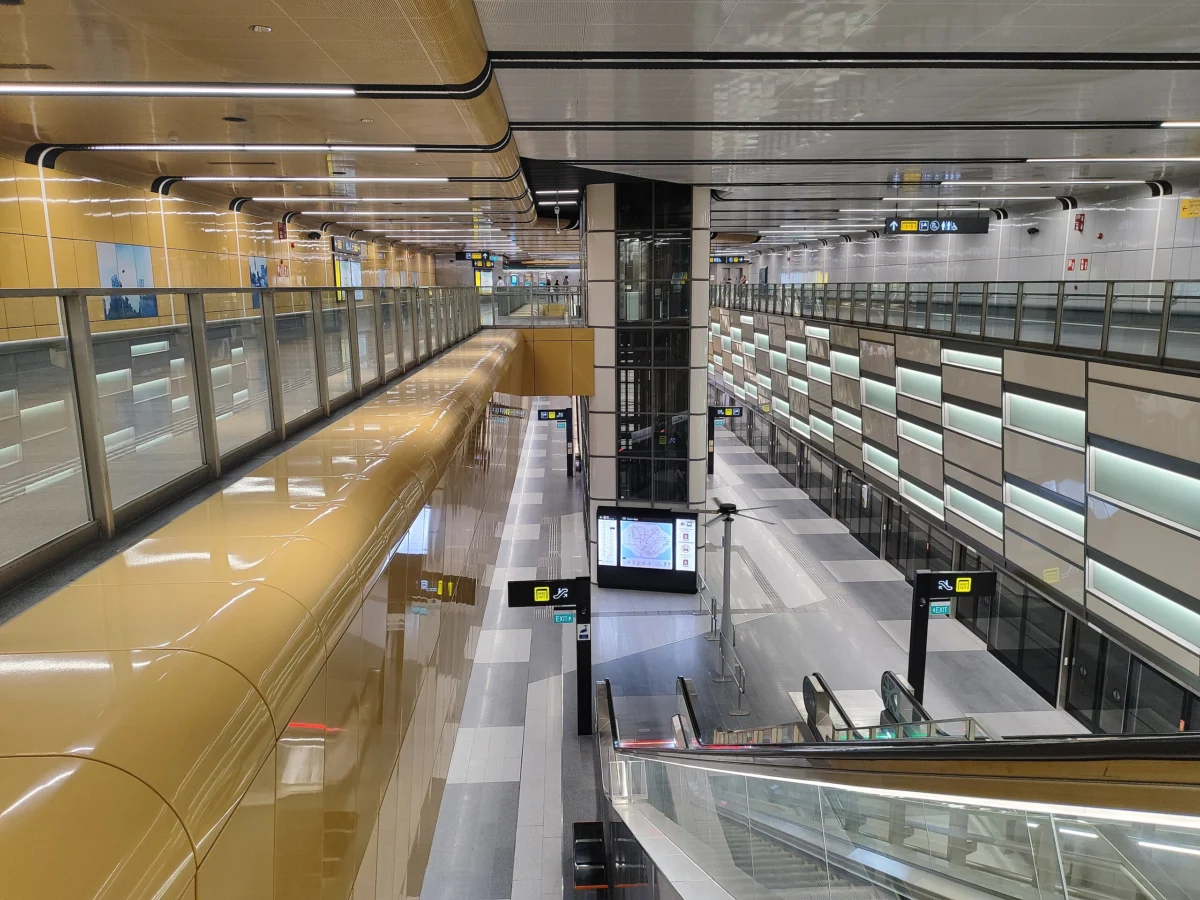
The year 2024 marked a significant chapter in the ongoing narrative of global urban mobility. Across the world, cities continued to prioritize high-capacity transit infrastructure, adding nearly 1,300 kilometers of new metro lines to the global network. This expansion represents a 6 percent increase over the 22,400 kilometers that were in service at the close of 2023, sustaining a trend that has seen the total global transit reach more than triple since the turn of the millennium.
While the headline figures are dominated by massive infrastructure projects in East Asia, the scope of expansion is truly global, encompassing light rail, tramways, and bus rapid transit (BRT) systems that collectively reshape how millions of people navigate their daily lives.
The State of Play: 2024 in Review
The year 2024 was characterized by a push toward connectivity. Beyond the 1,300 kilometers of new metro rail, the global transit map grew by approximately 120 kilometers of light rail and tramway services, and nearly 170 kilometers of new BRT lines.

The engine of this growth remains China, which accounted for approximately two-thirds of all new line openings. Cities across the nation, from the sprawling urban complex of the Pearl River Delta to the inland hubs of Zhengzhou and Xi’an, continued to weave together dense, high-frequency rail webs. Notable projects included the inauguration of Line 11 in Guangzhou and Line 8 in Xi’an—both significant loop lines designed to relieve congestion in rapidly densifying urban cores.
However, the year was not without significant milestones elsewhere. Riyadh, Saudi Arabia, emerged as a major player in the transit space, baptizing a monumental new metro network with five of its six lines opening in December, followed by the final line in early 2025. In Europe, Paris continued its ambitious transit modernization, expanding metro, regional rail, and tramway services. In India, the momentum of urban rail was evident as seven cities welcomed new metro services. Meanwhile, Ho Chi Minh City, Vietnam, achieved a landmark goal by opening its first metro line, signaling a new era of transit-oriented development in Southeast Asia.
A Comparative Look: The Changing Global Landscape
The geography of urban transit has shifted dramatically since 2000. At the start of the century, London and New York City were the undisputed titans of metro infrastructure, boasting the world’s longest networks. Today, those cities have slipped to 12th and 15th place respectively in the global rankings.

The rise of the Pearl River Delta as a unified transit powerhouse is perhaps the most striking development. Encompassing Guangzhou, Hong Kong, Shenzhen, and surrounding areas, this region now manages over 1,667 kilometers of metro track—significantly more than the entire United States, which holds approximately 1,365 kilometers.
This shift underscores a broader trend: the "catch-up" growth in developing economies, particularly in Asia, has outpaced the incremental, often constrained expansion projects seen in older Western cities. In the United States, 2024 was a year of modest gains, with significant activity limited to specific corridors in Seattle, Indianapolis, and Madison. As a result, the U.S. continues to lag behind global peers in terms of the scale and speed of transit deployment.
The World’s Top Metro Systems (Early 2025)
| Rank | Region | 2025 Length (km) | 2000 Length (km) |
|---|---|---|---|
| 1 | Pearl River Delta, China | 1,667 | 135 |
| 2 | Beijing, China | 857 | 54 |
| 3 | Shanghai, China | 842 | 64 |
| 5 | Seoul, South Korea | 620 | 321 |
| 8 | Moscow, Russia | 540 | 272 |
| 12 | London, UK | 454 | 438 |
| 15 | New York City, US | 418 | 415 |
The Road Ahead: Projections for 2025
If 2024 was a year of robust expansion, 2025 is poised to be transformative. Global projections suggest that nearly twice as many kilometers of metro and light rail service are slated to open in 2025 compared to the previous year.

China remains the primary driver of this growth, with over 1,500 kilometers of new metro services planned. Key cities including Chengdu, Nanjing, Tianjin, and Xiamen are preparing for substantial system additions. Beyond China, India’s urban rail sector is set for a massive year; Mumbai is expected to unveil over 116 kilometers of new lines, and the much-anticipated Delhi-Meerut Regional Rapid Transit System (RRTS)—a high-speed 82-kilometer rail corridor—is scheduled for completion.
Other notable global developments include:
- Canada: The long-delayed Eglinton Crosstown light rail in Toronto is expected to finally open, alongside the majority of Montreal’s automated REM light metro.
- Europe: Porto’s "Linha Rosa" will add a critical light rail link, while Birmingham, England, will see two light rail expansions.
- United States: The first phase of the Los Angeles Purple Line extension and the light rail connection across Lake Washington in the Seattle region represent the most anticipated milestones.
Official Perspectives and Operational Challenges
While these figures represent a monumental achievement in civil engineering and urban planning, they are accompanied by significant operational realities. Transit authorities worldwide have increasingly moved toward "systemic integration," where new lines are not treated as isolated projects but as nodes in a wider, interconnected web.

The planning of these projects often involves complex, multi-year negotiations regarding funding, land acquisition, and environmental impact. The recurring theme in 2024 was the challenge of meeting project timelines. As noted in the industry, the "assuming projects open on time" clause is never a given. Delays—whether due to labor shortages, supply chain disruptions, or technical complexities—remain a common obstacle.
Public agencies in cities like Paris and Ho Chi Minh City have emphasized that the success of these new lines hinges not just on ribbon-cutting ceremonies, but on the long-term integration of transit-oriented development (TOD). The goal is to move beyond mere capacity expansion and focus on creating walkable, dense urban environments that make transit the most convenient option for the majority of citizens.
Implications for the Future of Urban Mobility
The data from 2024 and the forecast for 2025 highlight a clear divergence in global urban planning strategies. In high-growth regions, transit is being utilized as a foundational tool to manage rapid urbanization and prevent the catastrophic gridlock that often accompanies massive population density.

Conversely, in many Western cities, the challenge is one of renewal and efficiency. The relatively stagnant growth in systems like New York’s or London’s does not necessarily indicate a lack of ambition, but rather the immense difficulty of expanding infrastructure within the constraints of established, historic urban fabrics.
Sustainability and the Climate Imperative
The expansion of these networks is fundamentally linked to global sustainability goals. As urban populations swell, the capacity of heavy rail and rapid bus transit to move large volumes of people with minimal carbon footprints per capita becomes the primary defense against climate change. The shift away from private vehicle reliance is a stated policy goal for almost every city listed in this report.
Economic Impact
Transit expansion is also a potent economic catalyst. The construction of new lines consistently triggers local economic development, increasing property values and attracting commercial investment near stations. The "multiplier effect" of transit spending—creating construction jobs, improving labor market mobility, and reducing travel time for commuters—continues to justify the multi-billion-dollar investments required for these projects.

Conclusion
The year 2024 served as a testament to the resilience and ambition of global urban transit authorities. By adding over 1,300 kilometers of new lines, the world has demonstrated a continued, albeit uneven, commitment to public transit. As we move through 2025, the focus will shift from the sheer volume of new construction to the quality of these networks—how they serve the underserved, how they integrate with existing modes, and how they contribute to a more sustainable, equitable future for the world’s growing urban population.
For observers, planners, and policymakers, the lesson of the past year is clear: the cities that thrive in the coming decades will be those that continue to build, expand, and refine their transit networks today. The infrastructure being laid now will define the economic and social geography of our cities for the next century.
