

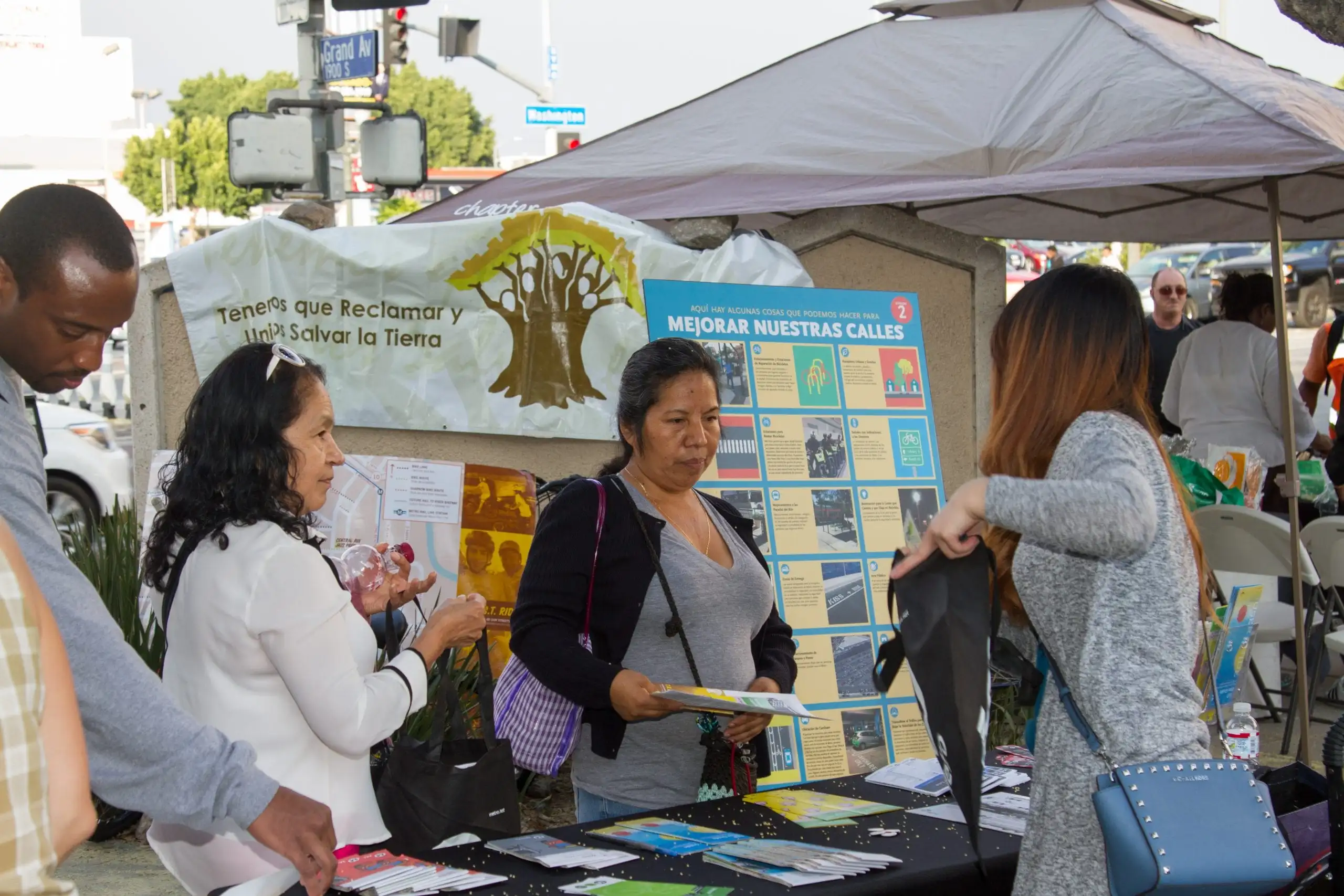
For decades, the standard operating procedure for transit agencies looking to engage the public has been a top-down affair. Agencies would design a project, finalize the blueprints, and then host a perfunctory town hall meeting to "collect feedback"—a process often perceived by riders as performative rather than collaborative. Recognizing the inherent flaws in this model, LA Metro has spent the last decade pioneering a transformative approach: moving away from distant, third-party consultants and toward deep, structural partnerships with Community-Based Organizations (CBOs).
A new report, Equity in Practice: Strengthening Transit through Community Partnerships, released by TransitCenter and the Center for Neighborhood Technology (CNT), documents this shift. It offers a blueprint for transit agencies nationwide, illustrating how to move beyond superficial engagement and toward a model of authentic community co-creation.
The Problem: The Consultant Bottleneck
Transit agencies often rely on third-party consultants to bridge the gap between bureaucratic planning and the public. While these firms provide necessary technical expertise, they often lack a fundamental prerequisite for successful urban planning: deep-rooted trust within the specific neighborhoods they are tasked to engage.
When a consultant who has no history with a community arrives to solicit feedback on a transit project, they are frequently met with skepticism. This is not necessarily a reflection of the consultant’s individual effort, but rather a reflection of the systemic "outsider" status that inhibits candid conversation. Because these consultants are often unfamiliar with the nuances of local culture, socioeconomic barriers, and historical grievances, the feedback they collect can be thin, missing the most critical insights required to build an equitable transit system.
The Solution: Braiding CBOs into the Infrastructure
Since the mid-2010s, LA Metro has begun to "braid" the perspectives of CBOs into its core operations. CBOs—which include neighborhood associations, advocacy groups, religious organizations, and community service providers—possess a level of local legitimacy that no outside consultancy can replicate.
Because CBOs work daily on behalf of their specific communities, they possess a wealth of "lived experience" and organizational memory. When LA Metro partners with a CBO, they aren’t just hiring a vendor; they are tapping into an existing network of trust. These organizations can translate complex transit policy into the language of their community, identify systemic barriers that prevent access, and help synthesize data about rider behavior through a lens of empathy and local knowledge.
Chronology of a Shift: From Strategy to Institutionalization
The journey toward this partnership model has been deliberate and iterative:
- Mid-2010s: LA Metro begins exploring more robust community engagement strategies, moving away from traditional public hearings toward targeted, collaborative outreach.
- 2021: TransitCenter releases Equity in Practice, a seminal report outlining equity best practices for the transit industry. Simultaneously, LA Metro publishes its "CBO Partnering Strategy," a roadmap for embedding community voices into agency projects.
- 2021–2023: A coalition consisting of TransitCenter, the Center for Neighborhood Technology (CNT), and six LA-based community organizations begins working directly with LA Metro’s Office of Equity and Race. The goal: to operationalize the CBO Partnering Strategy into something concrete.
- 2024: The publication of Equity in Practice: Strengthening Transit through Community Partnerships, documenting the successful implementation of new tools—such as a CBO database and formal charter processes—designed to make these partnerships sustainable.
Data and Mechanics: Why CBOs are Uniquely Equipped
The effectiveness of CBOs lies in their versatility. The report highlights that these organizations are capable of performing high-level transit work, including:
- Data Synthesis: Collecting and interpreting rider behavior patterns from a localized perspective.
- Environmental Investigation: Analyzing the physical conditions around a transit project, such as lighting, safety, and accessibility, from the viewpoint of someone who navigates those spaces daily.
- Community Connection: Serving as a bridge to ensure that marginalized riders are aware of and feel empowered to use new transit services.
- Identifying Barriers: Pinpointing systemic inequities—such as fare structures, station locations, or lack of first-mile/last-mile connectivity—that planners might overlook.
However, the report is candid about the "clash of cultures." Government agencies operate on slow, procedural timelines governed by massive amounts of paperwork, while CBOs often operate with agility and a focus on immediate community needs. Bridging these two worlds requires more than good intentions; it requires a structural framework to manage the friction.
Official Responses and Internal Transformation
The Office of Equity and Race at LA Metro has been the engine behind this transformation. To make the partnership model viable, the office recognized that they couldn’t just tell staff to "work better with communities"; they had to provide the tools to make that possible.
The collaborative team from TransitCenter and CNT helped develop several key institutional mechanisms to streamline these relationships:
- The CBO Database: A centralized hub that connects LA Metro project managers with vetted CBOs, detailing their expertise and potential partnership opportunities.
- The Charter Process: A formalized agreement structure that defines roles, expectations, and compensation, ensuring that both the agency and the CBO are aligned from day one.
- Equity Training: A series of professional development modules, including "Working with CBOs 101," designed to help transit planners understand how to communicate effectively with community partners.
- The Equity Information Hub: A centralized digital repository where staff can find templates, checklists, and documentation forms, effectively lowering the barrier to entry for launching a new partnership.
Implications for the Future of Public Transit
The implications of the LA Metro model extend far beyond California. If transit agencies across the U.S. adopt these practices, the result could be a fundamental shift in how public infrastructure is conceived.
When a project is co-designed by the people who use it, the "buy-in" is organic. Projects are less likely to face the delays associated with public opposition because the community has been part of the planning process from the start. Furthermore, the outcomes are more equitable, as transit resources are directed to the specific needs of the ridership rather than the assumptions of a desk-bound planner.
The "Equity in Practice" Takeaways
The report concludes with a clear message to transit leaders: Equity is not a project you finish; it is a way of doing business. The key takeaways for practitioners include:
- Invest in Relationships, Not Transactions: Partnerships should be long-term, not project-based.
- Acknowledge Power Dynamics: Recognize that the agency holds the purse strings and the power; use that power to uplift and compensate CBOs fairly.
- Standardize the Process: Use charters, databases, and checklists to remove the "mystery" of how to partner.
- Prioritize Internal Capacity: Agencies must train their own staff to be better listeners and collaborators.
A Path Forward
As transit agencies face increasing pressure to provide reliable, accessible, and equitable service, the traditional consultant-led model is proving insufficient. The work done by LA Metro and its partners provides a scalable, replicable roadmap. By institutionalizing community partnerships, transit agencies can ensure that they are not just moving people, but serving people.
The tools now available—ranging from the Equity Information Hub to the formalized charter process—represent more than just bureaucratic efficiency. They represent a commitment to the idea that the best experts on transit are the people who ride it every day. As other agencies look to the future, they would do well to study the LA Metro model, recognizing that the most powerful technology in public transit is the community itself.
For more information on these initiatives, visit the LA Metro Office of Equity and Race and read the full Equity in Practice report.
