

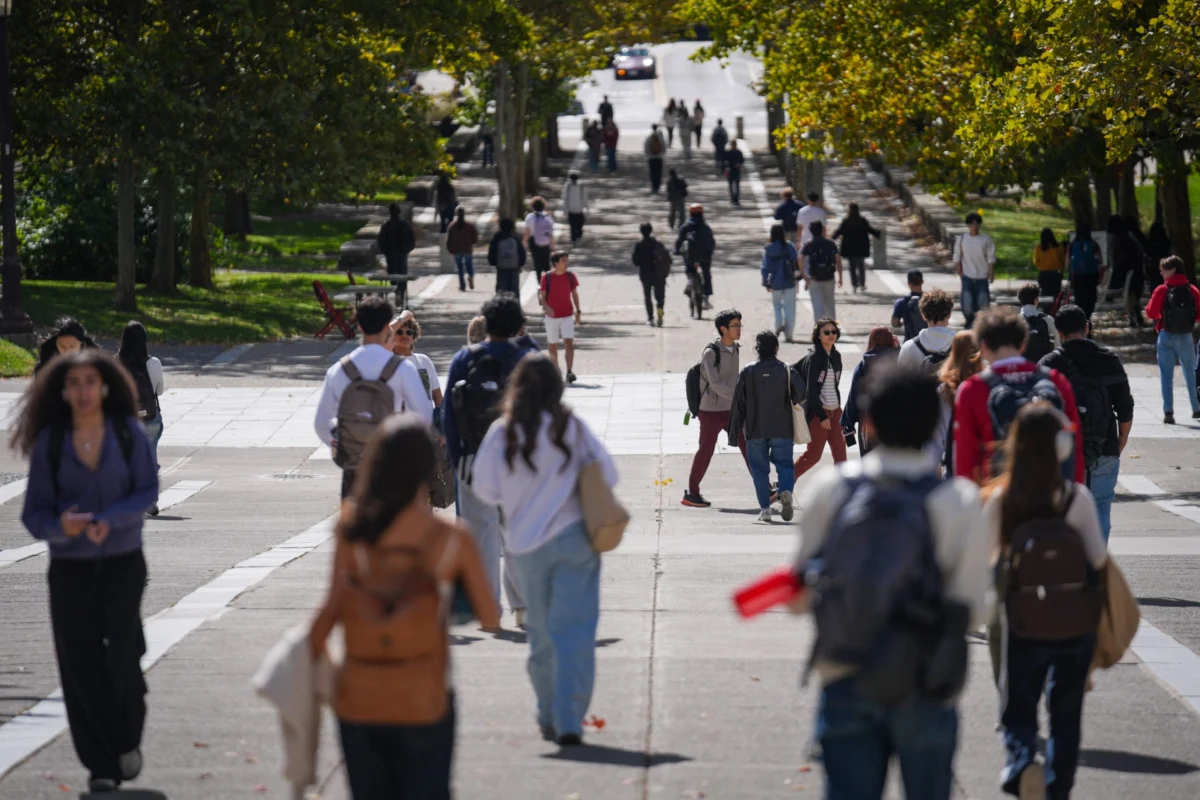
In the landscape of American public discourse, few institutions have suffered a sharper reputational decline than the university. Once viewed as the undisputed gold standard for social mobility and professional success, higher education is now frequently painted as an ivory tower disconnected from the realities of the workforce, a bastion of political polarization, or an overpriced relic of a bygone era.
Yet, a fascinating, counterintuitive reality persists beneath the surface of this cultural skepticism: while the rhetoric surrounding college has turned increasingly sour, the actual behavior of the American public has remained remarkably resilient. As public opinion polls plummet to historic lows, college enrollment numbers suggest a population that, while deeply critical, is not yet ready to abandon the degree as a primary path to the middle class.
The Crisis of Confidence: A Statistical Snapshot
The numbers are, by any measure, startling. According to a Gallup poll conducted in August 2026 and released this October, only 31 percent of Americans consider a college education to be “very important.” This represents a staggering erosion of faith; as recently as 2013, that figure stood at 70 percent.
The decline is not isolated to a specific demographic silo. Historically, skepticism toward higher education was often concentrated among those with lower levels of formal education or specific ideological leanings. Today, the disillusionment has permeated the entire social fabric. Women, Democrats, Black and Hispanic Americans, and even those who hold college degrees themselves—the very individuals who once championed the value of a campus experience—have registered double-digit declines in their approval ratings of higher education.
This shift in sentiment is not happening in a vacuum. It is compounded by high-profile controversies, such as the recent protests at Cornell University regarding the school’s handling of a 2024 sexual assault case. Such incidents, which draw national headlines and prompt interventions from state officials like Attorney General Letitia James, reinforce the perception that universities are failing in their duty of care, further damaging their institutional brand.
Chronology of a Cultural Shift
To understand how we reached this point, one must look at the trajectory of public perception over the last decade.
- 2013: The high-water mark of public support, with 70 percent of Americans viewing college as essential. The prevailing narrative centered on the “degree-as-the-gateway” to economic stability.
- 2014–2020: The rise of the student debt crisis and the “skills gap” debate began to chip away at the narrative. Economic anxiety, coupled with rising tuition costs, forced a reevaluation of the return on investment (ROI) for a bachelor’s degree.
- 2020–2022: The COVID-19 pandemic acted as a massive catalyst. With classes moved online and campus life suspended, the value proposition of a traditional four-year experience was challenged as never before.
- 2024–2026: The current era of intense scrutiny. Public discourse is now heavily focused on campus climate, political bias, and the potential of alternative credentials, leading to the record-low 31 percent approval rating.
The Data Gap: Sentiment vs. Enrollment
Despite this dramatic drop in “importance” ratings, the actual college-going behavior of Americans has remained remarkably steady. The latest data from the National Student Clearinghouse Research Center, released in September 2026, illustrates this stability.
For students graduating from low-poverty high schools, the college enrollment rate reached 74 percent in the fall of 2025, a slight increase from 73 percent the previous year. Even among graduates from high-poverty high schools, the rate has remained consistent at 51 percent.

While it is true that there has been a long-term decline in immediate college-going rates—falling from 68 percent in 2014 to 63 percent in 2024—this 5-percentage-point dip hardly mirrors the 39-percentage-point collapse in public approval.
Furthermore, total enrollment—which includes graduate students and adult learners—paints a picture of an industry that is far from collapsing. Total enrollment has been on an upward trajectory since 2022. While we are currently shy of the all-time peak of 21 million students seen during the post-recession surge of 2010-2011, there were nearly 20 million students enrolled in higher education in 2024. This is a significant increase from the fewer than 16 million students enrolled in the early 2000s.
The Countercyclical Nature of Education
Why the disconnect? Part of the answer lies in the countercyclical nature of higher education. Enrollment is historically tied to the health of the labor market. When the economy is booming and entry-level jobs are plentiful, young people are often tempted to enter the workforce immediately to capture short-term gains. Conversely, when the economy stagnates, individuals flock to universities to "wait out" the storm and bolster their skills.
The period between 2008 and 2011 serves as the classic case study for this phenomenon, where enrollment surged in response to the Great Recession. Today, as economic uncertainty persists, the degree remains a "safe harbor" for many, regardless of their stated opinion on the quality or importance of the institution.
However, a lingering question remains: if the number of 18-year-olds has increased, why hasn’t enrollment grown proportionally? While births began rising in the late 1990s—leading to nearly 900,000 more high school graduates by 2016 compared to 1998—college enrollment did not see a corresponding explosion. It is highly plausible that while the desire for education remains, the rising costs and the growing chorus of criticism against higher education are acting as a "soft ceiling," preventing what would otherwise be a period of significant growth.
Voices from the Field: The Lumina-Gallup Insight
If Americans are so critical, why do they keep enrolling? The answer may lie in a nuance of human behavior: we can be critical of a system while still viewing it as the best available option for our personal advancement.
A joint survey by the Lumina Foundation and Gallup provides crucial evidence for this theory. When asked, 73 percent of adults without a college degree or credential indicated that earning a two- or four-year degree is at least as important as it was 20 years ago. When parents are asked about their own children’s futures, a clear majority still express a preference for the college pathway.
This reveals a profound duality in the American psyche. The public is capable of holding two conflicting thoughts simultaneously:

- "Higher education is currently too expensive, too politically charged, and potentially overrated."
- "A college degree remains the most reliable hedge against economic instability and the best bet for my child’s future."
Implications for the Future of Higher Education
This disconnect between sentiment and behavior offers a temporary reprieve for colleges, but it is not a sustainable model. Universities cannot rely on the inertia of tradition forever. The implications for the sector are significant:
1. The ROI Accountability Crisis
As long as the public views the cost of education as high and the value as questionable, the pressure for transparency will only grow. Institutions will need to move beyond marketing slogans and provide concrete data on career outcomes, salary expectations, and debt-to-income ratios to satisfy a skeptical public.
2. Diversifying the Value Proposition
The "college-for-all" mentality is being replaced by a more fragmented approach. Universities that fail to integrate career-focused training, certifications, and flexible, modular learning paths may find themselves losing ground to vocational programs and corporate-led credentialing, which are increasingly seen as faster, cheaper alternatives.
3. Institutional Integrity
The incidents at institutions like Cornell serve as a warning. When schools are seen as failing their basic moral obligations, the public’s skepticism quickly turns into active opposition. Restoring trust will require more than just public relations; it will require a fundamental commitment to safety, academic freedom, and administrative accountability.
4. Policy and Funding
With politicians increasingly responding to the public’s disillusionment, we may see a shift in how higher education is funded. If the sentiment does not improve, the political will to provide subsidies or student loan support may continue to weaken, potentially leading to a more privatized, tuition-dependent model that further exacerbates the inequality the system is meant to bridge.
Conclusion
The American experiment with higher education is at a crossroads. We are currently living through a "perception-reality gap"—a period where the institutions are functionally central to our society, yet culturally peripheral to our values.
While enrollment numbers show that the demand for the credential remains intact, the record-low approval ratings are a warning flare. The American public is currently "buying" the product while simultaneously protesting the price and the brand. If universities do not address the root causes of this disillusionment—cost, campus climate, and career alignment—the current stability in enrollment may prove to be the final chapter before a more permanent and structural shift in how we value, fund, and attend college. For now, the ivory tower stands, but its foundation is increasingly built on a fragile compromise between what we think we need and what we actually believe.
