

The global landscape of urban mobility is undergoing its most significant transformation in decades. As urbanization accelerates and the imperative to decarbonize transport networks becomes a central pillar of climate policy, cities worldwide are racing to expand their rail transit capacity. Data from 2025 confirms that we are in the midst of a historic construction boom, with over 1,300 kilometers of new metro, light rail, and tramway lines entering service last year. Looking ahead, 2026 promises to be equally transformative, with another 1,000+ kilometers of rail infrastructure scheduled to commence operations.
This rapid expansion is not merely about adding steel and concrete; it is a fundamental reconfiguration of how millions of people interact with their metropolitan environments. From the massive, state-led investments in East Asia to the strategic light-rail infill projects across Europe and North America, the message is clear: the future of urban density is rail-oriented.

The Epicenter of Growth: China and the New Global Order
The narrative of global transit expansion remains, as it has for the past decade, inextricably linked to the trajectory of Chinese infrastructure development. In 2025, China accounted for a staggering 72 percent of all new metro and light rail route kilometers opened globally. Of the 1,300 kilometers added worldwide, 930 were located within Chinese borders.
This growth is not limited to a single megacity but is distributed across 23 distinct urban regions. The Pearl River Delta (PRD)—a polycentric megalopolis encompassing Dongguan, Foshan, Guangzhou, and Shenzhen—added 179 kilometers of new lines in 2025 alone. To put this into perspective, the PRD’s single-year expansion is longer than the entire existing "L" system in Chicago.

China’s total operating metro network has now ballooned to an unprecedented 12,500 kilometers. This represents a network five times the size of the entire European Union and nine times the length of the United States’ metro systems. As we look toward 2026, Chinese cities are slated to bring another 1,100 kilometers of line into service, further cementing the country’s status as the global leader in mass transit capacity.
Shifting Geopolitics of Infrastructure: The Rise of India
While China currently holds the crown, the most dynamic shift in the coming years will likely occur in South Asia. India is currently in the midst of a massive, multi-city rail buildup, with systems in Delhi, Mumbai, and Chennai leading the charge.

The scale of this construction is reaching a tipping point. Based on current project delivery schedules, India is projected to surpass the United States in total length of metro systems by the end of 2026. This transition highlights a broader trend: while Western nations—particularly the U.S. and Japan—have seen their pace of expansion plateau since the late 20th century, emerging economies are prioritizing rail as the primary solution to rapid urban population growth.
Global Chronology: 2025 Highlights and 2026 Projections
The following breakdown outlines the trajectory of current and completed projects, illustrating the geographic diversity of these investments.

2025: A Year of Completion
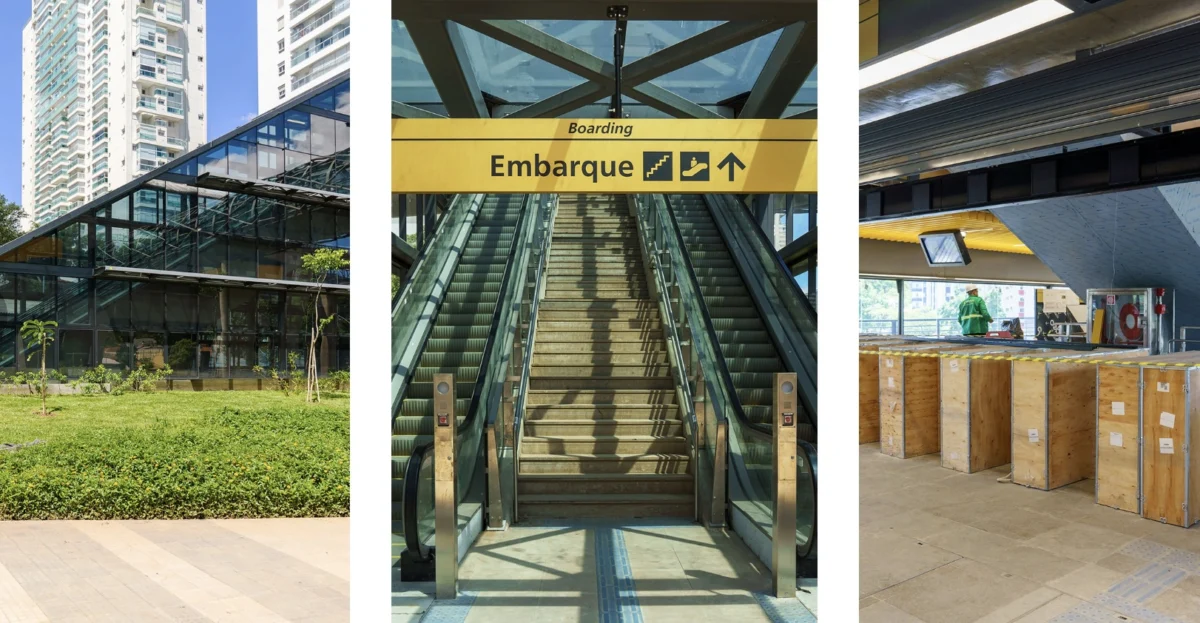
The past year saw a flurry of activity across several continents. In Europe, cities like Paris and Milan continued to modernize, while North American cities, including Montreal and Toronto, saw incremental but vital extensions to their existing networks. In South America, São Paulo’s continued investment in its metro system remained a standout, while in the Middle East, Jerusalem continued to expand its light rail footprint.
2026: The Year Ahead
The focus for 2026 shifts toward consolidation and new network launches. Key projects to watch include:

- Bologna, Italy: The creation of a new tram network, which aims to shift the city’s historic core toward more sustainable transit.
- Padova, Italy: Significant extensions to its tire-running tram system.
- France: A surge of activity across Brest, Lyon, and Marseille, where new lines are being integrated into existing systems to bolster connectivity.
- North America: Continued expansion efforts in Los Angeles and Seattle, where light rail remains the primary tool for mitigating regional traffic congestion.
Supporting Data: A Tale of Two Eras
To understand the scale of this change, one must look at the historical context. In 1990, the world’s top 20 metro systems were dominated by European and American cities. At that time, not a single Chinese city appeared on the list (excluding Hong Kong, which was then a British protectorate).
Today, that list has been entirely rewritten. Of the 20 largest metro systems, 13 are located in China, with the remainder scattered between Japan, India, Russia, South Korea, the UK, and the U.S.

The disparity in growth rates is stark. While the EU has maintained a steady, if slower, pace of expansion, Japan and the U.S. have struggled to keep up with their own historical standards. This, however, is beginning to change as cities like Los Angeles and Paris (with its massive Grand Paris Express project) begin to catch up. By 2032, it is expected that Paris will possess a network large enough to overtake New York City in total length, marking a significant milestone for European transit.
Official Perspectives and Strategic Implications
For city planners and government officials, these investments are driven by more than just transportation needs. They represent a strategic response to climate change and economic efficiency.

"The expansion of rail is the backbone of the modern, resilient city," notes one urban planning expert. "By moving away from car-dependency and toward high-capacity rail, cities are not only reducing their carbon footprint but are also creating the conditions for higher-density, more productive economic zones."
However, the rapid expansion is not without its challenges. Financing remains a significant hurdle. In many regions, particularly in Latin America and Southeast Asia, the cost of tunnel boring and system integration is forcing governments to explore public-private partnerships (PPPs) and innovative funding models.

Furthermore, the "last mile" problem remains a persistent issue. As new lines open, the success of these systems depends on the integration of buses, cycling infrastructure, and pedestrian pathways. The 2026 projects, particularly in cities like Bologna and Lyon, place a heavy emphasis on "transit-oriented development," ensuring that new stations are surrounded by high-density, mixed-use housing rather than parking lots.
Conclusion: The Path Forward
The data provided by The Transport Politic and other global observers indicates that the world is in the midst of a transit renaissance. Whether it is the sheer volume of construction in China, the rapid scaling of the Indian market, or the thoughtful, integration-focused expansions in Europe, the trend is undeniable.

As we move through 2026, the success of these projects will be measured not just by the number of kilometers added, but by the ability of these systems to serve their populations equitably and reliably. The era of the car-centric city is being challenged, and in its place, a new, rail-connected urbanism is emerging.
For those interested in the granular details of every station opening, tunnel completion, and system upgrade, the full global database is available through Transit Explorer. As these lines open, they do more than connect A to B; they shape the future of our urban life, defining the quality of our air, the efficiency of our economy, and the accessibility of our cities for generations to come.
