

The year 2026 marks a pivotal moment for urban mobility across North America. From the bustling metropolitan cores of Mexico City and Los Angeles to the rapidly growing transit corridors of the American South and the Canadian suburban landscape, a wave of new fixed-guideway transit projects is coming online. These additions—ranging from high-capacity subways and light rail lines to strategic bus rapid transit (BRT) networks—represent a significant investment in the infrastructure of the future.
This overview synthesizes data from Transit Explorer, the comprehensive, interactive database that now tracks over 13,700 transit lines and 62,300 stations worldwide. As we analyze the 2026 project slate, it becomes clear that the focus has shifted toward closing critical gaps in existing networks, improving airport connectivity, and facilitating transit-oriented development.

The 2026 Project Slate: A Regional Breakdown
The American South and Midwest
In Atlanta, the MARTA Rapid A-Line is set to launch in September 2026. This 5 km (3.1-mile) BRT project, connecting downtown to the historic Carver/Atlanta Beltline area, serves as a test case for high-frequency surface transit. With 85% dedicated lanes and a $123 million price tag, it is a key piece of the city’s strategy to accommodate the surge in activity surrounding major international events.
Further south, Baton Rouge is embracing arterial rapid transit with the "BRapid" (Plank-Nicholson) route. Launching in mid-2026, this 15 km (9.3-mile) project utilizes transit signal priority to connect the North Transfer Center to Louisiana State University.

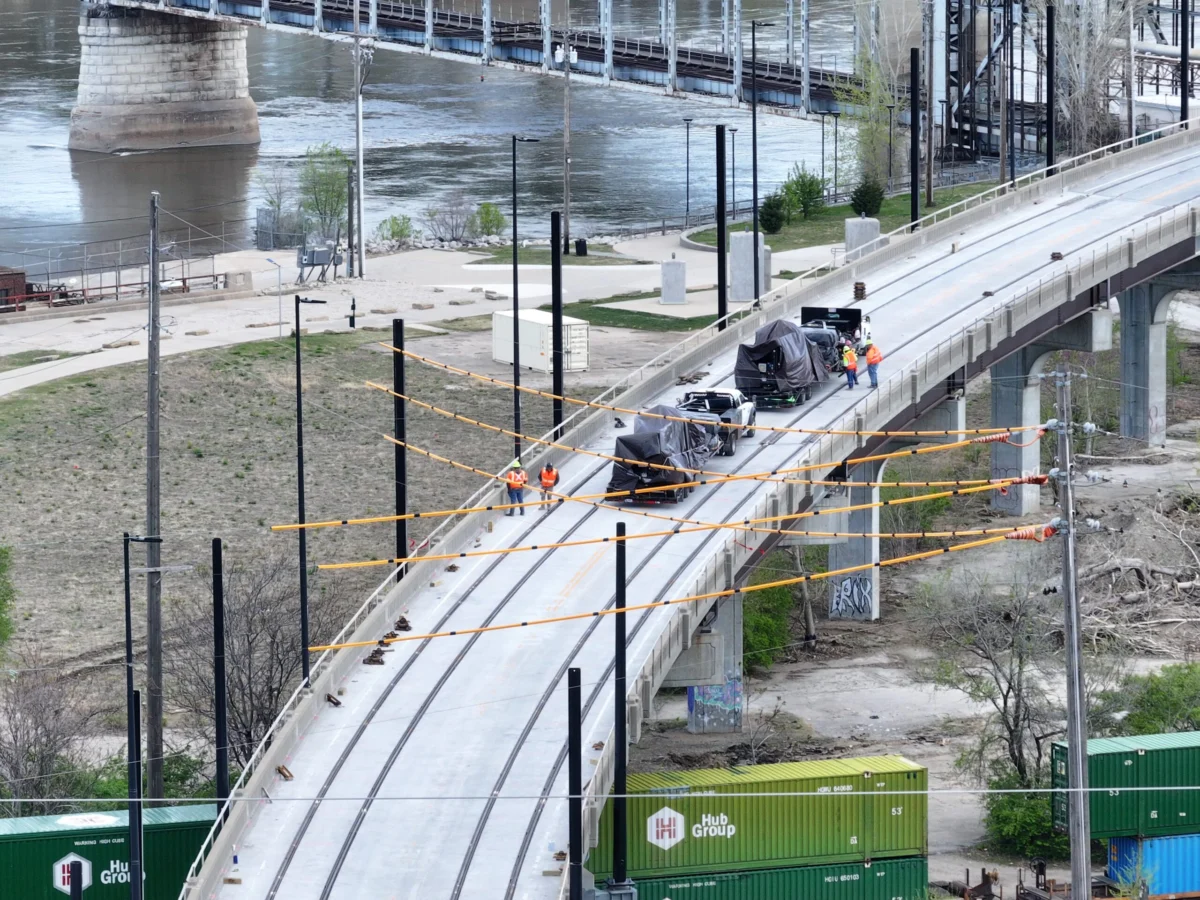
In the Midwest, Kansas City continues to refine its urban core with the Streetcar Waterfront Extension. The 1.1 km (0.7-mile) northern extension will serve the burgeoning Berkley Riverfront Park and the new CPKC Stadium, reinforcing the streetcar’s role as a catalyst for riverfront redevelopment.
The West and Pacific Coast
Las Vegas is tackling its unique transit challenges with the Maryland Parkway BRT. This $378 million, 20 km (12.5-mile) corridor will bridge the gap between the Las Vegas Medical District, downtown, and Reid Airport, incorporating significant streetscape enhancements such as improved lighting and pedestrian infrastructure.

Los Angeles remains the epicenter of major transit construction. Two monumental projects define its 2026 outlook:
- D Line Extension (Phase I): This $3.5 billion, 6.3 km (3.9-mile) subway extension finally brings heavy rail into the heart of the museum district, connecting Wilshire/Western to La Cienega.
- LAX Airport Connector: Following the 2025 arrival of light rail at the airport’s edge, the $2.7 billion automated people mover will finally provide the critical final-mile link directly into the terminals, effectively completing the long-awaited integration of LAX into the regional rail network.
In the Pacific Northwest, Seattle will celebrate the final phase of the Link 2 Line (East Link Extension). Linking Bellevue to Seattle’s International District across the I-90 floating bridge, this 12 km (7.5-mile) segment will provide a high-frequency cross-lake connection, vital for the region’s dense employment corridors.

The Mexican Expansion
Mexico is seeing a surge in intermodal and regional connectivity.
- Mexico City: The Observatorio section of "El Insurgente" (Mexico-Toluca Interurban Train) will finally bridge the regional rail line to the Mexico City Metro system, creating a seamless transfer point. Additionally, the Lechería to AIFA regional rail line will provide a 43-minute connection from Buenavista to the Felipe Ángeles International Airport, projected to carry 82,000 daily riders.
- Mexicable Linea 3: Expanding the aerial transit footprint, this 9.5 km (5.9-mile) tramway will serve 40,000 daily riders in the State of Mexico, linking the Cuatro Caminos Metro station to underserved western neighborhoods.
- Monterrey: The Metrorrey Linea 4/6 monorail project continues to advance. These lines are set to add nearly 16 km of elevated, high-tech transit capacity to the city’s existing light rail network.
Canadian Infrastructure Milestones
Montréal’s REM (Réseau express métropolitain) continues its aggressive expansion with the Anse-à-l’Orme branch. This 15 km (9.3-mile) automated light metro line will serve four new stations on the island’s western side, providing a high-speed alternative for suburban commuters.

In Ottawa, the Line 1 East Extension adds 12 km (7.5 miles) and five new stations to the city’s light rail network. Despite construction challenges, this extension is a vital upgrade for residents of the eastern suburbs.
Perhaps the most scrutinized project is Toronto’s Line 5 (Eglinton Crosstown). With costs ballooning to $13 billion CAD, this 19 km (11.8-mile) light rail line represents a massive investment in crosstown mobility. Once operational, it will provide a long-awaited east-west backbone for the city.

Chronological Overview of 2026 Openings
- Q1 2026: Ottawa Line 1 East Extension, Mexico City (Lechería to AIFA), Mexico City (El Insurgente – Observatorio).
- Spring 2026: Montréal REM (Anse-à-l’Orme), Orange County Streetcar, Ottawa Line 1 (finalization), St. Louis Red Line Extension.
- June 2026: Los Angeles LAX Airport Connector.
- Mid-2026: Baton Rouge BRapid, San Bernardino West Valley Connector.
- August 2026: Houston 54 Scott BOOST.
- September 2026: Atlanta MARTA Rapid A-Line.
- Fall 2026: Las Vegas Maryland Parkway BRT.
- Late 2026: Mexico City (Mexicable Linea 3), Monterrey (Metrorrey Linea 4/6).
Supporting Data and Transit-Oriented Growth
The data gathered for these projects underscores a clear trend: the "post-pandemic" transit landscape is defined by efficiency and intermodal synergy. Projects like the Orange County Streetcar ($649 million) and the St. Louis MidAmerica Airport extension ($150 million) highlight the ongoing commitment to connecting existing commuter rail and aviation hubs with local transit networks.
Notably, many of these projects were delayed from original 2024 or 2025 timelines. These delays, while frustrating for stakeholders, reflect the complexity of modern construction in dense urban environments and the volatility of global supply chains. The total investment across this selection exceeds $20 billion, signaling that despite fiscal pressures, the appetite for high-quality, fixed-guideway transit remains robust.

Official Perspectives and Challenges
Agencies such as Metrolinx in Toronto and Sound Transit in Seattle have emphasized that these projects are not merely about current ridership numbers, but about creating long-term resilience. The Eglinton Crosstown, for instance, has faced significant criticism regarding its ballooning budget. However, project officials argue that the 30-year maintenance and operations contract embedded in the project cost provides a level of stability that standard, piecemeal funding models lack.
Similarly, in Los Angeles, the transition of the D Line extension into the museum district is viewed by Metro officials as a "transformative" moment for the city’s culture and economy, moving the needle on the "15-minute city" concept.

Implications for the Future
As these projects reach completion throughout 2026, the implications for urban development will be profound. The arrival of high-frequency rail and BRT generally triggers a "halo effect" of transit-oriented development (TOD). Developers are already breaking ground on residential and commercial projects around the new stations in Los Angeles, Montréal, and Atlanta.
Furthermore, the integration of these lines into the Transit Explorer database allows planners and the public to visualize the increasing density of North America’s transit web. As the network grows to over 62,300 stations globally, the ability to analyze these connections becomes an invaluable tool for ensuring that future investments are data-driven rather than speculative.

The year 2026 is, above all, a testament to the endurance of public transit. In an era dominated by discussions of remote work and the changing nature of the office, these projects affirm that the physical connection of people to places remains the bedrock of a functioning, equitable society. Whether it is a new monorail in Monterrey or a critical airport link in Los Angeles, the projects of 2026 are building the infrastructure that will define the next generation of North American urban life.
