

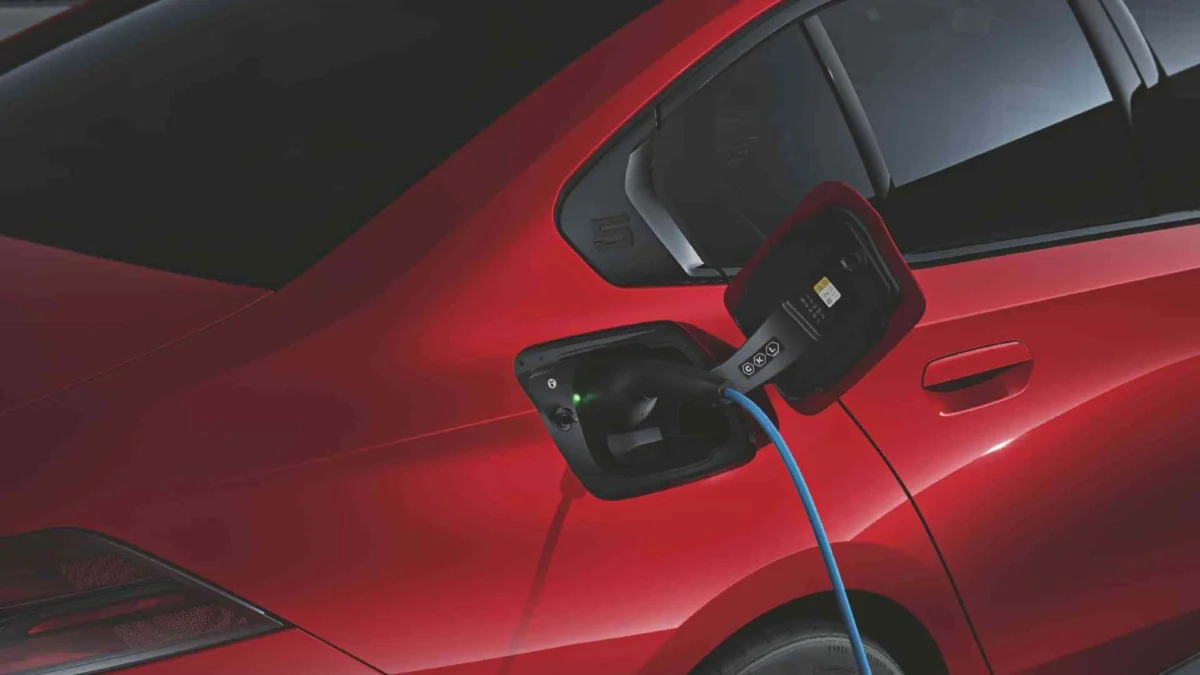
The electric vehicle (EV) revolution has hit a psychological speed bump. While technological advancements have pushed battery capacities to record levels, a significant gap remains between the reality of how Americans drive and the perceived requirements of potential EV buyers. A new survey conducted by BMW Group North America has shed light on this phenomenon, revealing that while 73 percent of respondents admit they drive 75 miles or less on a typical day, they remain tethered to the idea that they need far more range to justify making the switch.
This "range anxiety," once a niche concern for early adopters, has become a mainstream hurdle for automakers. As the industry shifts from the "early adopter" phase to mass-market adoption, understanding the disconnect between daily utility and consumer perception has become the primary mission for manufacturers looking to accelerate electrification.
The Reality of the Daily Commute
The data collected by BMW between September 11 and 13 paints a clear picture of the American driver. With 1,005 US adults surveyed, the findings highlight a stark contradiction: the vast majority of daily driving consists of predictable, short-distance trips. School drop-offs, grocery runs, and the average daily commute rarely exceed the capacity of even the most modest modern battery packs.
Yet, despite this reality, the expectation for minimum range remains inflated. The survey suggests that while the actual physical need for massive range is low, the mental requirement remains high. It is a psychological barrier that transcends mathematics; it is about the "what if" scenario—the fear of being stranded during an unexpected detour or a rare long-distance trip. This anxiety persists even though most modern EVs on the market today can handle a 75-mile daily loop several times over without needing to visit a charging station.
Chronology of an Evolving Market
The evolution of the EV market has been a rapid, often confusing journey for the average consumer. In the early 2010s, "range anxiety" was a valid concern. Vehicles like the early Nissan Leaf or the first-generation BMW i3 offered limited range, often struggling to crest the 100-mile mark. For those buyers, every mile was a calculated risk.
By the mid-2010s, Tesla began to shift the narrative by introducing Supercharging networks and longer-range battery options, setting a new industry standard. As competitors scrambled to catch up, the "range race" began. Manufacturers prioritized maximum range as a marketing metric, essentially teaching consumers that "more is better."
Today, we have arrived at a point where many EVs offer 300 to 400 miles of range, yet the consumer sentiment has not shifted as quickly as the hardware. The BMW survey indicates that we are currently in a transition period—a "maturation phase"—where the focus is finally beginning to shift from total battery capacity to charging convenience, infrastructure reliability, and overall vehicle value.
Supporting Data: The Cost vs. Capability Tug-of-War
While range remains a dominant topic, it is not the only factor in the decision-making process. According to the survey, price remains the primary obstacle to widespread EV adoption. Fifty-one percent of respondents identified the initial purchase cost as their main barrier.
This creates a complex dilemma for automakers. To satisfy the consumer’s desire for massive range, companies must install larger, more expensive battery packs, which inevitably drives up the MSRP of the vehicle. This creates a self-defeating cycle: the consumer demands more range, which makes the car less affordable, which then prevents the consumer from buying the car.
Furthermore, there is a lack of awareness regarding the long-term economic benefits of electric vehicles. Only 27 percent of respondents cited lower ownership and operating costs as a primary motivation for switching to electric. This suggests that the industry has done a poor job of communicating the "total cost of ownership" benefits, focusing instead on the upfront "sticker shock." Interestingly, 55 percent of participants expressed a willingness to consider a certified pre-owned or used EV, provided the cost savings were significant enough. This indicates that the secondary market could be a vital catalyst for future adoption.
Fast Charging: The Potential Game Changer
If total range is the "security blanket" that consumers currently cling to, fast charging is the reality that could eventually replace it. The survey indicates that if an EV could add 150 miles of range in just 10 minutes—effectively the time it takes to grab a coffee and use the restroom—the appetite for massive, heavy, and expensive battery packs might evaporate.
Fifty-three percent of respondents confirmed that such high-speed charging capability would make them significantly more likely to consider an EV. This finding is critical for the future of infrastructure development. It suggests that the industry should perhaps stop obsessing over 500-mile batteries and start investing more heavily in 350kW-plus charging stations that can deliver rapid power reliably.

Generational differences are also becoming apparent. Younger buyers are increasingly comfortable with the idea of shorter, more frequent "top-ups" rather than the traditional "refuel to full" mentality. As charging infrastructure becomes as ubiquitous as gas stations, the threshold for what constitutes an "acceptable" charging time is falling. In 2024, 48 percent of people surveyed by Mini USA said 30 minutes was an acceptable stop; today, that number has climbed to 55 percent according to the new BMW data.
Official Response: A Shift in Perspective
Alexander Schleicher, head of e-mobility for BMW Group North America, views these results as a positive sign of a market that is finally beginning to understand its own needs.
"As range and charging capability continue to advance, we’re seeing consumers evaluate EVs the same way they’d evaluate any other vehicle: on performance, features and value, not on outdated assumptions about range," Schleicher stated.
BMW’s perspective is that the "early adopter" era is ending. For years, the people buying EVs were tech enthusiasts who were willing to forgive flaws and adapt to the limitations of the technology. Now, the industry is courting the "mainstream" buyer, who treats a car as a tool rather than a lifestyle statement. This consumer expects an EV to be just as convenient as a gas-powered car, which means the responsibility lies with the manufacturers to bridge the gap through better charging, lower prices, and improved education.
The Implications: What This Means for the Future
The implications of this survey are profound for the automotive industry.
1. The Death of the "Range Race"
We are likely approaching the ceiling of the "range race." Beyond 400 miles, the marginal utility for the average consumer drops significantly, while the weight and cost penalties of the battery continue to rise. Future innovation will likely pivot toward software, battery chemistry efficiency, and, most importantly, faster charging curves.
2. Marketing Needs a Pivot
Automakers must move away from marketing "miles" as the primary feature. Instead, they need to market "convenience" and "integration." Showing a consumer that they can handle their entire work week on a single charge—and that a quick stop on a road trip is faster than a standard lunch break—will be more effective than simply boasting about a 500-mile range.
3. The Second-Hand Market
The fact that over half of the respondents are open to used EVs is a major opportunity. As the first generation of modern, long-range EVs hits the used market in large numbers, it will lower the barrier to entry for millions of families. This will prove that EVs are not just luxury items for the wealthy, but practical, affordable transportation for the masses.
4. Infrastructure is Everything
The survey underscores that the "range anxiety" of today is, in many ways, an "infrastructure anxiety." If the public had higher confidence in the reliability and speed of public charging networks, the perceived need for 400+ miles of range would likely plummet. The focus for policymakers and private industry must remain on density and reliability of high-speed charging.
Conclusion
The BMW survey serves as a mirror held up to the American car buyer. It reflects a society that is technically ready to embrace the electric transition but remains held back by the inertia of a century of combustion-engine habits.
The disconnect between the 75-mile daily drive and the desire for "more" is not a sign of irrationality; it is a sign of a market that is still adjusting to a new paradigm. As charging speeds increase and the price gap between internal combustion and electric continues to narrow, the reliance on the "range security blanket" will likely diminish. We are witnessing the maturation of an industry, one where the car itself is becoming less about the battery underneath and more about the experience behind the wheel. The transition will not happen overnight, but as these numbers show, the path toward a fully electrified future is becoming clearer, one short commute at a time.
