

In the automotive world, the march of progress is usually measured in incremental gains. We expect every new model year to bring a slight improvement in efficiency, a marginal increase in refinement, and a subtle leap in technology. Yet, a curious anomaly has emerged in the American performance segment, revealing a fascinating disconnect between raw capability and federal fuel economy ratings.
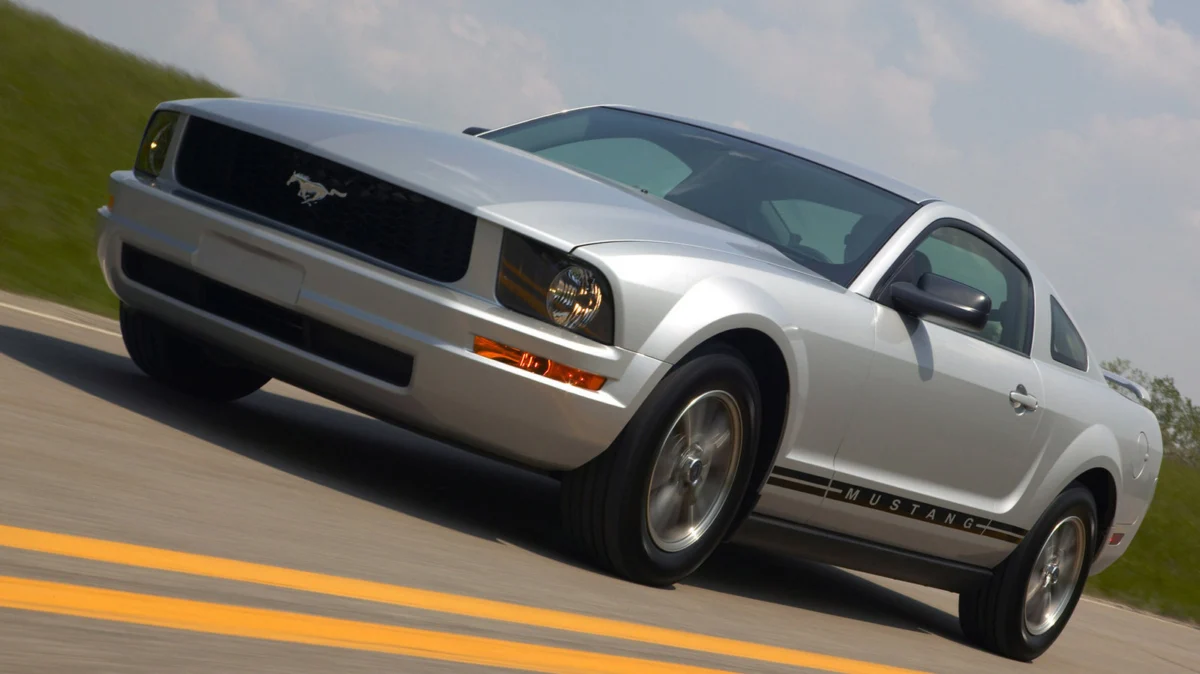
A review of EPA data confirms a startling reality: the 2026 Ford Mustang GT, when equipped with a manual transmission, returns the exact same fuel economy figures as its predecessor from 2009. Both vehicles are rated at 15 mpg in the city, 23 mpg on the highway, and 18 mpg combined. After 17 years of rapid technological advancement, advanced materials science, and computational fluid dynamics, the fuel efficiency of the quintessential American pony car has remained effectively static.
The Data: A Static Benchmark
To understand the gravity of this observation, one must look at the official EPA certification logs. For the 2009 Ford Mustang GT, the 4.6-liter V8 engine paired with a five-speed manual gearbox was the standard for high-performance daily driving. Fast forward to the 2026 model year, and the modern 5.0-liter Coyote V8, paired with a six-speed manual transmission, mirrors those exact figures.
This is not a case of rounding errors or minor statistical variances. The 15/23/18 mpg rating is a literal reflection of the fuel consumption profiles of two vehicles separated by nearly two decades of engineering evolution. While the automatic transmission variants have seen slight improvements—with the 2026 10-speed automatic Mustang GT achieving a 16/24/19 mpg rating compared to the 15/22/18 mpg of the 2009 five-speed automatic—the manual transmission segment remains anchored to the standards of the late 2000s.
A Historical Chronology of Engine Evolution
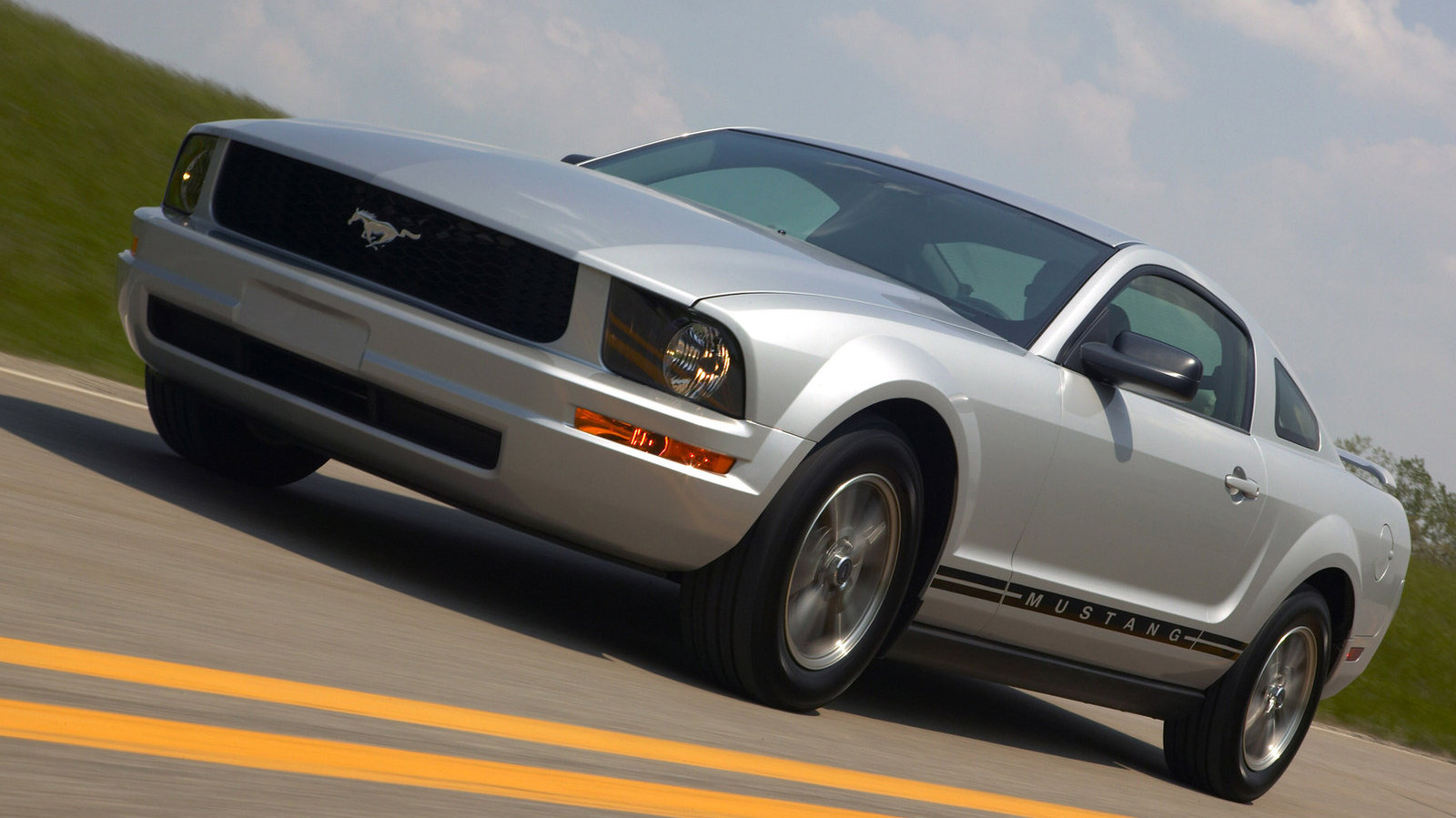
To dismiss this stagnation as a failure of engineering would be to overlook the radical transformation that has occurred under the hood. The 2009 Mustang GT utilized the final iterations of the Ford Modular engine architecture. By that time, the 4.6-liter V8 was a highly refined, albeit aged, platform. It produced 300 horsepower and 320 pound-feet of torque.
In contrast, the 2026 Mustang GT’s 5.0-liter Coyote engine represents the pinnacle of naturally aspirated V8 development. It generates a staggering 480 horsepower and 415 pound-feet of torque. This is a 60% increase in power output, achieved while maintaining the same displacement footprint and fuel efficiency profile as its significantly weaker ancestor.
The narrative is similar when examining the Chevrolet Corvette. A review of the last four generations shows that while the cars have become exponentially faster, their combined fuel economy has fluctuated within a razor-thin margin. The 2004 base-model Corvette (C5) offered a 19 mpg combined rating. The 2026 iteration, despite being a mid-engine exotic capable of performance that would have embarrassed supercars of the early 2000s, remains in the same 18–19 mpg bracket.
The Engineering Trade-off: Power vs. Efficiency
Why hasn’t the fuel economy improved? The answer lies in the engineering priorities of the performance sector. When manufacturers like Ford and General Motors develop high-performance V8s, they are not primarily tasked with maximizing miles per gallon; they are tasked with maximizing volumetric efficiency, thermal management, and power density.
The Physics of Performance
Modern engines like the Coyote V8 or the LT2 in the Corvette utilize complex variable valve timing, sophisticated electronic fuel injection systems, and high-compression ratios to squeeze more energy out of every drop of gasoline. However, these systems are calibrated to prioritize torque delivery and high-RPM power.
If engineers were to prioritize fuel economy above all else, they would likely downsize the displacement or rely heavily on forced induction with aggressive lean-burn cycles. But the market for a V8 Mustang or Corvette is not driven by fuel-sipping efficiency—it is driven by the visceral experience of a naturally aspirated power plant. Consequently, the "gains" in efficiency that have been achieved through modern friction reduction and aerodynamic improvements have been immediately reinvested into higher performance ceilings rather than lower fuel consumption.
Transmission Dynamics
The transition from five-speed and four-speed automatics to modern 10-speed units has been the primary driver of any efficiency gains observed in the automatic segment. The wider gear ratios allow the engine to spend more time in its most efficient operating band, whether that is at a steady highway cruise or during light city acceleration. The fact that the manual transmission models have remained static is largely due to the fixed nature of manual gearing, which has not evolved at the same rate as multi-clutch or planetary-gear automatic systems.
Official Industry Stance and Regulatory Context
It is a common misconception that such stagnation is the result of corporate laziness or an indifference toward emissions regulations. In reality, automakers operate under strict CAFE (Corporate Average Fuel Economy) standards.
When Ford or GM engineers a high-performance vehicle, it is often part of a wider fleet strategy. While the Mustang GT or the Corvette may show "flat" fuel economy over time, they are balanced by the manufacturer’s other offerings—hybrids, compact crossovers, and electric vehicles—that pull the fleet-wide average toward compliance.
Manufacturers have explicitly stated that their goal is to keep these iconic platforms viable in an increasingly electrified landscape. By maintaining the V8’s performance-to-efficiency ratio, they satisfy the core enthusiast demographic while ensuring that these engines meet the increasingly stringent emissions standards that have evolved since 2009. The fact that they can produce 40% to 60% more power while meeting the same emissions and fuel economy standards as engines built nearly 20 years ago is, in many ways, a testament to the immense progress made in combustion science.
Implications for the Future of the V8
The persistence of these fuel economy figures serves as a "canary in the coal mine" for the future of internal combustion. It highlights the physical limits of the naturally aspirated V8. We have reached a point of diminishing returns where further increases in fuel economy would require sacrificing the very attributes that define these cars: the throttle response, the exhaust note, and the linear power delivery.
The End of an Era?
As we look toward 2030 and beyond, the "flat" fuel economy of these vehicles suggests that the V8 has reached the ceiling of its evolutionary potential. To move past this 18-mpg barrier would likely require hybridization—a path that some manufacturers are already exploring. The integration of electric motors could allow for improved city fuel economy without stripping the V8 of its character, effectively "cheating" the laws of physics that have kept these numbers stagnant for nearly two decades.
The Enthusiast’s Perspective
For the average buyer, the lack of improvement in fuel economy is rarely a deal-breaker. The performance gap is simply too massive to ignore. The 2026 Mustang GT is not just a faster car than the 2009 model; it is a more capable, safer, and more technologically advanced machine in every measurable category. The fact that it manages to deliver this superior performance while consuming fuel at the same rate as a 2009 model is, for many, a win. It implies that for the same "cost" in fuel, the consumer is receiving a significantly more rewarding driving experience.
Conclusion: A Triumph of Engineering, Not Stagnation
To look at the EPA ratings and conclude that American automakers are standing still is a fundamental misreading of the automotive landscape. While the fuel economy numbers have remained trapped in a 17-year loop, the engines themselves have been completely reinvented. We have transitioned from the era of simple, robust Modular engines to the era of high-tech, precision-engineered power plants that push the boundaries of what a naturally aspirated engine can do.
The paradox of the "same mileage" is not a sign of failure; it is a sign of a choice. Automakers have chosen to prioritize performance, power, and engagement, using every ounce of modern technological efficiency to bolster the capability of the vehicle rather than its range. As the automotive industry shifts toward a future dominated by electrification, these "static" V8s stand as the final, peak iteration of a century-long obsession with the internal combustion engine. They are, quite possibly, the most efficient, most powerful, and most refined V8s we will ever see. And perhaps, for the enthusiasts who buy them, that is exactly how it should be.
