

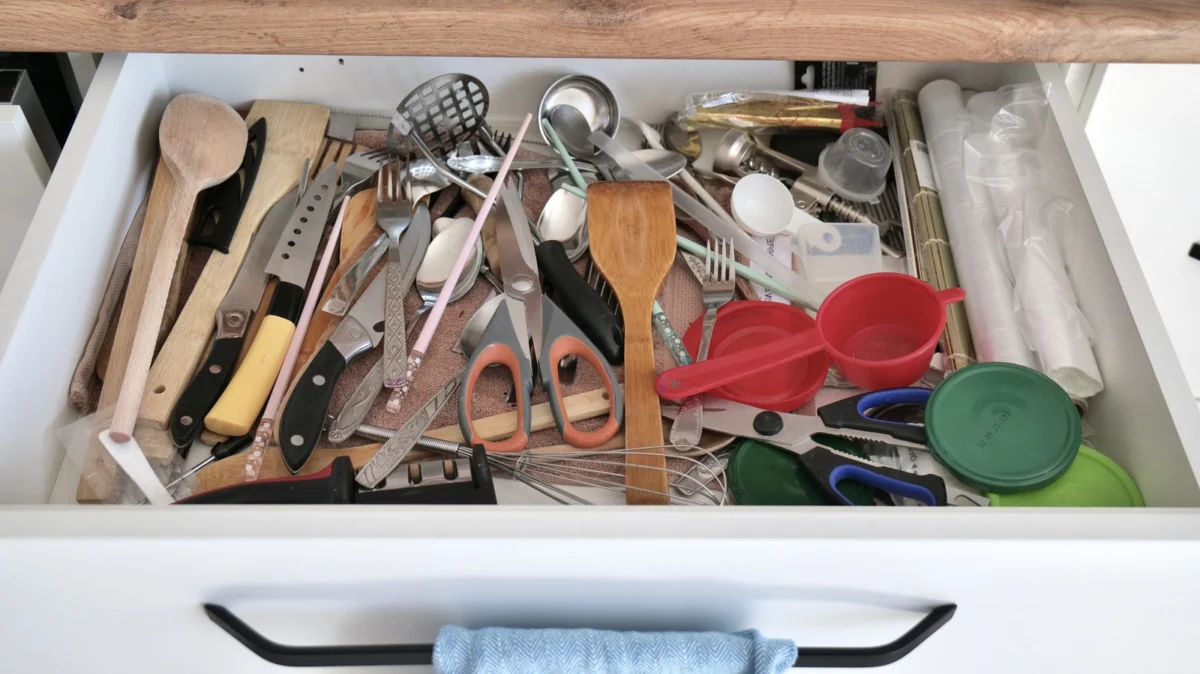
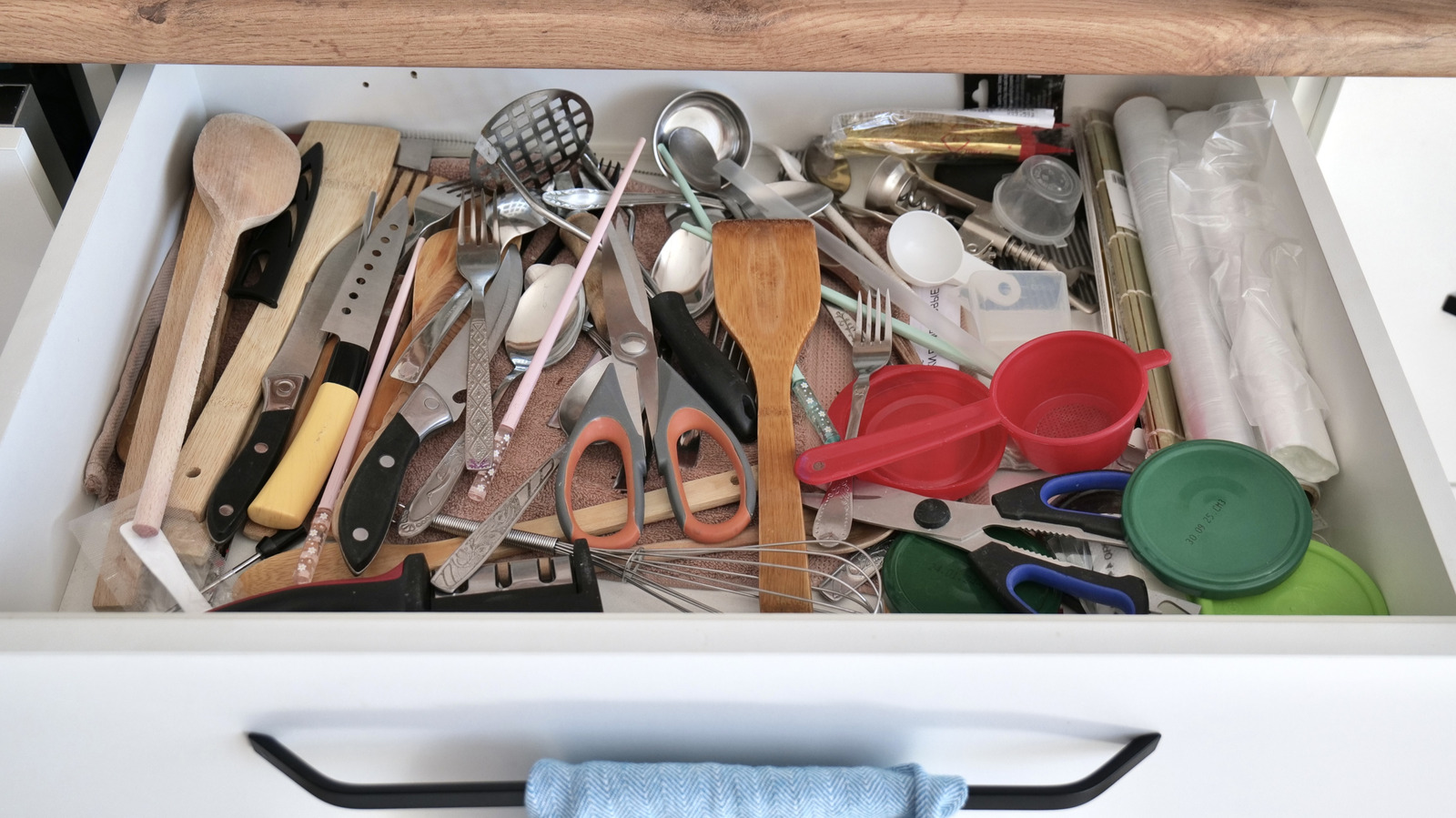
In the modern culinary landscape, the kitchen is often referred to as the heart of the home, but for many, it is also the primary site of domestic chaos. Among the most notorious offenders in home organization is the "junk drawer"—specifically the utensil drawer. Whether it is a pair of tongs that refuses to stay shut, a chef’s knife sliding dangerously against other tools, or a collection of mismatched gadgets creating a tangled web, kitchen clutter is more than just an eyesore; it is a safety hazard.
As homeowners and professional organizers seek sustainable, cost-effective solutions to these logistical headaches, a surprising candidate has emerged from the recycling bin: the humble paper towel roll. By repurposing these cardboard cylinders, individuals are creating custom, modular storage systems that address the unique dimensions of awkward kitchen tools.
The Anatomy of Kitchen Chaos: Why Standard Organizers Fail
To understand why a cardboard tube provides a superior solution, one must first analyze the failure of conventional storage. Most store-bought drawer dividers are designed for linear, uniform items: forks, spoons, and butter knives. They utilize rectangular grid systems that assume every tool fits neatly into a square compartment.
However, the modern kitchen is filled with "problematic" implements. Tongs are inherently spring-loaded and prone to snagging on other items. Mandoline blades, citrus presses, and specialized spatulas often feature irregular silhouettes that do not play well with standard plastic dividers. When these items are loose in a drawer, they create a "clutter cascade"—a situation where one item blocks the drawer from opening or poses a laceration risk to the user.
Professional organizers have long noted that the most efficient kitchens are those that treat every tool as an individual unit rather than part of a collective pile. The paper towel roll, by virtue of its cylindrical shape and structural integrity, acts as a protective sheath, effectively "de-tangling" the drawer environment.
Chronology of the DIY Organization Movement
The trend of "upcycled storage" did not emerge in a vacuum. It is the product of two converging cultural shifts: the rise of the "zero-waste" lifestyle and the democratization of interior design via social media platforms.
- 2015–2018 (The Minimalism Wave): Influenced by figures like Marie Kondo, homeowners began aggressively purging kitchen items. As the focus shifted from "having less" to "organizing what remains," DIY enthusiasts began experimenting with household waste as storage components.
- 2019–2021 (The Sustainability Pivot): During the global pandemic, supply chain disruptions made traditional organizational products harder to source. This forced consumers to look toward DIY solutions, leading to a surge in tutorials regarding the reuse of cardboard packaging.
- 2022–Present (The Aesthetic Integration): The current phase of this movement focuses on "hidden beauty." It is no longer enough for a solution to be functional; it must be aesthetically pleasing. This has led to the development of methods involving peel-and-stick wallpaper, washi tape, and waterproof sealants to transform basic cardboard into high-end-looking storage units.
Engineering a Sheath: Technical Implementation
Turning a discarded roll into a professional-grade sheath requires a blend of structural reinforcement and aesthetic customization. The process is rooted in the principles of modular storage.
Step 1: Structural Preparation
The cardboard tube must first be measured against the specific utensil it is intended to house. For knives, the tube should be cut to a length that covers the blade entirely, leaving the handle exposed for easy retrieval. For tongs, the tube should be long enough to hold the handles together at the tension point.
Step 2: Reinforcement for Longevity
Cardboard is naturally susceptible to moisture, which is prevalent in kitchen environments. To mitigate this, experts recommend the application of a waterproof sealer. Mod Podge Dishwasher Safe, or even a simple coat of clear acrylic spray, can provide a moisture barrier. This prevents the cardboard from softening over time due to humidity or incidental contact with wet hands.
Step 3: Aesthetic Customization
The "upcycling" aspect relies on the marriage of function and form. To ensure the solution feels like a permanent fixture rather than a temporary fix:
- Adhesive Coverage: Using waterproof peel-and-stick wallpaper allows the user to color-coordinate the tubes with their kitchen cabinetry or drawer liners.
- Color Coding: By using different patterned tapes for different types of tools (e.g., blue for baking, red for meat prep), users can create a visual shorthand that speeds up the cooking process.
- Structural Binding: Wrapping the tube in electrical or duct tape adds a secondary layer of durability, allowing the tube to withstand the friction of being pulled in and out of the drawer repeatedly.
Supporting Data: Efficiency and Safety Metrics
Studies on "kitchen ergonomics" suggest that the time taken to locate and retrieve a tool directly impacts the "flow" of meal preparation. In a cluttered drawer, the average user spends approximately 15 to 30 seconds searching for a specific item. By implementing a sheath-based system, this time can be reduced to under 5 seconds.
Furthermore, the safety implications are significant. Sharp-edged implements, when loose, contribute to a high percentage of minor kitchen injuries. By creating a dedicated cardboard sheath, the sharp edge is shielded, reducing the risk of accidental cuts during the "blind reach" into a drawer. From an environmental perspective, reusing a single paper towel roll prevents the immediate consumption of new plastic storage products, aligning with the circular economy principles that emphasize extending the life of existing materials.
Expert Perspectives and Implications
Professional home organizers generally endorse the "sheath method" as a low-barrier-to-entry solution for those struggling with drawer real estate.
"The beauty of this method lies in its adaptability," says Sarah Jenkins, a home management consultant. "Most people believe they need to buy expensive, custom-milled inserts to organize a drawer. But in reality, you need volume-based containment. A cardboard tube is essentially a ‘bespoke’ container for a specific, difficult-to-store object. It eliminates the need for expensive organizational systems that often fail to fit irregular spaces."
However, there are caveats. Experts advise that these solutions should be viewed as "living" organizers. Because cardboard is biodegradable, it will eventually degrade. The system requires a maintenance cycle: as tubes become worn or soiled, they should be recycled and replaced with new ones from the next finished roll of paper towels.
The Broader Implications for Sustainable Home Design
The widespread adoption of repurposing common household items signals a shift in consumer behavior. We are moving away from the era of "disposable consumption," where every problem requires a new purchase. Instead, the "Paper Towel Roll Revolution" represents a move toward intentional consumption.
As we look toward the future of kitchen design, the integration of modular, upcycled storage is likely to influence how we approach home organization on a larger scale. When a simple cardboard tube can outperform a $50 plastic organizer, it challenges the industry to rethink the value of household waste.
Ultimately, the goal of kitchen organization is to lower the "activation energy" required to cook a meal. By ensuring that every tool has a designated place—even if that place is a beautifully wrapped piece of cardboard—we create a safer, faster, and more enjoyable cooking environment. The next time you finish a roll of paper towels, consider the potential hiding in your hands; you are not just holding trash, you are holding the solution to your next kitchen conundrum.
