

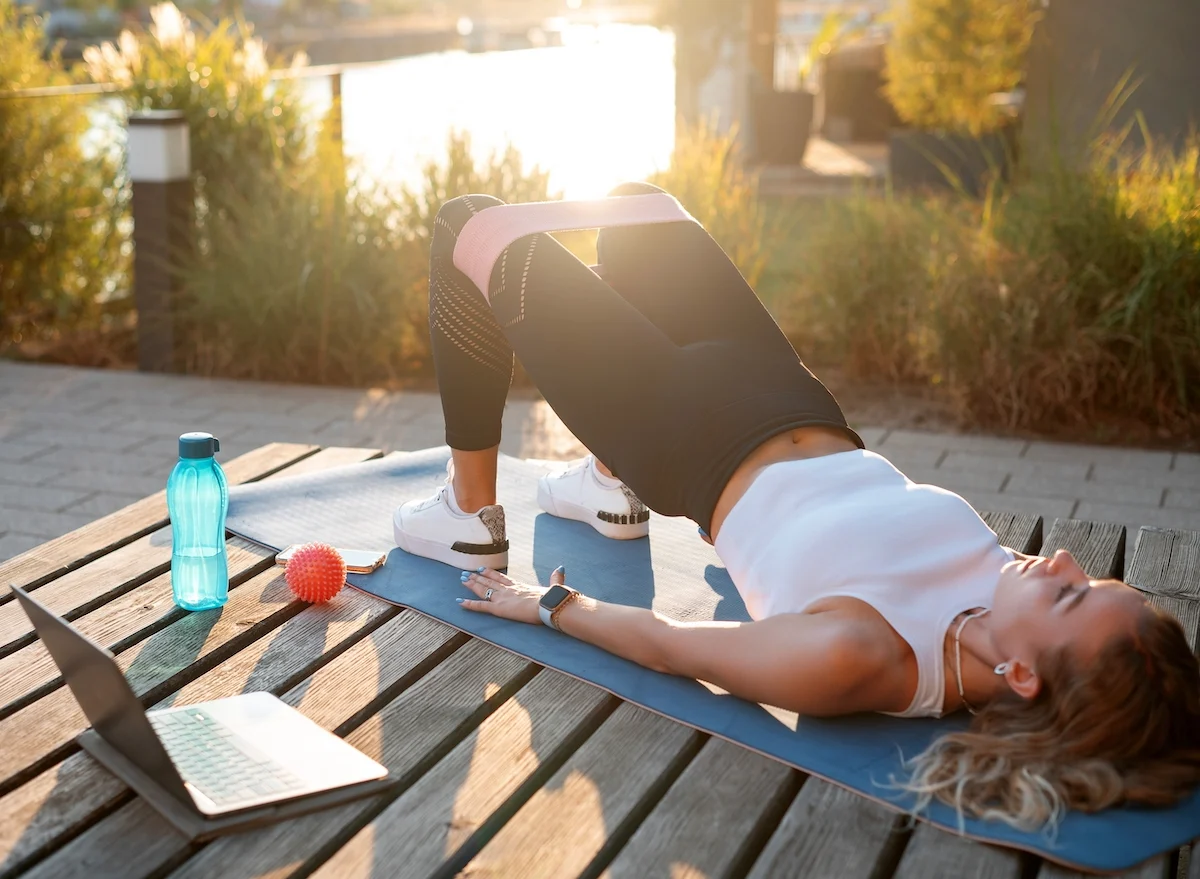
Maintaining independence and mobility after the age of 60 is rarely about high-intensity cardio or endurance sports; it is fundamentally rooted in the stability and power of your hips. Often overlooked until discomfort arises, the hips serve as the "powerhouse" of the human body, acting as the bridge between your upper body and your legs.
If you have ever felt a moment of hesitation before standing up from a low chair, or if climbing a flight of stairs feels more taxing than it used to, you are likely experiencing the silent decline of hip strength. Fortunately, you don’t need to guess where you stand. By using a standardized, four-movement "hip audit," you can objectively assess your functional strength, identify asymmetries, and build a roadmap for long-term health.
The Foundation: Why Hip Strength Dictates Quality of Life
The importance of strong hips extends far beyond the gym. Scientifically, hip strength is the primary predictor of "functional independence" in older adults. Strong glutes and hip flexors facilitate everyday tasks: rising from a seated position, maintaining balance on uneven surfaces, and sustaining a confident stride during long walks.
When hip muscles weaken—a process clinically referred to as sarcopenia—the body compensates by shifting the load to the lower back and knees. This is why many people over 60 report "mystery" back pain; it is often a symptom of underactive glutes. By proactively testing your hip function, you aren’t just checking off a fitness goal; you are investing in an insurance policy for your future mobility.
The Four-Part Assessment: A Chronological Diagnostic
To get a comprehensive read on your hip health, you must test multiple planes of motion. We break this down into a four-step diagnostic: extension, unilateral control, squatting power, and the posterior chain hinge.
1. The Glute Bridge: Assessing Foundational Extension
The glute bridge is the gold standard for testing hip extension—the ability to fully open the hip joint.

- The Diagnostic: Lie flat on your back, knees bent, feet flat on the floor. Lift your pelvis toward the ceiling by squeezing your glutes.
- The Standard: A top-tier result is 15 clean, controlled repetitions. If your lower back arches or you feel more fatigue in your hamstrings than your glutes, you are likely overcompensating.
- Implications: If you cannot reach 15 reps, your hip extensors are likely underdeveloped, which will inevitably lead to lumbar strain when performing standing activities.
2. The Single-Leg Bridge: Identifying Asymmetries
Life is rarely performed on two legs. Whether you are walking, stepping onto a curb, or getting out of a car, your body relies on one leg to bear the weight.
- The Diagnostic: Perform a standard glute bridge, but extend one leg straight out. Lift your pelvis using only the planted leg.
- The Standard: 8 controlled reps per side, maintaining a level pelvis. If your hips tilt or drop on one side, you have identified a significant muscle imbalance.
- Implications: Asymmetry is a leading cause of falls in adults over 60. Correcting this imbalance is critical for gait stability and preventing hip joint degeneration.
3. The Goblet Squat: Functional Loading
Once you have mastered the floor, it is time to move to a standing position. The goblet squat requires your hips to produce force while supporting your body weight plus an external load.
- The Diagnostic: Hold a dumbbell against your chest. Descend into a squat, keeping your chest tall and heels planted.
- The Standard: 10 repetitions with a challenging weight, ensuring your thighs reach at least parallel to the floor.
- Implications: This movement mirrors the mechanics of sitting down and standing up. If you cannot maintain form, your hips lack the "torque" necessary to assist you in daily life, putting excessive pressure on your knees.
4. The Romanian Deadlift (RDL): The Posterior Hinge
The hinge is arguably the most important movement for the aging population to master. It separates the hips from the spine, teaching you to move from the hip joint rather than the lower back.
- The Diagnostic: Hold two dumbbells in front of your thighs. Keep your back straight, hinge at your hips, and push your glutes backward until you feel a stretch in your hamstrings. Return to a standing position by driving your hips forward.
- The Standard: 10 clean reps with a challenging weight.
- Implications: A weak hinge is the primary cause of chronic lower back pain. Mastering this movement ensures that when you pick up a grandchild or a bag of groceries, the force is absorbed by your muscles, not your discs.
Supporting Data and Clinical Evidence
Research published in various medical journals, including the Archives of Physical Medicine and Rehabilitation, suggests that targeted hip strengthening can reduce the incidence of falls by up to 30% in adults over 65. The shift from "rehab" to "prehab" is the modern medical gold standard.
Clinical data shows that as we age, we lose Type II (fast-twitch) muscle fibers in the hips first. These are the fibers responsible for catching yourself if you stumble. By utilizing these four exercises, you are not just building muscle; you are maintaining the neuromuscular pathways required for rapid reaction and stability.
Expert Consensus: Training for Longevity
Physiotherapists and strength coaches agree that "movement quality" must supersede "weight lifted." For those over 60, the goal is to maintain range of motion while increasing force production.

- Progressive Overload: Once you can hit the "top-tier" standards listed above, do not simply add more weight blindly. Focus on slowing down the tempo of the movement to increase "time under tension."
- Consistency over Intensity: Training your hips twice a week is superior to one marathon session. Frequent stimulation signals the body to maintain muscle mass.
- The "Listen to Your Body" Protocol: If a movement causes sharp pain, stop immediately. Use the "Best Variations" suggested—such as the B-Stance RDL or Banded Glute Bridge—to work around limitations until your mobility improves.
The Long-Term Implications of a Strong Posterior Chain
Completing this four-part audit provides more than just a sense of accomplishment. It creates a "functional buffer." When your hips are strong, you are less likely to suffer from knee osteoarthritis, hip bursitis, or chronic sciatica.
Furthermore, the psychological benefit of feeling physically capable cannot be overstated. When you trust your body to perform, you are more likely to remain active, participate in social outings, and engage in travel. The "fear of falling" is a real psychological barrier for many, and it is almost exclusively defeated by building the strength required to maintain balance and power.
Conclusion: Your Roadmap for the Next 60 Days
If you have completed this assessment, you now have a clear diagnostic report. Perhaps your single-leg bridge is weak, or your RDL lacks depth. Use this information to tailor your training for the next two months:
- Weeks 1–4: Focus on mastering the movement patterns. Use light weights and prioritize perfect form in front of a mirror.
- Weeks 5–8: Introduce "progressive overload." Increase the weight slightly or add a second set to your weakest exercise.
- Week 9: Re-test. Measure your progress against the standards listed above.
The hips are the engine of your body. By taking the time to test, train, and maintain them, you ensure that your next decade is defined by mobility, strength, and confidence rather than restriction. Keep training, keep moving, and let these standards serve as your guide to a stronger, more capable future.
