

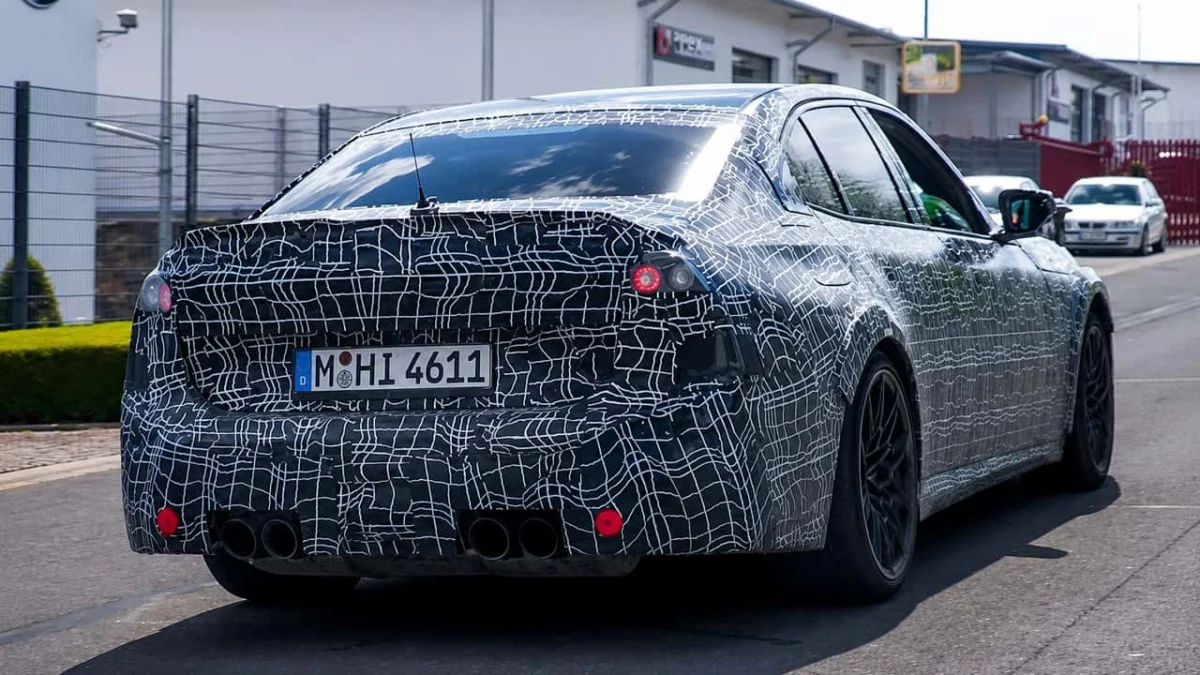
While the automotive world’s gaze is increasingly fixed on the electrified future of the Neue Klasse platform, BMW is quietly ensuring that its performance heritage remains tethered to the visceral experience of the internal combustion engine. Recent sightings of a heavily camouflaged prototype at the Nürburgring have reignited excitement, providing a definitive answer to a burning question: the M3, in its purest, gasoline-burning form, is not going anywhere.
The Nürburgring Proof: A New Chapter for the M3
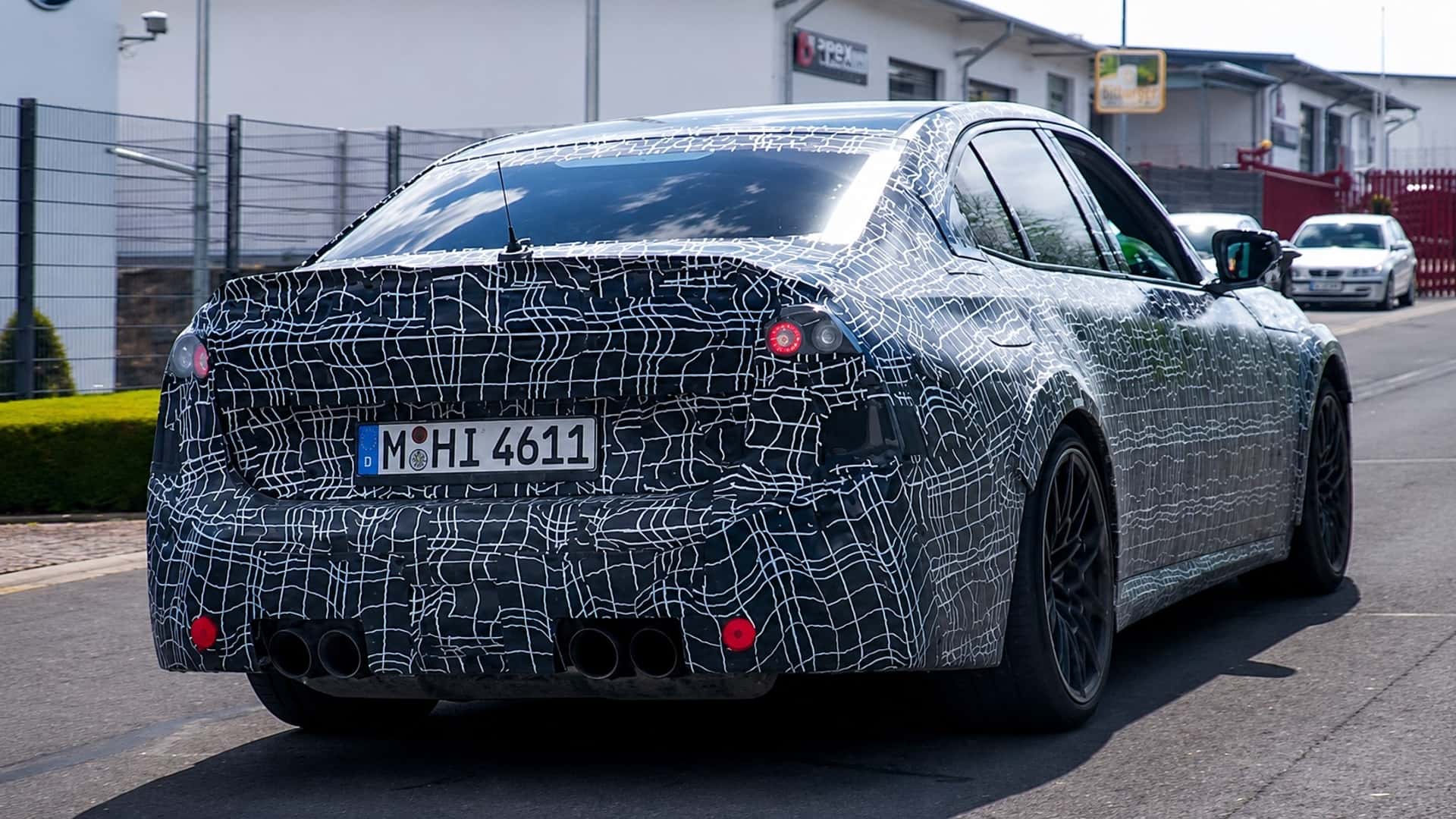
Fresh footage captured by Carspotter Jeroen at the iconic Nürburgring circuit offers the most compelling evidence yet that BMW is actively developing a successor to the current G80-generation M3. The prototype, swathed in intricate black-and-white camouflage, displays the tell-tale signs of a high-performance M vehicle, including widened fenders, an aggressive stance, and a track-ready chassis geometry.
Despite this progress, patience is a requirement. Industry insiders and internal roadmaps suggest that this new iteration of the sports sedan is unlikely to break cover until at least 2028. This long lead time indicates that BMW is meticulously refining the vehicle to ensure it meets the complex demands of modern emissions standards without sacrificing the driving dynamics that have defined the M3 nameplate for decades.
A Chronology of the "G84" Development
The development of the next-generation M3 is a multi-pronged strategy. While BMW has confirmed that the Neue Klasse electric architecture will spawn a high-performance M variant, the company is concurrently engineering a combustion-powered sibling.
- Mid-2020s: BMW introduces pre-chamber ignition technology in its European engines, a precursor to the efficiency gains expected in future performance blocks.
- 2026: Anticipated release of the "M350," a performance-oriented model intended to replace the M340i, serving as a bridge to the new generation.
- 2027: The current G80/G81 M3 generation is expected to reach the end of its production cycle, marking a significant transition point in the 3 Series lineup.
- 2028 and Beyond: The projected launch window for the combustion-powered "G84" M3, which will exist alongside the electric M3 portfolio.
Engineering the "New Type" of Inline-Six
Perhaps the most significant revelation from BMW’s leadership is the confirmation that the brand is not abandoning the inline-six engine layout. Mike Reichelt, Head of Neue Klasse, has explicitly stated that the next-generation M3 will utilize a "new type of six-cylinder engine."
This statement has successfully quelled rumors regarding a potential shift to a V6 configuration—a design BMW has never utilized in a production vehicle, despite internal experimentation. By doubling down on the inline-six, BMW is playing to its traditional strengths: perfect primary balance and linear power delivery.
The upcoming engine is expected to be a substantial evolution of the current twin-turbocharged 3.0-liter unit. To comply with the increasingly draconian Euro 7 emissions standards, engineers are likely incorporating mild-hybrid technology and advanced combustion strategies. While enthusiasts often recoil at the mention of electrification, a mild-hybrid setup could provide a necessary torque fill at low RPMs, further sharpening the M3’s response while keeping the character of a pure combustion engine intact.
Design Philosophy: Familiarity Meets Innovation
One of the most intriguing aspects of the next M3 is its visual connection to the electric future. BMW has made it clear that future models—whether powered by electrons or fossil fuels—will share a common design language. The M Concept Neue Klasse serves as a North Star for this aesthetic.
While the combustion-powered prototype captured at the Nürburgring lacks the extreme, concept-grade aerodynamic add-ons, the core silhouette is undeniable. We can expect the production model to feature:
- Double-Yellow Headlights: A new signature element for future M vehicles.
- Cube-Shaped Lighting: Stacked, vertical light signatures integrated into the bumpers.
- Functional Aero: Expect a sophisticated approach to downforce, likely utilizing a subtle ducktail spoiler and refined underbody airflow management, even if it avoids the "wild" styling of the concept car.
Furthermore, the prototype features a fixed panoramic glass roof, though this will likely be joined by an optional lightweight roof crafted from flax-based natural fiber composites—a sustainable and high-tech alternative to traditional carbon fiber.
Official Responses and Strategic Implications
The decision to continue the gasoline M3 is as much a political and strategic move as it is an engineering one. BMW executives, including M CEO Frank van Meel, have been vocal about maintaining choice for the consumer. By offering both a high-performance electric M3 and a six-cylinder combustion counterpart, BMW is attempting to hedge against the volatility of the global EV transition.
However, the clock is ticking. The European Union’s mandate to reduce CO2 emissions by 90 percent by 2035 (relative to 2021 levels) creates a difficult environment for high-output combustion engines. This reality suggests that the upcoming G84 generation may indeed be the "last of the line" for the six-cylinder M3. This status is likely to make the car an instant collector’s item, appealing to purists who view the mechanical complexity of a combustion engine as the pinnacle of automotive art.
Market Implications: Why the Inline-Six Matters
The survival of the internal combustion M3 is a victory for driving purists. While electric motors provide instant torque and superior acceleration, they currently struggle to replicate the acoustic feedback and the mechanical connection of a turbocharged inline-six.
The integration of this engine into a platform designed to be flexible—capable of hosting both battery-electric and internal combustion powertrains—shows that BMW is unwilling to force a "one-size-fits-all" solution on its M customers. The implication is clear: BMW believes there is still a profitable, albeit shrinking, market for high-performance gas engines.
Furthermore, the potential for a gasoline-powered M3 Touring (the "G81" successor) to finally reach the North American market remains a topic of intense speculation. If BMW does indeed bring the next-generation wagon to the U.S., it would satisfy a long-standing demand from enthusiasts, potentially cementing the G84’s legacy as the most versatile M3 ever produced.
Conclusion: The Final Act of a Performance Icon
The next-generation BMW M3 represents a delicate balancing act. It is a vehicle designed to satisfy the rigorous emissions mandates of a changing world while simultaneously honoring the legacy of a nameplate that has defined the sports sedan segment for nearly four decades.
As we look toward 2028, the message from Munich is one of defiance. They are not merely "keeping the engine alive"; they are evolving it. By blending the soul of the inline-six with the efficiency of modern hybrid components and the cutting-edge design language of the Neue Klasse, BMW is positioning the next M3 to be more than just a car—it is a bridge between the golden age of internal combustion and the unknown horizon of the electric era. For those who believe that the heartbeat of a car lies in its cylinders, the best is yet to come.
