

By Olivia Rosane and Cristen Hemingway Jaynes
Methane is a silent, invisible, and odorless gas that permeates the natural and industrial world. From the wetlands of the Arctic to the digestive tracts of livestock and the leaking valves of gas furnaces, methane is everywhere. While carbon dioxide (CO2) often dominates the climate change conversation, methane is the second most significant contributor to the global warming crisis. As the primary component of natural gas, it fuels 25 percent of the world’s electricity, yet its environmental footprint is far more complex and dangerous than many realize.
Quick Key Facts
- Atmospheric Impact: Over a 20-year period, methane is 86 times more potent at trapping heat than CO2.
- Atmospheric Lifespan: Methane persists in the atmosphere for approximately 12 years, compared to centuries for CO2.
- The 60% Rule: Roughly 60 percent of global methane emissions are directly linked to human activity.
- The 30% Goal: The Global Methane Pledge aims to reduce emissions by 30% of 2020 levels by 2030.
- The "Super-Emitter" Phenomenon: Just 5 percent of the largest methane leaks are responsible for over 50 percent of total industrial leak volume.
The Chemistry and Chronology of a Greenhouse Giant
Methane is a simple hydrocarbon—one carbon atom bonded to four hydrogen atoms. Its origins are both geological and biological. Geologically, methane is formed when heat and pressure act upon organic matter trapped deep underground for millions of years. Biologically, it is the byproduct of methanogenesis, a process where microorganisms called archaea thrive in oxygen-free environments, such as swamps, rice paddies, and the stomachs of ruminant animals.

A Chronology of Accumulation
- Pre-Industrial Era: Atmospheric methane levels remained relatively stable for millennia, maintained by a balance of natural sinks like soil and the troposphere.
- The Industrial Revolution: The rapid expansion of fossil fuel extraction, intensive livestock farming, and massive waste storage began shifting the balance.
- 19th–20th Century: The industrialization of agriculture and the global reliance on natural gas infrastructure accelerated emissions beyond the capacity of natural sinks to absorb them.
- 2023: Atmospheric methane concentrations reached a staggering 1,934 parts per billion (ppb)—a 265 percent increase compared to pre-industrial levels.
Supporting Data: Measuring the Invisible
Scientists utilize two primary methodologies to track methane: "bottom-up" and "top-down."
Bottom-up approaches involve localized counting. By multiplying the emission rates of individual cows by the total number of livestock in a region, or calculating leak rates for specific gas equipment, researchers create a baseline inventory. However, these estimates often fail to capture reality. A study comparing U.S. oil and gas emissions found that actual measurements were 60 percent higher than EPA inventories.
Top-down approaches utilize satellite imagery and high-altitude sensors. This technology has revolutionized our understanding of "super-emitters"—massive, accidental leaks that occur at oil fields or landfills. In 2022 alone, researchers identified over 1,005 such incidents. One notable leak in Turkmenistan released 427 metric tons of methane per hour—the equivalent of an entire nation’s hourly emissions.

The "Bridge Fuel" Myth and Fossil Fuel Implications
For years, the natural gas industry has marketed methane-based energy as a "bridge fuel" to move away from coal. The logic was simple: burning natural gas emits roughly half the CO2 of coal. However, this argument ignores the "upstream" reality: the massive amount of methane that leaks during extraction, processing, and transport.
New satellite data reveals that if as little as 0.2 percent of methane leaks during the supply chain, the climate-warming benefits of natural gas are completely neutralized. In fact, a 2023 study concluded that when accounting for methane leakage, liquefied natural gas (LNG) has a 33 percent greater global warming potential over 20 years than coal. With 55 "methane bomb" gas fields currently planned for development, the infrastructure buildout risks locking the planet into decades of irreversible warming.
Official Responses and International Commitments
The global policy response began in earnest at COP26 in Glasgow with the launch of the Global Methane Pledge. As of early 2025, 159 nations have signed on, agreeing to cut methane emissions by 30 percent by 2030.

The Implementation Gap
Despite these pledges, the "implementation gap" remains a significant barrier. While governments have made grand promises, only 13 percent of all global methane emissions are currently covered by specific, actionable policy. Emissions in the oil and gas sector, despite being the most "low-hanging fruit" for mitigation, have continued to rise since 2020. The International Energy Agency (IEA) maintains that 70 percent of oil and gas methane emissions could be eliminated with existing technology, yet industry-wide adoption remains sluggish.
Implications for Public Health and the Environment
Methane is not just a driver of temperature; it is a catalyst for public health crises. In the atmosphere, methane reacts to form ground-level ozone, a toxic pollutant that damages human lung tissue. Estimates suggest that methane-generated ozone contributes to nearly half a million premature deaths annually.
Tipping Points and Feedback Loops
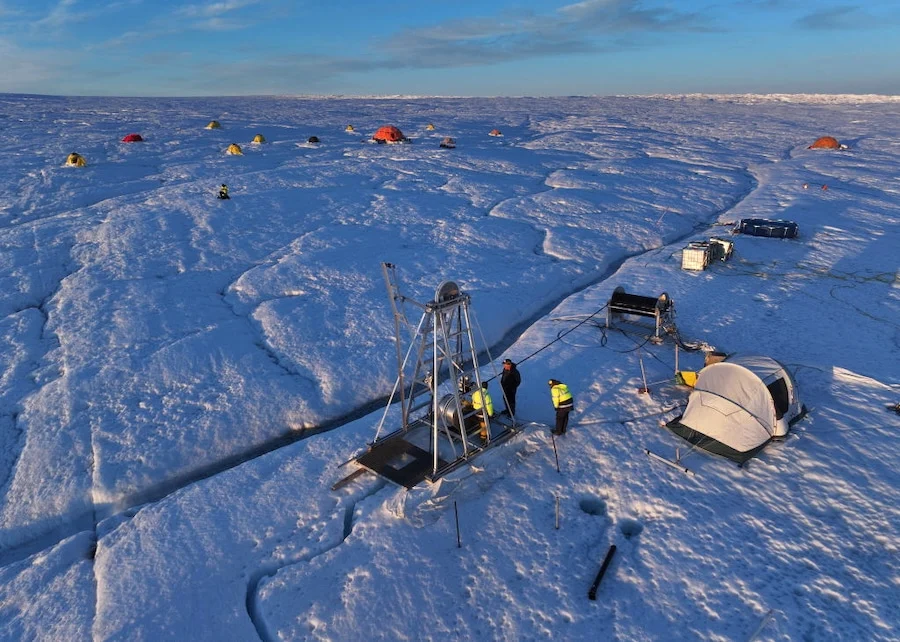
Perhaps most alarming are the "positive feedback loops." As the climate warms, Arctic permafrost—which holds 2.5 times more carbon than the atmosphere—begins to thaw. This releases ancient methane trapped in the soil, which in turn causes more warming, leading to further thawing. Similarly, the increasing frequency of wildfires creates a vicious cycle: fires release vast amounts of methane, which fuels the very temperature increases that make future fire seasons more severe.

A Path Forward: Systemic and Individual Action
To reach the IPCC goal of limiting global heating to 1.5 degrees Celsius, global methane emissions must be slashed by 34 percent by 2030. Achieving this requires a two-pronged approach:
Systemic Transformation
- Energy: A rapid phase-out of fossil fuels and a moratorium on new LNG infrastructure.
- Agriculture: Implementation of enteric methane inhibitors (such as seaweed-based cattle feed), improved manure management systems, and a shift toward "Alternative Wetting and Drying" in rice cultivation.
- Waste: Transitioning to a circular economy that prioritizes composting and mandates the capture of methane from landfills and wastewater plants.
Individual Agency
While systemic change is paramount, individual actions play a supportive role in driving market demand and political will:
- Dietary Shifts: Reducing meat and dairy consumption, even modestly, significantly lowers an individual’s methane footprint.
- Home Electrification: Swapping gas stoves and furnaces for induction cooktops and electric heat pumps removes direct sources of methane from the household.
- Civic Engagement: Joining organizations such as 350.org, Third Act, or local environmental justice groups to lobby for policies that hold corporations accountable for their emissions.
Conclusion
Methane is a dual-edged sword. Its extreme potency makes it a formidable foe, yet its short atmospheric lifespan provides a unique window of opportunity. If we act now to curb emissions, we can achieve rapid, measurable results in stabilizing the climate. The path forward is clear: we must stop viewing methane as a convenient commodity and start treating it as the urgent environmental emergency it truly is. By demanding transparency, embracing renewable alternatives, and supporting aggressive global policy, we can prevent the worst impacts of the climate crisis before the feedback loops become permanent.
