

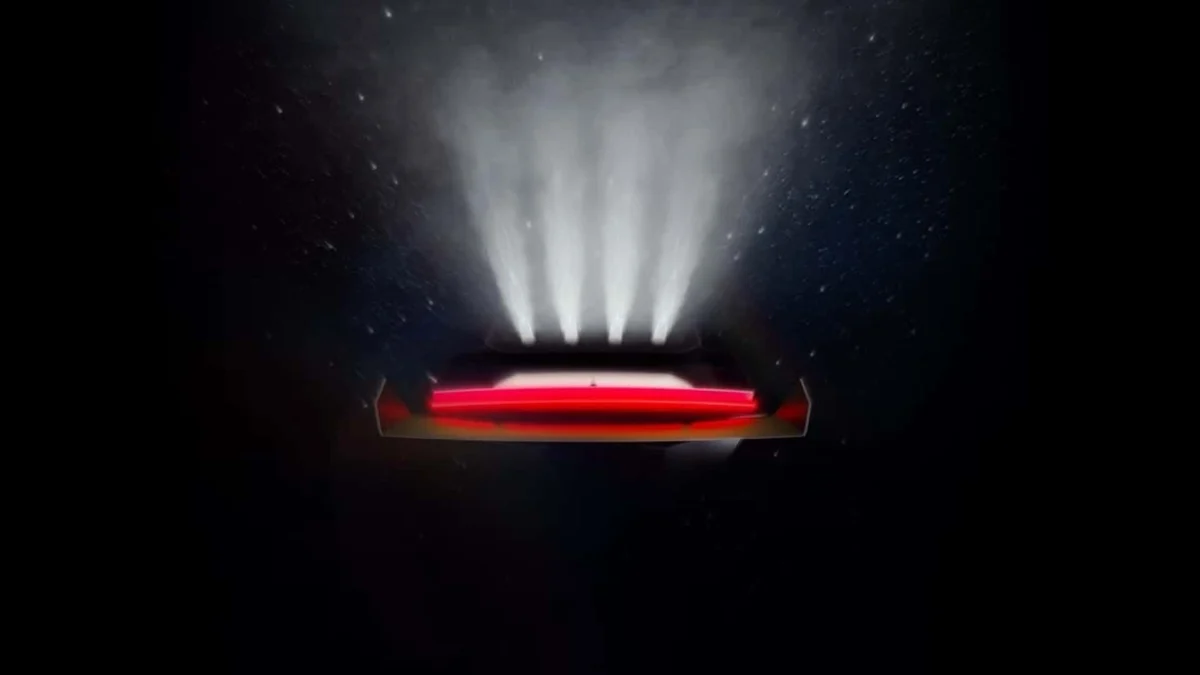
After a decade of anticipation, shifting priorities, and a cycle of perpetual delays, Tesla has finally provided a definitive timeline for the vehicle that many believe represents the pinnacle of Elon Musk’s engineering ambitions. On Saturday, the automaker confirmed that the next-generation Tesla Roadster is set for an official unveiling on October 1. This announcement marks a significant turning point for a project that has lived primarily in the realm of concept renderings and hyperbolic promises since its initial reveal.
The upcoming reveal is poised to be more than just a product launch; it is a statement on the state of Tesla’s technological capabilities. As the company pivots toward a future dominated by AI, robotics, and full-self-driving (FSD) autonomy, the Roadster serves as a bridge—a high-performance "swan song" for the era of human-operated driving.
Main Facts: What We Know About the October 1 Reveal
The confirmation of the October 1 date follows years of speculation. While Tesla has released very few official details, the teaser imagery accompanying the announcement has sparked intense debate among automotive enthusiasts and industry analysts.
The teaser offers only a shadowy glimpse of the vehicle’s rear, highlighting its signature taillamps. However, the most intriguing detail is the presence of four distinct circular elements positioned on the rear deck. Industry insiders and tech analysts believe these are the ports for the SpaceX-developed cold gas thrusters—a feature previously teased by Elon Musk that would theoretically allow the vehicle to achieve unprecedented performance, or, as Musk has famously suggested, "short hops."
Recent reports, including those from The Information, suggest that Tesla is pursuing a dual-track strategy for the Roadster. The company is reportedly planning a limited-edition "flying" version, equipped with the aforementioned thruster technology, alongside a more conventional, road-legal model. The demo vehicle intended for the reveal is expected to be remotely operated, a safety precaution necessitated by the immense force and acoustic output of the SpaceX-derived hardware.
A Decade in the Making: A Chronology of Delays
The journey of the new Tesla Roadster is one of the most protracted development cycles in modern automotive history. To understand the significance of this upcoming reveal, one must look back at the timeline of its evolution.
- 2017: The Initial Unveil: Tesla stunned the world at the end of its Semi truck event when a red Roadster rolled onto the stage. At the time, Musk promised a 0-60 mph time of 1.9 seconds, a 620-mile range, and a top speed exceeding 250 mph.
- 2018–2020: The Focus Shift: During this period, Tesla shifted its internal resources heavily toward the Model 3 production ramp-up, the development of the Cybertruck, and the refinement of its Autopilot and FSD software suites. The Roadster was pushed to the back burner.
- 2021–2023: The SpaceX Integration: Musk began to publicly iterate on the idea of a "SpaceX package," which would include cold gas thrusters to enhance acceleration, handling, and braking. This added a layer of engineering complexity that moved the project further away from a traditional production timeline.
- 2024: The Imminence of Launch: Throughout early 2024, rumors began to swirl that a prototype was ready for testing. Reports indicated that the engineering team had finalized the core chassis, shifting the focus to the integration of the exotic propulsion systems.
- October 1, 2025: The Reveal: The date is now set, marking exactly one year after the industry began to anticipate an "imminent" launch.
Engineering the Impossible: SpaceX Tech in an EV
The integration of SpaceX technology into a consumer vehicle is unprecedented. The "cold gas thruster" system is designed to provide high-pressure bursts of air, which, when applied to a vehicle, can manipulate its movement with extreme precision.
The Physics of the "Flying" Roadster
The primary challenge for Tesla is not just the installation of the thrusters, but the safety and regulatory hurdles that come with them. Cold gas thrusters typically involve high-pressure storage tanks, which occupy significant space—space usually reserved for passenger comfort or battery capacity.
Performance Metrics
If the production model retains even a fraction of the performance figures promised in 2017, it will sit at the absolute top of the hypercar hierarchy. The "base" model is expected to outperform almost every combustion-engine hypercar on the market, while the "SpaceX package" variant aims to challenge the boundaries of what is possible for a wheeled vehicle.
Official Responses and Executive Vision
Tesla’s leadership has been vocal about the role the Roadster plays in the company’s broader narrative. Lars Moravy, Tesla’s VP of Engineering, recently characterized the vehicle as the "last, best driver’s car."
This phrasing is deeply symbolic. As Tesla continues to double down on the Optimus robot project and the expansion of its Robotaxi fleet, the company is effectively signaling a departure from the traditional enthusiast-focused automotive market. For Tesla, the Roadster is the final tribute to the act of driving before the industry transitions fully into a world where vehicles are viewed as autonomous transportation utilities rather than objects of personal expression.
Elon Musk has frequently described the project as "the cherry on the icing of the cake." His rhetoric suggests that the Roadster is less about profitability and more about proving that Tesla, as an engineering entity, can push the laws of physics further than any legacy automaker.
Implications: Market Positioning and Brand Legacy
The release of the Roadster has profound implications for Tesla’s brand identity.
1. Re-establishing Engineering Dominance
In the years since the original Roadster concept, legacy automakers like Porsche, Rimac, and Ferrari have made significant strides in electrification. Tesla needs the new Roadster to reclaim the "performance crown." By showcasing extreme technology like thrusters, Tesla aims to maintain its position as the industry’s primary disruptor.
2. The "Halo" Effect
While the Roadster will likely be a low-volume, high-margin vehicle—with prices estimated to range from hundreds of thousands to over a million dollars—its primary purpose is the "halo effect." It will serve to bolster the prestige of the entire Tesla lineup, creating a aspirational connection between the $40,000 Model 3 and the multi-million dollar hypercar.
3. The Future of Autonomy
The contradiction between a "driver’s car" and a company focused on "autonomy" is not lost on observers. However, Tesla’s strategy appears to be one of contrast: by perfecting the manual driving experience in the Roadster, they define the baseline from which all future autonomous models will be measured. It is a way of saying, "We can build the ultimate car for humans, but we have chosen to build the ultimate car for the future."
What to Expect in October
As October 1 approaches, the industry is bracing for a spectacle. Given Tesla’s penchant for theatrical product reveals, the event will likely involve live demonstrations.
Will we see the car actually "fly"? It is highly probable that the demo will show the car performing "short hops" or extreme maneuvers on a closed course, utilizing the thrusters to demonstrate agility that would be physically impossible for any other vehicle. Whether these features make it to the final, consumer-ready street-legal version remains the biggest question.
Many analysts expect a "split" launch: a highly limited, non-street-legal "SpaceX Special" for track use, and a refined, ultra-high-performance road-legal model for the general market.
Regardless of the specifics, the October 1 event will be a defining moment for Tesla. It represents the closure of a decade-long loop of promises and the beginning of a new chapter where the company must prove that it can still surprise an audience that has seen almost everything. Whether it acts as the "swan song" for the driver or the opening act for a new era of physics-defying transport, the Roadster remains one of the most significant, and most scrutinized, vehicles of our time.
