

HIGHLANDS RANCH, Colo. — In a typical first-grade classroom at Sand Creek Elementary, the air is usually thick with the scratching of pencils and the frantic energy of six-year-olds grappling with the complexities of the English language. On a recent morning, Gabrielle Grace’s students were deep in the process of drafting paragraphs about their summer plans.
For most, the task was a rigorous mental workout. But for 6-year-old Dean, the exercise was a victory lap. He sat back, his worksheet already completed with a structured topic sentence—“I do many things over the summer”—followed by a crisp, organized list of activities.
“I wrote this, like, before the bell rang,” Dean said with a nonchalant shrug.
His teacher, Gabrielle Grace, recalls that just a few months prior, many of these same students struggled to string together a coherent sentence. Now, the transformation is palpable. “Their writing is very organized. They write in complete sentences. It’s just like clockwork,” she says.
Dean’s newfound confidence is a rare commodity in today’s elementary classrooms. For years, educators have struggled with a persistent, quiet crisis: a generation of students who can read and solve math equations but find themselves paralyzed when asked to put pen to paper. As schools across the United States grapple with this "writing gap," a shift is underway—a move away from vague, creative-only assignments toward the "science of writing."
The Crisis of the Blank Page
For decades, writing has been the neglected sibling of literacy instruction. While the "science of reading"—a movement centered on phonics and evidence-based decoding—has commanded the national spotlight and significant funding, writing has largely been left to drift.
The consequences are clear. Standardized testing data, while sparse, paints a bleak picture. The United States has not released nationwide standardized writing scores for elementary students since 2002, when a mere 27 percent of fourth graders met the threshold for proficiency.
In the absence of federal data, state-level results have sounded the alarm. In 2025, more than half of the 360,000 third graders in Texas received no credit for essay responses that required comparing and contrasting texts. In California, only 17 percent of third graders met standards for organized, research-based writing. In Florida, students averaged a discouraging 6 out of 12 possible points on state writing assessments.
This deficiency follows students into higher education and the workforce. College professors frequently lament the inability of incoming freshmen to construct multi-paragraph essays, while employers report that entry-level workers lack the basic written communication skills necessary for professional success.
Anatomy of the Struggle: Why Writing is Hard
Writing is, arguably, one of the most cognitively demanding tasks an elementary student can perform. It requires the simultaneous orchestration of fine motor skills, vocabulary retrieval, grammatical knowledge, and executive function—the ability to plan, organize, and revise thoughts.
“I think writing is the hardest thing to teach,” says Chrissy Everett, a veteran fourth-grade teacher at Prairie Crossing Elementary in the Douglas County School District. With 23 years of experience, Everett notes that the primary hurdle is helping students understand the architectural nature of writing: how to piece ideas together in a logical sequence.
The challenge is exacerbated by a changing student population. As children spend their early developmental years interacting with touchscreens, many lack the physical dexterity once honed by traditional play. Christina Bretz, an occupational therapist with Learning Without Tears, recalls meeting a kindergartener who had never held a crayon, knowing only how to navigate the world via an iPad interface. “As we’re seeing more children use devices, we start to see less of them manipulating objects with their hands,” Bretz explains.
The Turning Point: The Rise of SRSD
In 2023, administrators in Colorado’s 61,000-student Douglas County School District noticed a widening chasm: students were performing significantly better in reading than in writing. An internal audit of their instruction revealed a systemic issue: there was no standard approach.
“We found that teachers didn’t know how to teach writing,” says Janet Merrill, the district’s literacy coordinator. "In the past, we were relying on whatever a teacher could find on websites like Teachers Pay Teachers."

The result was a "hodgepodge" of instruction. Teachers frequently leaned on creative writing prompts—like "describe your shoe" or "write about your summer vacation"—which allowed for expression but failed to teach the structural mechanics required for academic writing.
To bridge this gap, the district turned to Self-Regulated Strategy Development (SRSD). Unlike traditional approaches, SRSD is highly prescriptive. It treats writing as a craft that can be engineered, teaching students to analyze prompts, plan their arguments using evidence from texts, and utilize mnemonic devices to keep their structure intact.
For example, students learn the acronym TIDE:
- T: Topic sentence
- I: Important details
- D: Detailed evidence
- E: Ending
This framework gives students a roadmap. By removing the fear of the blank page, teachers have found that students—who were previously "lost"—suddenly feel empowered.
Bridging the Gap: From Kindergarten to Middle School
The implementation in Douglas County has been comprehensive. Over 100 instructional coaches have been deployed across 70 elementary schools to ensure that every teacher, regardless of grade level, uses the same language and techniques.
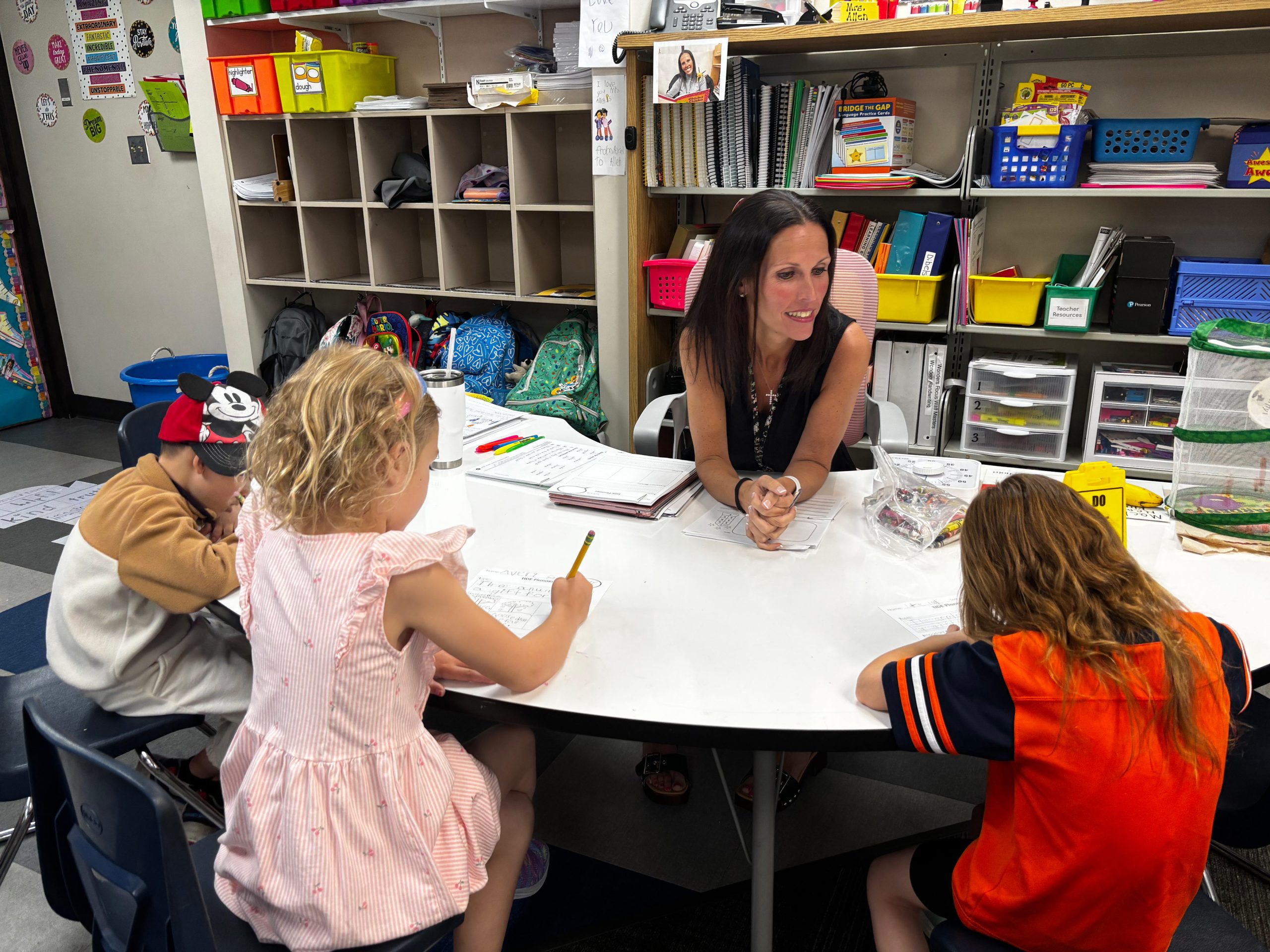
In Kristin Allen’s kindergarten class, the impact of this structure is on full display. After reading a story about animals helping a turtle, Allen’s students aren’t just doodling; they are constructing sentences. Before starting, they write affirmations on their papers: "I can do this," or "I am smart."
"Some people have the attitude that, ‘Oh, they’re kindergarteners, they can’t,’" Allen says. "They can."

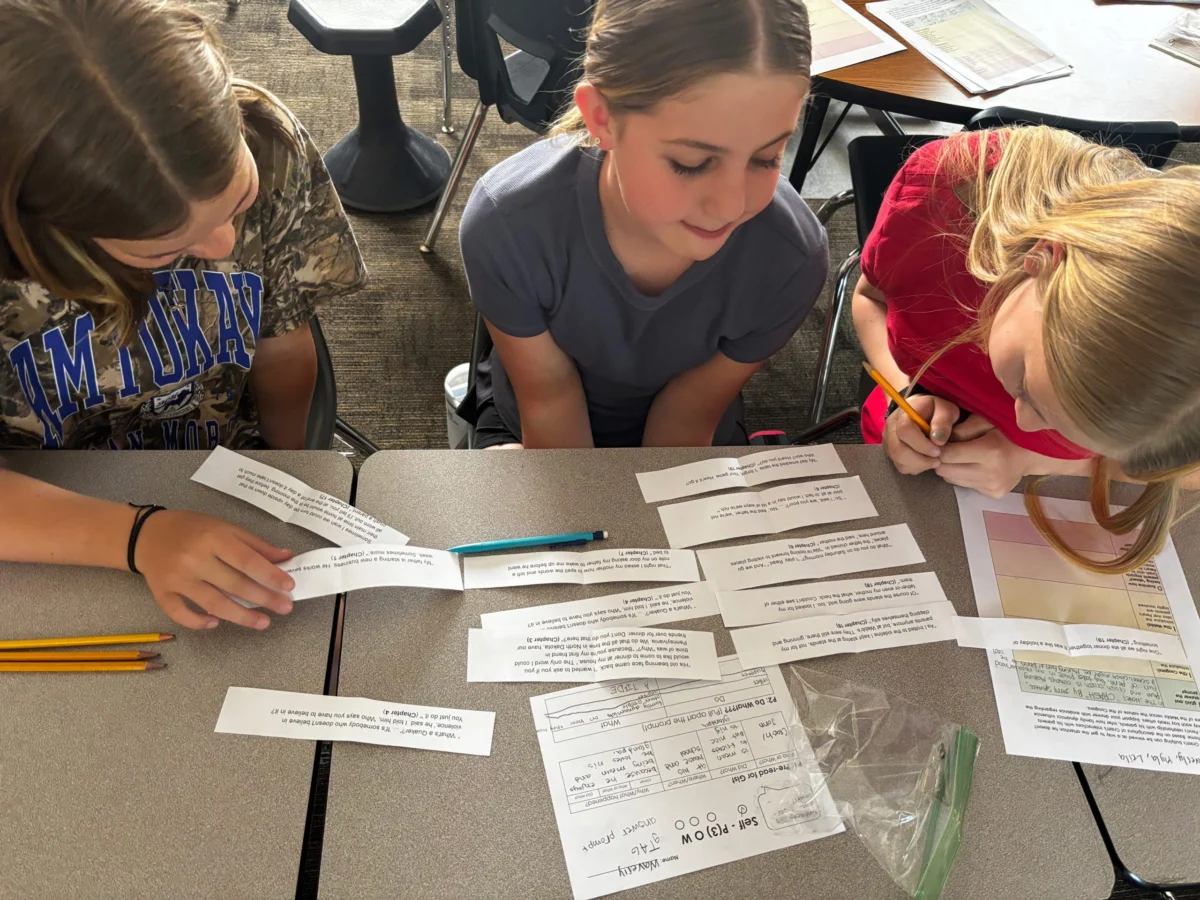
This sentiment is echoed by the students themselves. Ten-year-old Arya Melancon, a fourth grader at Prairie Crossing, admits that in previous years, writing prompts were a source of anxiety. "Last year, we were all scared of writing prompts," she says. "This year, we felt like we were ready."
Challenges and the Path Forward
Despite the success in districts like Douglas County, scaling these methods remains difficult. A significant barrier is the lack of standardized training in teacher preparation programs.
"Even teacher educators do not always feel comfortable teaching preservice teachers about writing," says Vicki McQuitty, a professor at Towson University. "It’s always pushed to the back."
Furthermore, schools operate under the immense pressure of standardized testing, which historically prioritizes math and reading. Many administrators feel they must "get reading right" before allocating resources to writing, effectively trapping writing in a cycle of neglect.
However, the "science of writing" advocates argue that the two are inextricably linked. Writing helps solidify reading comprehension; by forcing students to analyze and synthesize texts, writing instruction actually boosts reading performance.
The early data supports this. After just one year of implementing SRSD, Douglas County reported a 3-percentage-point increase in state writing scores. Even more encouragingly, math scores rose as well—a result officials attribute to students developing better cognitive habits for analyzing and breaking down complex problems.
Implications: A New Era for Literacy
The "last bastion of education," as Randy Barth, CEO of SRSD Online, calls it, is finally receiving the investment it deserves. The success of these structured, evidence-based programs signals that the struggle to teach writing is not a failure of the students, but a failure of the system.

As the Douglas County School District prepares to roll out SRSD training to its middle school teachers this summer, the broader implications for American education are clear. When students are provided with the right tools—the strategies, the practice, and the structure—the "blank page" ceases to be a terrifying void and becomes a space for potential.
The shift represents more than just better test scores; it is a fundamental change in how we view the student’s ability to communicate. By demystifying the process of writing, educators are ensuring that the next generation will not just be able to consume information, but to construct it with clarity, logic, and confidence.
As Arya Melancon noted, the difference between "scared" and "ready" is nothing more than the right instruction. For the thousands of students currently sitting in classrooms across the country, that difference is everything.
