


In the rapidly evolving landscape of contemporary American fashion, few designers have managed to synthesize the rigid discipline of historical construction with the ethereal fluidity of the occult as effectively as Colleen Allen. Since the launch of her eponymous label in 2024, the Chicago-born, New York-based designer has carved out a distinct niche. Her work—characterized by a darkly romantic sensibility, reinterpreted Victorian silhouettes, and an unwavering commitment to the "divine feminine"—has garnered critical acclaim, including a CFDA Emerging Designer nomination and recognition as a finalist for the prestigious LVMH Prize.
For Allen, fashion is not merely an exercise in aesthetics; it is a ritualistic act. By drawing inspiration from tarot, witchcraft, and the cyclical nature of history, she challenges the traditional, often patriarchal, structures of the garment industry, creating clothing that acts as a bridge between the material world and the esoteric.
A Chronology of Craft: From Parsons to the Global Stage
Colleen Allen’s trajectory is marked by a rigorous academic foundation paired with high-level industry experience. Her journey began at the hallowed halls of Parsons School of Design, followed by a tenure at Central Saint Martins, where she refined her understanding of drape, tension, and structure.
- Formative Years: After completing her education, Allen sought to ground her avant-garde sensibilities in the realities of luxury manufacturing. She joined the design teams at Calvin Klein and The Row, two houses that prioritize minimalist precision and architectural integrity. These experiences provided the structural "bones" that would later define her own work.
- The Launch (2024): In 2024, Allen stepped out on her own, debuting a collection that immediately caught the eye of industry insiders. Her early pieces were characterized by a subversion of Victorian undergarments—corsets, petticoats, and bloomers—recontextualized for a modern wardrobe.
- Critical Recognition (2025–2026): Her rapid ascent saw her named a recipient of the Net-a-Porter Vanguard program, a crucial endorsement for emerging talent. Her inclusion as a finalist for the LVMH Prize cemented her status as a global contender, drawing attention to her ability to merge "darkly romantic" storytelling with wearable, high-fashion silhouettes.
The Intersection of Tarot and Textile
At the heart of Allen’s design philosophy lies an intimate, lifelong relationship with the occult. For Allen, tarot is not a gimmick but a framework for existence—a tool for understanding the "cyclical spiral" of life rather than the linear path of the modern careerist.
"I got my first tarot deck, the Rider-Waite-Smith, when I was 16," Allen reflects. Her deep-seated respect for the deck is rooted in its history, particularly the contributions of Pamela Colman Smith, the illustrator often sidelined by the male-dominated historical record of the deck’s publication. Allen’s designs frequently echo this sentiment of reclamation, pulling hidden histories into the light.
She views her garments as instruments of transformation. "The High Priestess is the card I most want to embody," she explains. "She is in the spirit world and material world, communicating between them in a powerful, grounded way. That is what I hope my clothes can do." By utilizing corsetry not as a tool of restriction, but as a scaffold for empowerment, Allen allows her wearers to inhabit a space that feels esoteric, unreachable, and deeply personal.
Supporting Data: The Rise of the Esoteric Aesthetic
The fashion industry has seen a marked shift toward "mystical consumption" over the past decade. Market data suggests that luxury consumers are increasingly gravitating toward brands that offer a narrative depth—often centered on heritage, sustainability, or, in Allen’s case, spiritual resonance.
- The "Ritual" Economy: According to recent industry reports, the intersection of wellness and luxury fashion is a multi-billion dollar sector. Brands that lean into symbolism and "slow fashion" narratives are seeing higher retention rates among Gen Z and Millennial demographics.
- Historical Reimagining: Allen’s focus on the Victorian era is part of a broader trend of "Gothic revival" in luxury. By deconstructing the heavy, restrictive silhouettes of the 19th century and introducing lighter fabrics and ergonomic construction, Allen has tapped into a consumer desire for clothing that honors the past while acknowledging the physical freedom required by the modern woman.
- The LVMH Effect: Being a finalist for the LVMH Prize is statistically correlated with a significant increase in international distribution. For Allen, this platform has allowed her to move from a niche designer to a global player, with retailers noting that her specific blend of "dark romanticism" fills a gap in the current market for intellectual, narrative-driven evening wear.
Official Responses and Industry Perspectives
Industry heavyweights have been quick to praise Allen’s unique fusion of disciplines. Following the announcement of her LVMH Prize finalist status, the panel of judges noted her "exceptional technical skill and a singular, unmistakable voice."
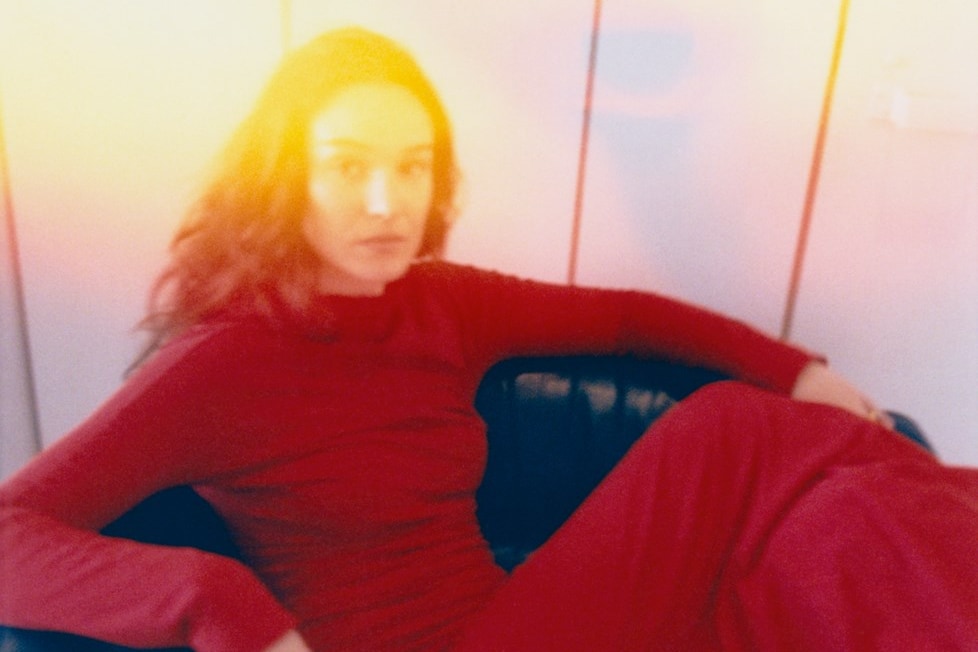
"Colleen isn’t just making clothes," one prominent retail buyer commented. "She is creating a lexicon. She takes the historical language of the corset and strips it of its baggage, making it something that feels like armor for the modern woman."
Allen herself remains grounded, despite the growing spotlight. When asked about her creative process, she describes an atmosphere of reverence. She keeps an altar in her bedroom—a site of reflection and focus—and maintains a firm boundary between her creative tools and the more volatile aspects of the occult. "I don’t fuck with Ouija boards," she jokes, emphasizing that her practice is one of intention and meditation rather than chaotic invocation.
Implications for the Future of Womenswear
The success of Colleen Allen represents a broader shift in the fashion industry toward "designer-as-author." In an era of mass-market saturation and AI-generated design, consumers are actively seeking out creators who offer a genuine point of view.
1. The Death of the "Linear" Career
Allen’s rejection of the linear career path is mirrored in her design. She proposes a fashion cycle that is seasonal yet eternal, focused on pieces that function as "records of evolution" for the wearer. This challenges the industry’s obsession with rapid trends, suggesting that a garment should be a companion in the wearer’s life journey.
2. The Divine Feminine as a Market Force
By actively centering the "divine feminine" and critiquing the male-centric "go-between" structure of traditional institutions—be they religious or professional—Allen is aligning herself with a powerful cultural movement. Her clothes serve as a protest against the idea that women require an intermediary to access power, authority, or the divine.
3. Sustainability and Sentimentality
There is a profound sustainability argument in Allen’s work. By imbuing a garment with ritualistic meaning and historical weight, she encourages the wearer to value the object beyond the typical lifecycle of a trend. When a coat or a dress becomes a "talisman," it is less likely to be discarded and more likely to be cherished, repaired, and passed down.
Conclusion: A New Chapter in Romanticism
As Colleen Allen continues to refine her vision, the implications for her brand—and for the industry at large—are clear. She is proving that there is a viable, thriving market for clothing that asks more of the wearer than simply looking good. By inviting the consumer into a world of tarot, ritual, and historical reclamation, Allen has created more than a label; she has created a community of individuals who see their clothing as an extension of their own spiritual and intellectual evolution.
As the Autumn/Winter 2026 season unfolds, all eyes are on Allen to see how she will further develop this intersection of the ancient and the modern. Whether through the continued evolution of her Victorian-inspired tailoring or her expansion into new, ritual-focused accessories, one thing is certain: Colleen Allen has successfully cast a spell on the fashion world, and for now, the industry is more than happy to remain under her influence.
