

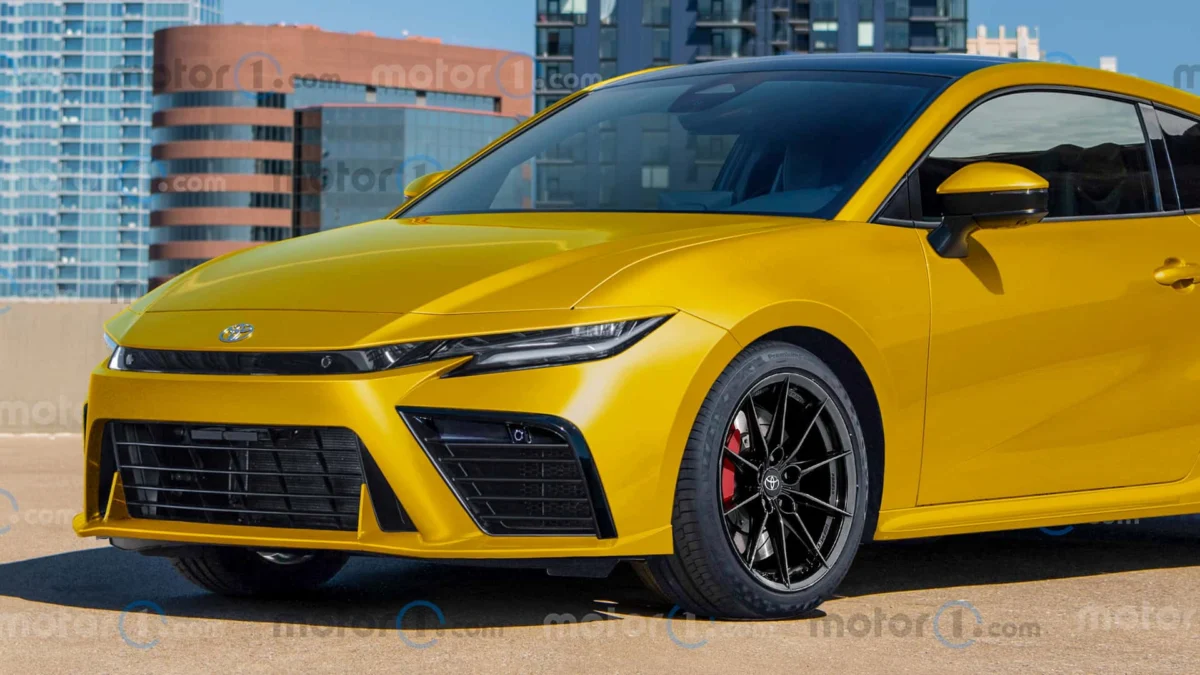
The automotive world is currently buzzing with anticipation following a cryptic, high-energy clip shared on social media platform X (formerly Twitter) by user @You_SuiKoyoAZ. The footage, captured at the legendary Fuji Speedway, provides what many enthusiasts believe is the most compelling evidence yet of a top-secret, high-performance project hidden within the halls of Toyota’s Gazoo Racing (GR) division. While the Japanese automaker has maintained a stoic silence, the industry is increasingly convinced that a new mid-engined, all-wheel-drive sports car is inching toward reality.
The Evidence: What the Footage Reveals
The brief, high-octane video shows a camouflaged prototype navigating the technical corners of Fuji Speedway. Although the clip is short, it is packed with critical technical cues. The vehicle’s exhaust note is distinct—a throaty, burbly resonance that suggests a forced-induction powertrain rather than a naturally aspirated configuration. Even more tantalizing is the audible gear-change rhythm, which has led many to speculate that Toyota is testing a manual transmission, a feature that would cement the car’s status as a driver-focused machine.
Visually, this prototype appears significantly more refined than the mysterious, rough-hewn mule spotted testing on gravel rally stages just a few months ago. The current iteration features a distinct two-door coupe silhouette, characterized by slim, aggressive downturned headlights and a prominent hood vent designed for cooling and aerodynamic efficiency. The taillights, meanwhile, mirror the sharp, futuristic aesthetic found in Toyota’s latest production design language.
A Chronology of a Mystery
The speculation surrounding this project did not appear overnight. It is the culmination of years of rumors and calculated leaks from within the Gazoo Racing ecosystem.
- 2021–2022: Toyota debuts the GR GT3 Concept and continues its dominance in the World Rally Championship (WRC), fueling rumors that the company wants to translate its rally success into a dedicated mid-engine sports car platform.
- Late 2023: Reports emerge that Toyota is re-evaluating its sports car lineup. The GR86 and GR Supra, while successful, are perceived as transitional. Internally, engineers are said to be pushing for a flagship model that can serve as a halo car for the GR brand.
- Early 2024: Spy shots emerge of a heavily modified test mule testing on snowy rally stages. The vehicle displays an unusual stance and proportions that do not align with any current production car, pointing toward a new chassis design.
- Mid-2024: The emergence of the Fuji Speedway footage marks a shift from "testing" to "track validation." The car is now being pushed at high speeds on a circuit, signaling that the vehicle is moving past the development of its powertrain into handling and chassis tuning.
- Future Outlook: If the current development cycle holds, industry analysts suggest a potential unveiling of a concept or pre-production model as early as 2026, with a market launch projected for 2027.
Supporting Data: The Case for the "New Celica" or "MR2"
While the official name remains a mystery, the industry is largely divided between two iconic monikers: the Celica or the MR2.
The argument for the Celica revival centers on Toyota’s desire to re-enter the performance rally heritage market. A mid-engine, AWD platform would provide the perfect base for a WRC-homologation special, mirroring the brand’s golden era in the 1990s.
Conversely, the MR2 supporters point to the mid-engine architecture. Toyota’s classic MR2 was a benchmark for handling, and a modern, high-tech version would fill a massive void in the current market for accessible, lightweight sports cars.
The Powertrain Configuration
Current intelligence suggests the car will be built around Toyota’s cutting-edge turbocharged 2.0-liter four-cylinder engine. This power unit is expected to be a masterpiece of modern engineering, capable of outputting a base of 400 horsepower. However, sources close to the project suggest that a "competition" or "GRMN" variant could push output closer to 600 horsepower, potentially utilizing an advanced hybrid-electric system to assist with torque fill and traction management.
The integration of all-wheel drive is the "killer app" here. By combining a mid-engine layout with an intelligent AWD system, Toyota could create a car with near-perfect weight distribution that remains planted in all weather conditions—a true successor to the GR Yaris, but with the gravitas of a dedicated supercar.
Gazoo Racing: A Brand in Transition
One of the most significant implications of this project is the potential independence of the Gazoo Racing (GR) label. Toyota has reportedly explored spinning off GR into a standalone performance brand, similar to how Hyundai operates the "N" division or how Mercedes-Benz manages AMG.
If this new sports car debuts as a "GR-exclusive" model—potentially omitting the Toyota emblem entirely—it would be a massive statement of intent. It would signal that Toyota is moving beyond being a manufacturer of reliable commuters to a powerhouse of performance engineering. This would provide the necessary brand autonomy to price the vehicle as a premium, low-volume enthusiast product without needing to reconcile it with the mass-market image of the Corolla or Camry.
Implications for the Industry
The arrival of such a vehicle would have ripple effects across the automotive landscape.
- The "Manual" Renaissance: By continuing to invest in manual transmissions while competitors move toward single-speed EVs, Toyota is positioning itself as the "guardian of the driving experience." This keeps the brand relevant to traditionalists who are currently being alienated by the industry’s rapid electrification.
- Competition for European Rivals: A 400–600 horsepower mid-engine Japanese sports car would pose a direct threat to the Porsche 718 Cayman/Boxster and the Lotus Emira. Toyota’s legendary build quality combined with Gazoo Racing’s track-honed dynamics could disrupt the status quo in the $80,000 to $120,000 price bracket.
- WRC and Motorsport Synergy: If this platform is indeed designed with WRC homologation in mind, it would revitalize the top tier of rally racing. A return to a specialized mid-engine car would allow Toyota to dominate the sport for the next decade.
The Road Ahead: 2027 and Beyond
As the automotive world pivots toward 2027, the pressure on Toyota to deliver is immense. The company has teased the market with concepts like the FT-Se and various GR iterations, but the Fuji Speedway prototype is different—it feels like a car that is being built to be driven, not just to sit on a pedestal at a motor show.
Whether this vehicle eventually wears the Celica badge or resurrects the MR2, one thing is clear: Toyota is not finished with internal combustion, and it certainly isn’t finished with the art of the sports car. The company is betting that there is still a massive appetite for visceral, driver-centric machines.
For now, enthusiasts will have to make do with grainy footage and the faint, unmistakable howl of a turbocharged engine echoing across the tarmac at Fuji. If this prototype is indeed the "real thing," the wait may just be worth it. The return of the high-performance Toyota is not just a rumor anymore; it is becoming a movement.
As we look toward the next three years, the automotive community will be watching Fuji Speedway with bated breath, waiting for the next glimpse of a car that could redefine what a modern performance vehicle is supposed to be. Toyota has always been a master of "Kaizen"—constant improvement—and if this project is any indication, they are applying that philosophy to the very soul of the automobile.
