

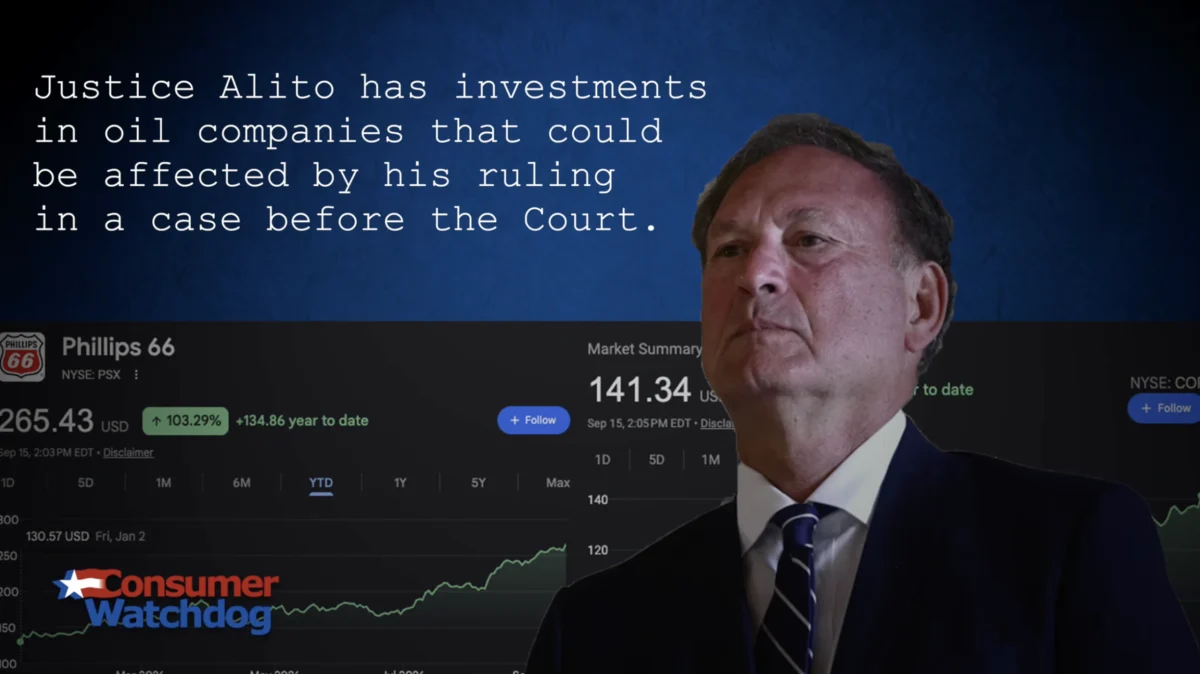
The U.S. Supreme Court faced a pivotal moment this week in the high-stakes climate litigation battle, Suncor v. Boulder. As the justices convened to determine whether local and state governments possess the legal standing to hold fossil fuel giants accountable for climate-related deception, the bench was noticeably diminished. Justice Samuel Alito, a long-standing fixture on the Court, was absent from the proceedings, having recused himself just days prior.
This unexpected withdrawal has sent shockwaves through the legal community, transforming the case into a 4-4 deadlock potential that could decide the future of state-level climate litigation. At the heart of this development is not merely a procedural shift, but a complex intersection of judicial ethics, financial transparency, and the mounting pressure of environmental advocacy.
The Catalyst: A Conflict of Interest Unveiled
The impetus for Justice Alito’s recusal can be traced back to a sustained campaign by legal watchdog groups, culminating in a bombshell report by Consumer Watchdog. For months, organizations had raised concerns regarding the potential for conflicts of interest involving justices with financial ties to the energy sector. However, the argument presented by Consumer Watchdog introduced a new dimension of specificity.
The research highlighted that Justice Alito held stock in two major oil companies—Phillips 66 and ConocoPhillips. Crucially, these companies, through their respective trade associations and amicus briefs, had explicitly warned their investors and the Court that they faced "material risk" from climate-related lawsuits. By linking the Justice’s personal financial portfolio directly to the arguments being presented by industry groups in Suncor v. Boulder, the watchdog group created a compelling case for recusal that became impossible to ignore.
A Chronology of the Recusal
The path to Justice Alito’s decision was marked by initial resistance followed by a reflective pivot:
- Initial Pressure: For months, various civil society groups petitioned the Supreme Court to address potential conflicts of interest, citing the financial holdings of several justices as a threat to the integrity of climate-related rulings.
- The Consumer Watchdog Report: Following the release of new research linking Alito’s holdings to the industry’s own warnings of "material risk" from litigation, the narrative shifted from general ethical concerns to specific financial impact.
- The Internal Deliberation: Justice Alito, initially hesitant, began to reconsider his position as the arguments for the case were finalized.
- The Formal Recusal: Just days before oral arguments were scheduled to commence, Justice Alito officially recused himself, citing the potential for his financial interests to be substantially affected by the Court’s ruling.
- The Argument: With only eight justices present, the Court heard the arguments regarding whether state tort law should be preempted by federal mandates, a decision that will now carry the weight of a potential 4-4 split.
Understanding the Stakes: Why Suncor v. Boulder Matters
At the center of this dispute is a foundational question of American jurisprudence: Can fossil fuel corporations be held liable in state courts for the damages caused by climate change?
For years, energy companies have sought to move these cases into federal court, where they hope for a more favorable reception and the application of federal preemption laws. If successful, federal preemption would effectively immunize these companies from state-level lawsuits, shielding them from the prospect of facing local juries.
State and local governments, conversely, argue that the industry engaged in decades of climate deception, misleading the public and regulators about the catastrophic risks of their products. They contend that these actions constitute traditional torts—deception, failure to warn, and public nuisance—which have historically fallen under the jurisdiction of state courts.
The "Snowball" Effect
Justice Alito’s own explanation for his recusal revealed a rare glimpse into the judicial reasoning process. In discussions regarding his new book, he noted, “The petitioner and the petitioners’ amici are arguing that a decision against them would start a snowball rolling down a hill which could ultimately lead to devastating consequences for the oil and gas industry.” By recognizing that the industry itself viewed a loss as an existential threat, Alito acknowledged the weight of the conflict: his financial stake in these companies was directly tied to the very outcome the companies were desperately trying to avoid.
Official Responses and Judicial Transparency
The Supreme Court rarely offers detailed explanations for recusal decisions, making Justice Alito’s public acknowledgment particularly significant. In his remarks, he expressed a sense of reluctance, yet maintained that the "particular circumstances" of the case made recusal the only ethically sound path.
“As the date of the argument approaches and I immersed myself in the arguments that were being made on both sides, I thought through the question again,” Alito explained. This level of candor is atypical for the Court, which has often faced criticism for its opaque standards regarding judicial ethics and recusal requirements.
Legal scholars suggest that the intensity of the public pressure, combined with the specificity of the financial evidence presented by Consumer Watchdog, created a "perfect storm" that forced a re-evaluation of the Court’s ethical obligations in an era of heightened public scrutiny.
Broader Implications for Climate Litigation
The absence of a ninth justice creates a precarious environment for the fossil fuel industry. In the event of a 4-4 split, the lower court’s ruling—which generally favors the plaintiffs in these climate cases—would stand, without setting a binding Supreme Court precedent. This would be a significant victory for states and municipalities, as it would deny the energy industry the "get out of jail free" card they have been seeking at the federal level.
1. The Preservation of State Tort Law
Should the 4-4 split hold, it would effectively signal that the Supreme Court is not yet ready to dismantle the ability of state courts to oversee climate-related litigation. This preserves the primary avenue for communities to seek damages for the impacts of extreme weather events, sea-level rise, and other climate-related disruptions.
2. A Precedent for Future Ethics
The case serves as a warning shot to the judiciary. The success of the campaign to force a recusal based on financial ties may encourage future litigants to perform more rigorous "conflicts of interest" audits on the judiciary. It reinforces the idea that financial disclosure, while technically required, is only the first step; the application of those disclosures to the specific arguments in a case is where the true accountability lies.
3. The Industry’s Defense Strategy
For the oil and gas industry, this outcome represents a tactical setback. By framing the lawsuits as an existential "snowball" rolling toward their bottom lines, they inadvertently made the case for why judges with financial stakes in their success should not be the ones deciding their fate. This strategic miscalculation may force the industry to reconsider how they brief the Court in the future.
Conclusion: A Lesson in Civic Engagement
The recusal of Justice Alito is a testament to the power of persistent, evidence-based advocacy. For the activists, researchers, and legal experts who spent months documenting the intersections between private equity and public policy, this is more than a procedural victory—it is a vindication of the democratic process.
As the Court moves forward with its deliberations, the absence of the ninth vote serves as a reminder that the judicial branch is not immune to the pressures of transparency. The "strangest of places" from which light can sometimes emerge—in this case, the complex, often-buried details of financial filings—has proven to be the very thing that could save the rights of local governments to seek justice for a warming planet.
While the final outcome of Suncor v. Boulder remains to be seen, one thing is certain: the conversation around judicial ethics and climate accountability has been irrevocably altered. The "snowball" is still moving, but for the first time in a long time, the path it takes will be determined by the facts of the case, rather than the hidden interests of the bench.
