

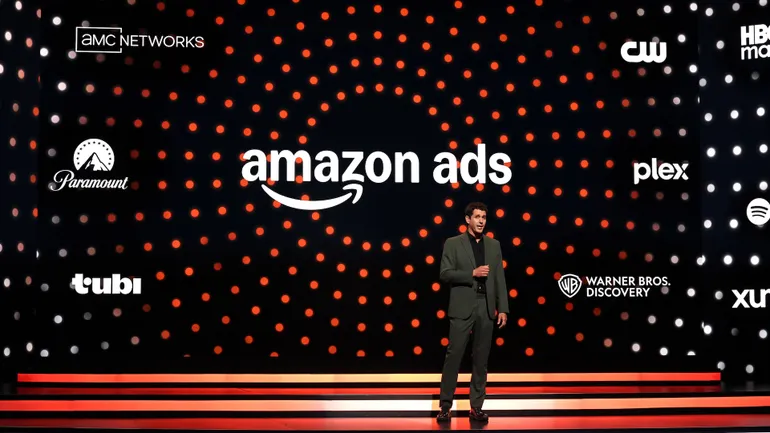
The annual ritual of the media "Upfronts"—a storied tradition where television networks woo advertisers with glittery presentations and A-list celebrities—has undergone a radical transformation. Once defined by the unveiling of fall sitcom schedules and high-budget dramas, the 2026 Upfronts in New York City signaled a definitive departure from the past. Today, the stage is dominated by a trifecta of industry imperatives: the insatiable demand for live sports, the rigorous pursuit of bottom-line business outcomes, and an aggressive integration of artificial intelligence to automate and optimize advertising spend.
As media giants like NBCUniversal, Disney, Warner Bros. Discovery (WBD), and Fox stood shoulder-to-shoulder with tech titans like Amazon and Netflix, a singular theme permeated the air: television is no longer a "top-of-funnel" awareness play. It is, increasingly, a performance-marketing machine.
The New Reality: Measuring Impact Over Awareness
For decades, the Upfronts were a game of reach and frequency. Networks sold audiences based on broad demographic projections, and advertisers were content to pay for the "halo effect" of premium content. That era is effectively over.
"The biggest shift heading into this year’s upfronts is that TV is no longer insulated by awareness-only measurement expectations," said YJ Kim, strategy director at consultancy AI Digital. "Premium reach still matters, but measurable business impact is increasingly what unlocks incremental budget."
This sentiment was echoed across every presentation. Advertisers are no longer satisfied with knowing how many people saw a commercial; they want to know how that commercial influenced a search query, a website visit, or a physical store purchase. Consequently, the media companies that succeeded this year were those that could prove they have the "plumbing" to connect the dots between an impression and a conversion.
Chronology of the 2026 Presentations: A Shift in Focus
The week’s presentations provided a clear roadmap of where the industry is heading. While the spectacle remained—complete with red carpets and Hollywood talent—the substance of the pitches moved rapidly toward data infrastructure.
- The Sports Primacy: From the onset, NBCUniversal and Fox signaled that their narrative wasn’t about scripted content but about the "appointment viewing" power of live sports. NBCU detailed an aggressive expansion of its sports portfolio, moving from a Sunday night football focus to a 365-day-a-year strategy involving basketball and baseball.
- The Tech Entry: Amazon and Netflix, now firmly entrenched in the ad-supported landscape, used their time to boast about their unique advantages. Amazon Prime Video, in particular, leaned into its "authenticated" audience data, highlighting its record-breaking NFL performance.
- The Data Integration: By mid-week, the conversation shifted to measurement. Warner Bros. Discovery debuted its "Always-On Measurement & Attribution Dashboard," while NBCUniversal prepared the market for the Q4 launch of its "Performance Insights Hub," an ecosystem designed to aggregate data from industry leaders like iSpot and VideoAmp.
- The AI Rollout: The week concluded with a heavy focus on generative AI and machine learning. From Amazon’s "Dynamic TV Creative" to WBD’s "Agentic Experiences," the message was clear: media companies are becoming technology platforms.
The Sports Monolith: Why Live Content Remains King
If the 2026 Upfronts proved anything, it is that live sports are the last remaining anchor of the linear TV model. In an era of fragmented media, sports provide the only reliable, large-scale, concurrent audience.
NBCUniversal’s commitment to the FIFA World Cup is a testament to this, with 700 hours of programming slated for Telemundo. Similarly, Fox—a network that has long centered its brand on live events—boasted a record 70 World Cup matches, 40 of which will air in primetime.
Fox CEO Lachlan Murdoch underscored the strategy, noting, "Fox is the leader in live programming and home to one of the fastest growing ad-supported streaming platforms in the business. That combination isn’t accidental—it’s intentional."
Amazon Prime Video further solidified the "sports-first" trend. Charissa Thompson, a sportscaster for the network, captured the sentiment during the presentation: "Prime audiences don’t merely tune in, they lean in. Our audience is younger and more likely to engage with advertised brands than sports viewers on any linear network."
Disney, looking to reclaim the narrative, positioned itself as a "category of one." With the acquisition of a Super Bowl broadcast for the first time across ESPN and ABC, and a projected 55% increase in NFL impressions, Disney’s ad chief Rita Ferro described the upcoming year as the company’s "biggest ever."
Data as the New Currency
If sports are the vehicle, data is the engine. Every major publisher now claims to be a "data company," but the level of sophistication varies.
Amazon holds a unique advantage in this arena. By connecting its retail ecosystem to its advertising platform, the company can track a customer from a Prime Video ad view to an Amazon purchase. With 300 million ad-supported consumers and 90% household reach in the U.S., their data isn’t modeled—it’s verified. As Tanner Elton, VP of U.S. Ad Sales at Amazon, noted, "These signals are not modeled. They’re not assumed. They’re built on trust."
Fox is countering this with its "Fox AdStudio," which integrates billions of data points into a converged audience graph. By providing "full-funnel" measurement, Fox is attempting to prove that its viewers aren’t just watching; they are buying. According to Jeff Collins, the network’s ad chief, campaigns utilizing AdStudio have seen double-digit lifts in in-store sales and foot traffic.
AI: The Engine of Efficiency and Personalization
Perhaps the most significant technological leap revealed at this year’s Upfronts was the widespread deployment of AI to create "dynamic" advertising.
Amazon’s introduction of Dynamic TV Creative marks a major shift. The tool uses AI to personalize interactive video ads based on the viewer’s shopping history. If a viewer is shopping for consumer electronics, the ad they see on Prime Video can adjust its headline, call-to-action, and visuals in real-time. This moves the industry away from the archaic "one-size-fits-all" commercial break and toward a highly personalized, context-aware experience.
Warner Bros. Discovery is pursuing a similar path with "Agentic Experiences"—ads that leverage autonomous agents to handle complex customer interactions—and "Scene Level Moments," which use AI to insert ads into content at the most contextually relevant moments.
NBCUniversal is also doubling down on "always-on" AI agents, signaling a future where the ad-buying process itself might eventually be managed by machines, further reducing the friction between the advertiser’s budget and the final consumer transaction.
Implications for the Future of Advertising
The shift observed at the 2026 Upfronts carries profound implications for the advertising industry at large.
1. The End of the "Blind" Buy: The era of buying television ads based on estimated "GRP" (Gross Rating Points) is dying. The future is built on deterministic data and performance metrics. Advertisers will increasingly demand that media companies prove their value through third-party integrations and verified conversion data.
2. The Rise of the "Full-Funnel" Network: TV networks are effectively transforming into digital publishers. By adopting the tools of the programmatic web—such as contextual targeting, real-time optimization, and AI-driven creative—they are blurring the lines between branding and direct-response advertising.
3. Economic Accountability: As noted by iSpot’s 2026 Video Ad Spend and Strategy Report, the current economic climate is forcing a "decisive pivot toward precision." Marketers are no longer in an experimental phase with AI; they are in an integration phase. Budgets are being consolidated into channels that offer the highest degree of accountability.
4. The "Elephant in the Room": While the presentations were polished and forward-looking, the industry is still grappling with massive consolidation. The potential acquisition of WBD by Paramount, jokingly referenced by WBD’s Bobby Voltaggio, looms large. This suggests that while the technology is advancing, the corporate structure of media is still in a state of flux, which could lead to further disruptions in how ad inventory is bought and sold in the coming years.
Conclusion: A New Era of Television
The 2026 Upfronts were a clear signal that the medium of television is evolving to survive the digital age. By embracing the rigor of performance marketing, the precision of AI, and the undeniable draw of live sports, media companies are attempting to make the "TV commercial" as relevant in the age of algorithms as it was in the age of the broadcast monopoly.
For advertisers, the message is clear: the media environment is becoming more complex, more automated, and more accountable. Those who can navigate this data-driven landscape, leveraging AI to reach the right consumer at the right moment with the right message, will find that television remains one of the most powerful tools in the marketing arsenal. For the media companies, the challenge is no longer just to capture the audience—it is to prove, in real-time, that the audience is worth the investment.
