

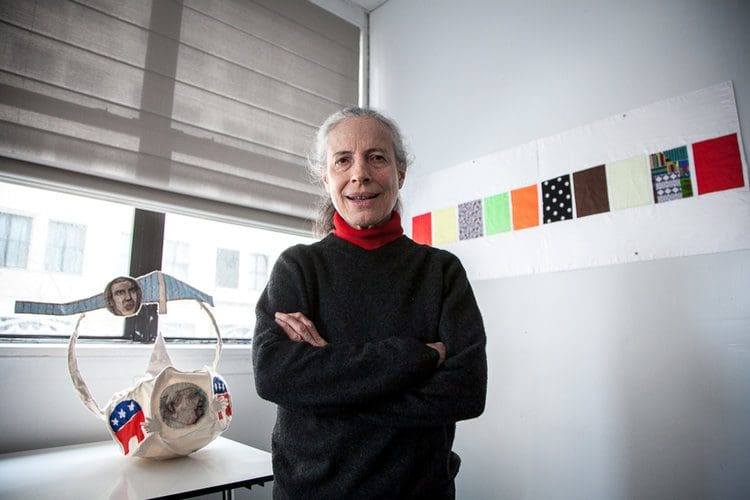
In the heart of New Jersey’s most populous city, the Newark Museum of Art (NMOA) has been championing a series titled Studio Snapshot—a digital and physical exhibition initiative designed to pull back the curtain on the lives and processes of the region’s most compelling contemporary artists. Among the featured creators is Patricia Dahlman, a fiber artist whose intricate, textile-based works serve as a tactile record of the socio-political atmosphere of the early 21st century. Through her lens, we see how the urban landscape of Newark informs a global conversation about resilience, identity, and the weight of our current historical moment.
Main Facts: The Intersection of Craft and Commentary
Patricia Dahlman’s work is characterized by a distinctive marriage of soft materials—canvas, fabric, and thread—with hard-hitting thematic content. Unlike traditional textile art that often leans into decorative motifs, Dahlman’s pieces are sculptural, architectural, and deeply discursive.
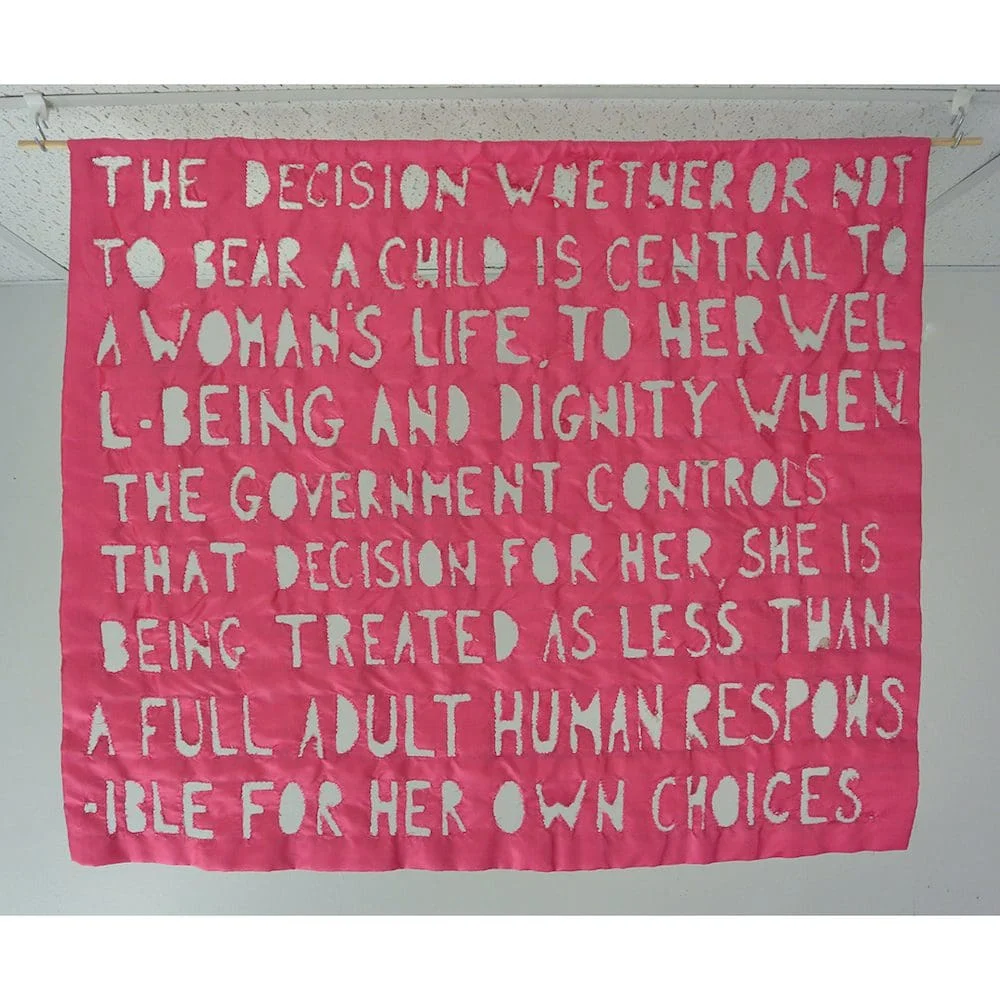
The core of her artistic practice involves "soft sculpture," where mundane or significant objects are meticulously recreated using fabric and thread. This act of recreation is a deliberate choice: by translating rigid concepts or iconic imagery into pliable, domestic materials, she invites the viewer to reconsider their relationship with the subject matter. Her pieces often feature text, utilizing thread as a form of "stitched calligraphy" that commands attention and forces a slower, more deliberate reading of the message conveyed.
Dahlman’s inclusion in the Studio Snapshot series is no coincidence. The Newark Museum of Art has focused its recent efforts on bridging the gap between historical collections and the burgeoning contemporary scene of the Ironbound and downtown districts. By documenting Dahlman, the museum underscores a commitment to the local creative economy—a vital, shifting ecosystem that defines Newark as more than just a satellite of New York City, but as an independent creative powerhouse.
Chronology: From Concept to Contemporary Resonance
The trajectory of Dahlman’s work in the late 2010s reflects a growing preoccupation with the "quotable" nature of modern life. A pivotal moment in her career occurred in 2019 with the creation of her piece, Quote from Ruth Bader Ginsburg.
- 2019: Dahlman completes Quote from Ruth Bader Ginsburg, a complex assemblage using canvas, fabric, thread, and wood. Measuring 62" x 34" x 1", the piece serves as a monumental tribute to the late Supreme Court Justice. The creation of this piece marked a shift in Dahlman’s work toward more explicitly political and socially engaged themes.
- 2020–2021: As the world retreated into lockdowns, Dahlman’s studio practice became a sanctuary for processing the global trauma of the COVID-19 pandemic. During this period, her work shifted from public political discourse to themes of domestic isolation, the fragility of the body, and the "threads" that bind community members together even when physically separated.
- December 2021: The Newark Museum of Art captures the Studio Snapshot footage, providing a rare glimpse into the artist’s working environment. The documentary-style video highlights her meticulous process, which relies on hours of hand-stitching—a meditative counterpoint to the rapid-fire digital news cycle.
- April 2024: The Newark Museum of Art formally features the spotlight on their digital platform, re-centering the conversation on Dahlman’s contributions to the Newark arts scene and her ongoing relevance in an era defined by political polarization and the need for tactile human connection.
Supporting Data: The Craft of Meaning
To understand the weight of Dahlman’s work, one must look at the technical specifications of her craft. The 2019 piece, Quote from Ruth Bader Ginsburg, is not merely a sign; it is a labor-intensive construction.
- Materiality: The use of canvas and fabric provides a "soft" interface for a subject—the law—which is typically perceived as "hard" and unyielding.
- Dimensions: At over five feet in height, the piece demands a physical presence in the gallery space. The scale is intentional; it elevates the written word to the level of a monument.
- Labor: The hours required to hand-stitch these large-scale pieces represent an investment of time that acts as a critique of the "disposable" nature of modern digital communication. In a world where a tweet can be deleted in seconds, Dahlman’s threads are permanent, intentional, and physically enduring.
Her work exists at the intersection of fine art and craft, challenging the historical hierarchies that have often relegated textile work to the domestic sphere. By bringing these works into the institutional setting of the NMOA, Dahlman elevates the "women’s work" of sewing into a vehicle for high-level philosophical inquiry.
Official Responses and Curatorial Intent
The Studio Snapshot series is part of a broader mandate by the Newark Museum of Art to document, preserve, and interpret the work of artists living and working within the city’s vibrant neighborhoods.
Curators associated with the NMOA have noted that the choice of Dahlman was driven by the "visceral honesty" of her work. According to official museum communications, the goal of the Studio Snapshot series is to provide a "humanizing bridge" between the artist and the public. By allowing viewers to see the texture of the fabric, the tension in the thread, and the clutter of the artist’s studio, the museum demystifies the act of creation.
"Patricia Dahlman’s work acts as a mirror," a museum representative remarked during the launch of the digital feature. "When we look at her pieces, we aren’t just seeing fabric; we are seeing our own values, our own political anxieties, and our own hopes for justice stitched into the very fabric of our reality."
The museum’s emphasis on accessibility—reflected in their provided tools for high contrast, wide spacing, and dyslexia-friendly interfaces—further mirrors the inclusive spirit of Dahlman’s work. Both the artist and the institution appear to be working toward a common goal: ensuring that the arts are not an exclusionary enclave, but a public space where all voices can be heard and understood.
Implications: The Future of Urban Art Scenes
The implications of Dahlman’s work and her association with the NMOA are significant for the broader arts landscape in New Jersey. As Newark continues to undergo rapid demographic and economic changes, the role of the "local artist" becomes increasingly critical.

1. The Artist as a Community Anchor
Dahlman represents a cohort of artists who choose to remain in Newark, contributing to the city’s identity as a hub for artistic production. Her work serves as a record of local history. As the city changes, her studio snapshots provide a "time capsule" effect, preserving the aesthetic and intellectual climate of the current era.
2. The Resurgence of Tactile Art
In an age of Artificial Intelligence and digital saturation, there is a growing hunger for the "analog." Dahlman’s reliance on physical materials—thread, wood, and canvas—resonates with a generation of viewers who are increasingly wary of the ephemeral nature of digital art. The physical labor involved in her work conveys a sense of sincerity that is often absent from purely digital media.
3. Art as a Socio-Political Instrument
Dahlman’s work proves that art does not need to be aggressive to be political. By focusing on quotes, values, and the human condition, she invites a slower, more contemplative form of political engagement. This is particularly relevant in the current climate, where public discourse is often fragmented and inflammatory. Her work suggests that there is still room for nuance, for slow deliberation, and for the stitching together of a fractured public square.
Conclusion
The Studio Snapshot of Patricia Dahlman is more than just a documentary feature; it is an invitation to engage with the world through a different set of materials. By highlighting her process, the Newark Museum of Art reminds us that our history is not just written in books—it is woven, stitched, and constructed in the quiet corners of our cities.
As we move further into the 2020s, the work of artists like Dahlman will likely become even more essential. They remind us that even when the world feels like it is coming apart at the seams, there is an enduring, human capacity to hold things together, one stitch at a time. Whether through the bold letters of a Ginsburg quote or the intricate textures of a soft sculpture, Dahlman’s art serves as a testament to the fact that creativity is the most durable thread we have.
