

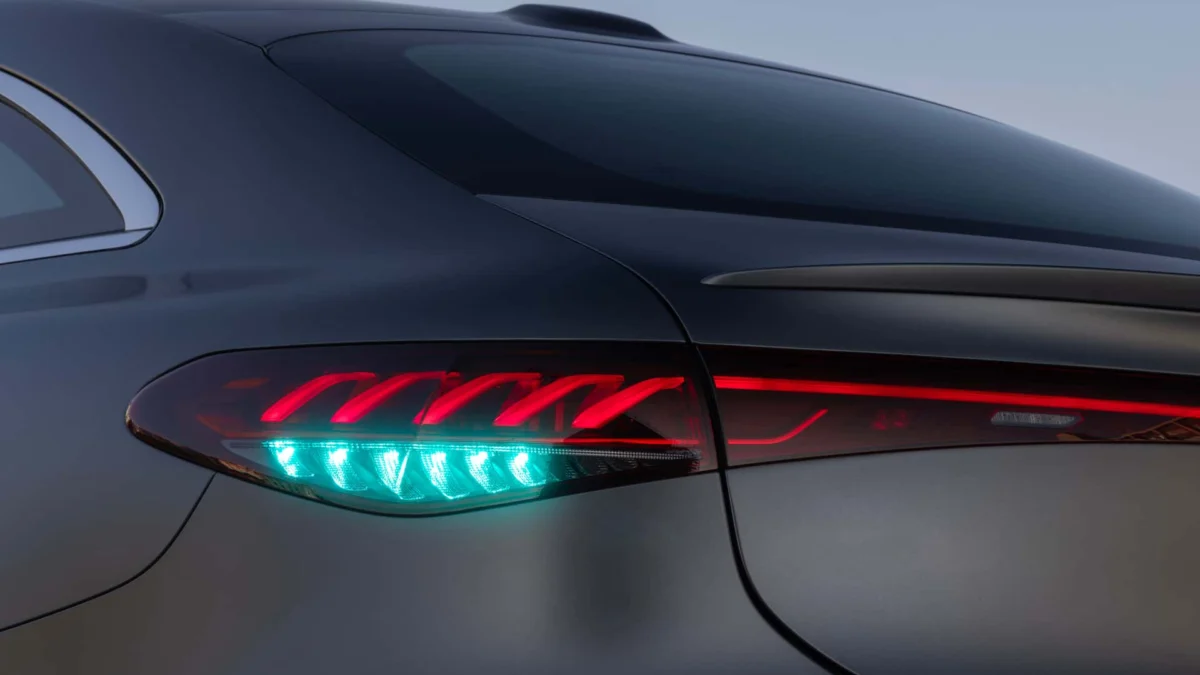
The landscape of American roadways is on the cusp of a profound transformation. As autonomous driving technology transitions from the laboratory to the public thoroughfare, the National Highway Traffic Safety Administration (NHTSA) has taken a decisive step toward codifying the visual language of the future. By drafting a new rule that would permit self-driving vehicles to utilize steady cyan-colored exterior lighting, the agency is addressing a fundamental challenge of the modern age: how to communicate the intent and status of a machine that lacks a human operator.
This proposed update to the Federal Motor Vehicle Safety Standard (FMVSS) 108 is not merely a technical adjustment to lighting protocols; it is a critical acknowledgment of the existence of vehicles like the Tesla Cybercab, which are designed from the ground up without steering wheels, pedals, or the traditional requirement for human oversight.
The Genesis of the Cyan Standard: A Chronology of Innovation
The path to this regulatory milestone began not in a government office, but on the test tracks and public roads of the West Coast. The concept of using distinct exterior lighting to signal autonomous status is a direct descendant of research conducted by Mercedes-Benz.
Between 2023 and 2025, the German automaker undertook rigorous testing in California and Nevada, deploying vehicles equipped with its sophisticated "Drive Pilot" system. These vehicles utilized turquoise—or cyan—lighting as a clear, non-verbal communication tool to signal to law enforcement and other road users that the vehicle was operating under its own automated systems.
The success of these tests provided the empirical foundation for NHTSA’s current proposal. By observing how human drivers interacted with the color-coded signals, regulators concluded that a standardized, high-visibility color could bridge the communication gap between robot and human. While other nations, including China, have begun exploring similar identification frameworks for high-level autonomous driving systems, the U.S. proposal represents one of the most comprehensive attempts to integrate such a system into existing federal safety law.
The Technical Framework: How the Cyan Lamps Function
The NHTSA draft is remarkably specific regarding the implementation of these "Automated Driving System (ADS) marker lamps." The agency intends to ensure that the lighting remains an intuitive, standardized signal rather than an aesthetic flourish.
Operational Parameters
The proposed rule dictates that the lamps must operate in a binary fashion: they are to be activated only when the automated system is fully in control and no human monitoring is expected. The lights must switch off the moment the vehicle requires human intervention or supervision. To avoid confusion with emergency vehicles or signaling systems, the rule stipulates that the lamps must be steady-burning. Flashing or pulsing, which could be misinterpreted as a request for right-of-way or an emergency alert, is strictly prohibited. Furthermore, the system must be designed so that all designated marker lamps on a vehicle activate and deactivate in total synchronization.
Mounting and Visibility Requirements
NHTSA has established a rigid spatial geometry for these lamps to ensure they are visible from all angles while maintaining a clean, uniform look.
- Quantity: Automakers may install between four and eight lamps per vehicle.
- Placement: Configurations include one or two lamps at the front, one or two on each side, and one or two at the rear.
- Height and Separation: Every lamp must be positioned at least 15 inches above the ground and kept visually distinct from existing headlamps, turn signals, and brake lights.
- Symmetry: For single-lamp setups, the light must be centered on the vehicle’s horizontal axis. Pairs must be mounted at equal heights and spaced symmetrically to ensure that other drivers can easily track the vehicle’s position and orientation.
By limiting the number and placement of these lights, the agency intends to prevent the "Christmas tree effect," where excessive lighting could distract or blind other motorists, ensuring the cyan glow remains a functional, rather than decorative, tool.
Optionality and Industry Compliance
A pivotal element of the NHTSA proposal is that these lights remain strictly optional. No manufacturer will be compelled to install them. This permissive approach is designed to foster innovation while allowing companies to decide if the "ADS marker lamp" is a necessary feature for their specific fleet.
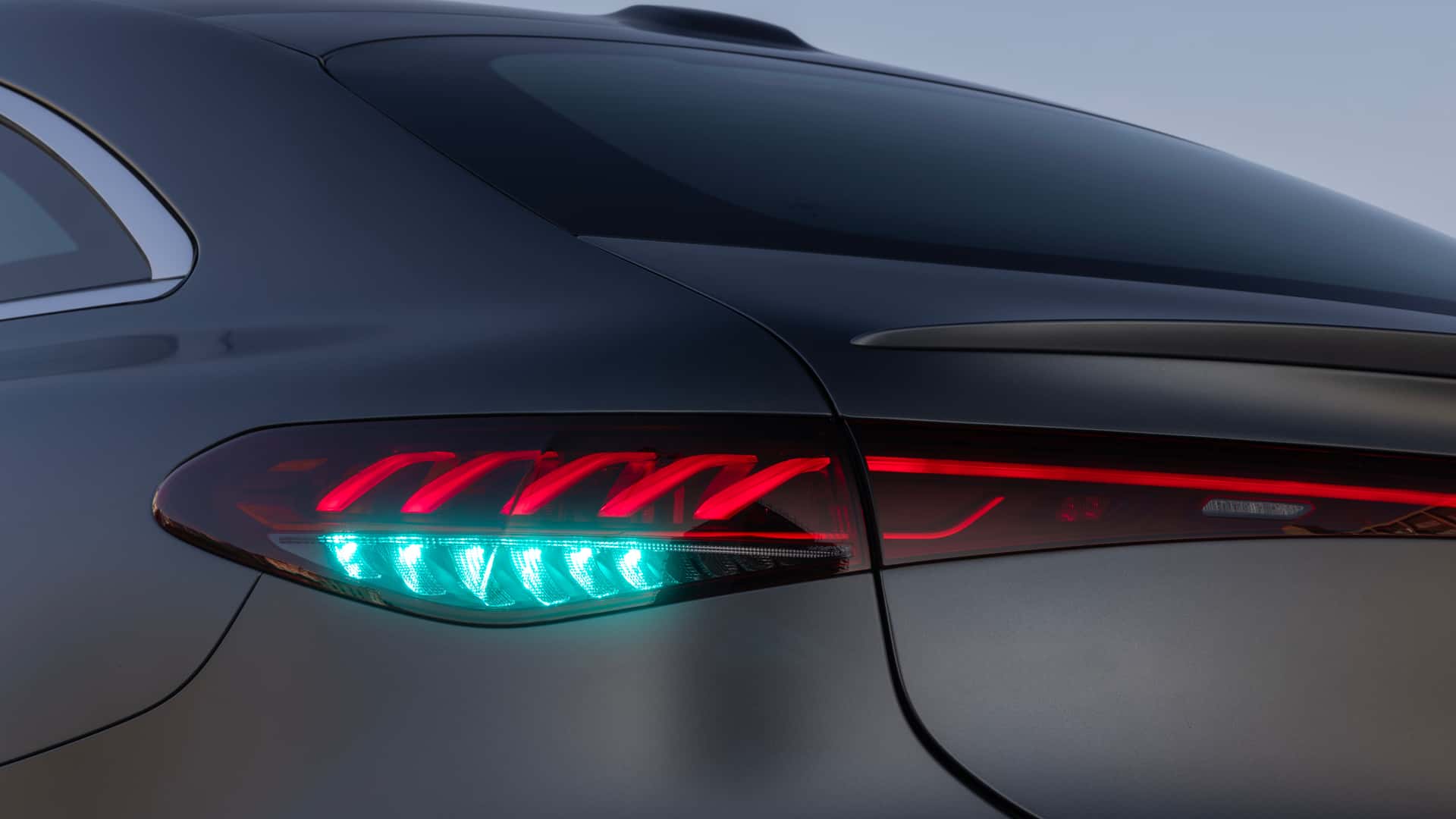
This creates a fascinating dynamic in the automotive market. A robotaxi fleet operator, such as those planning to deploy fleets of Cybercabs in dense urban environments, might choose to implement the lights to build public trust and facilitate easier identification for traffic enforcement. Conversely, another manufacturer focusing on highway-only autonomous trucking might find that the lamps provide little utility and choose to omit them. Both approaches would be fully compliant with the updated FMVSS 108.
This flexibility acknowledges that the "driverless" category is not a monolith. By decoupling the necessity of these lights from the ability to sell a vehicle, NHTSA is effectively creating a voluntary "best practices" standard that the market will likely adopt out of a desire for safety and regulatory clarity.
Supporting Data: Moving Beyond the 12.8-Volt Era
The broader filing includes significant updates that reflect the changing nature of vehicle electrical architectures. Traditionally, FMVSS 108 mandated testing at a 12.8-volt standard—a legacy of the era of incandescent bulbs and lead-acid batteries.
As the industry shifts toward LED-based lighting systems and high-voltage electric vehicle platforms, this requirement has become an unnecessary burden. By removing the 12.8-volt test requirement, NHTSA is allowing manufacturers to certify lighting systems at voltages that better align with modern EV battery architectures. This shift, according to NHTSA Administrator Jonathan Morrisson, is part of a wider effort to cut "unnecessary regulatory burdens" that have historically hindered the rapid iteration of automotive lighting technology.
Implications for the Future of Transportation
The move toward an official cyan signal is a watershed moment for the autonomous vehicle (AV) industry. It signals that the federal government is moving from a posture of observation to one of active integration.
Legal and Liability Considerations
The presence of a glowing cyan light will inevitably become a focal point in traffic law. If a vehicle is involved in an incident while its cyan lights are active, investigators will have a clear, objective data point indicating the vehicle’s state at the time of the event. This could simplify insurance claims and liability determinations, providing a digital "state of mind" for the car.
Public Trust and Social Acceptance
For the average driver, sharing the road with a machine that has no human behind the wheel can be an unsettling experience. The cyan light acts as a psychological bridge. By providing a clear visual cue that a car is in "autonomous mode," the system helps manage expectations. If a driver knows a car is being operated by an ADS, they may adjust their own behavior—perhaps giving the vehicle more space or anticipating smoother, more predictable driving patterns.
The Ongoing Regulatory Dance
While this rule is a major step forward, it exists alongside ongoing scrutiny. The agency’s investigation into Tesla’s Cybercab, for instance, remains open. The implementation of these lights does not exempt manufacturers from other safety protocols, nor does it replace the need for comprehensive testing and validation. The 30-day public comment period following the publication in the Federal Register will serve as a final check, allowing stakeholders, safety advocates, and manufacturers to provide feedback before the rule is finalized.
Conclusion: A New Language for the Road
The introduction of the cyan marker lamp is a testament to the speed at which technology is outpacing policy. For decades, vehicle lighting has been limited to a standard palette: white for visibility, red for warning, and amber for signaling. The adoption of cyan as the universal color for "automated autonomy" creates a new, fourth pillar in the language of road safety.
As we look toward a future where the steering wheel may eventually become an optional relic, the cyan light stands as a beacon of the transition. It is a symbol of a regulatory system that is learning to adapt to a world where the driver is no longer a person, but a complex, software-driven architecture. Whether these lights become a ubiquitous feature of the next decade’s commute remains to be seen, but for now, they provide a necessary, clear, and standardized way to navigate the uncertain, exciting transition to fully autonomous travel.
