

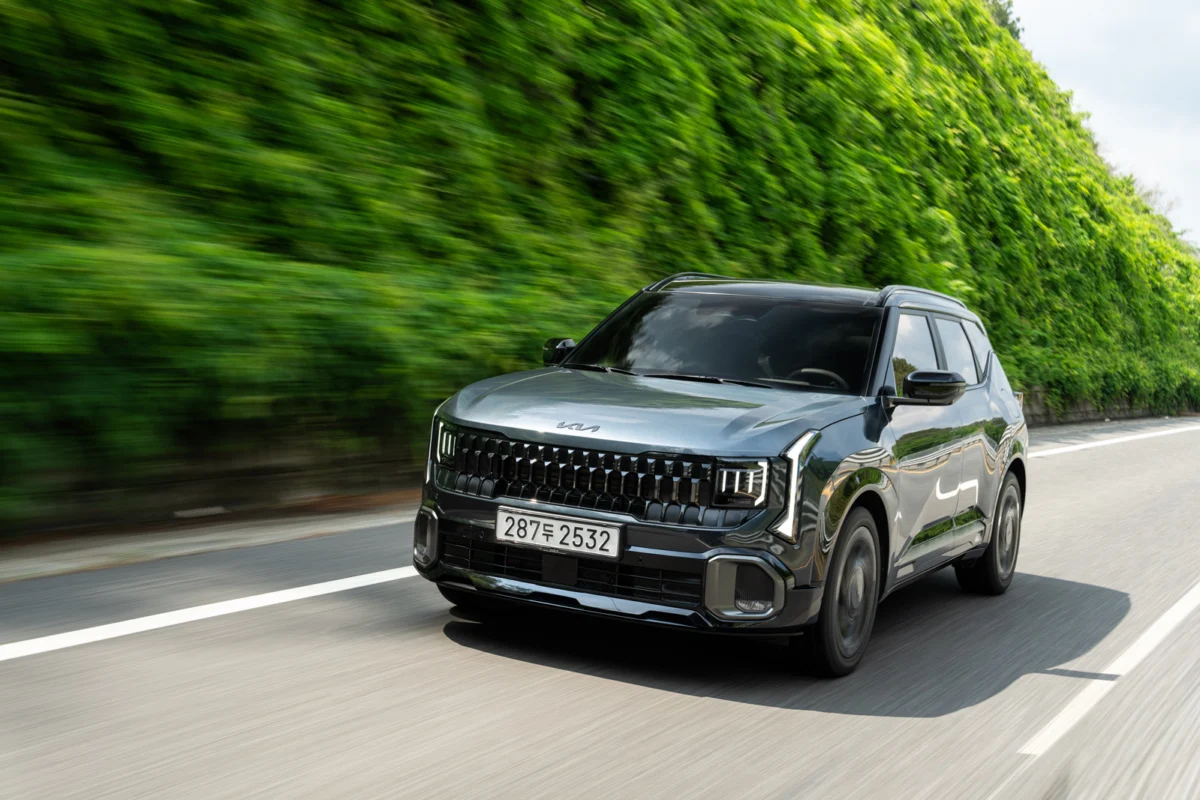
In the hyper-competitive compact SUV segment, where manufacturers often trade personality for mass-market neutrality, the Kia Seltos arrives as a refreshing, albeit imperfect, contender. As Kia continues to refine its design language—drawing heavily from the aesthetic DNA of its growing electric vehicle (EV) lineup—the Seltos positions itself as a bridge between the utilitarian and the modern.
This deep dive explores the nuances of the Seltos interior, assessing how its cabin technology, space management, and build quality stack up against established rivals like the Nissan Qashqai, Skoda Karoq, and Volkswagen T-Roc.
Main Facts: Setting the Benchmark
The interior of the Kia Seltos is a masterclass in visual integration. By adopting the design motifs found in Kia’s dedicated EV range, the brand has successfully elevated the Seltos’ cabin beyond the "economy-first" aesthetic that plagued previous generations of entry-level SUVs.
The dashboard is dominated by a dual-screen setup, featuring twin 12.3-inch displays. One serves as the digital instrument cluster, while the other acts as the nerve center for the infotainment suite. Unlike the conservative, button-heavy layouts found in the Nissan Qashqai, the Seltos opts for a cleaner, more fluid architectural approach. While the cabin relies heavily on high-quality plastics rather than soft-touch fabrics, the materials are robust, tactile, and visually refined, avoiding the "grim" scratchy surfaces often associated with lower-tier interiors.
While it lacks the premium flair and soft-touch upholstery found in the larger Kia Sportage, the Seltos feels remarkably well-constructed, signaling a focus on longevity and functional durability.
Chronology: The Evolution of the Kia Cabin
To understand the Seltos, one must look at Kia’s trajectory over the last half-decade.
- 2019-2020: Kia launches the first-generation Seltos, focusing on value and exterior styling. Interior quality was functional but criticized for a lack of premium integration.
- 2021-2022: The rise of the Kia EV6 and EV9 introduced a new design language: curved displays, integrated touch-sensitive controls, and a minimalist cockpit philosophy.
- 2023-Present: The latest Seltos model is released, explicitly incorporating the "EV aesthetic." This marks the first time Kia has successfully trickled down its flagship cabin design into its internal combustion engine (ICE) compact crossover segment.
This evolution represents a strategic shift. Kia has moved away from traditional analog instrumentation to a digital-first interface, forcing the brand to contend with the ergonomics of touch-capacitive systems—a challenge that has become the primary talking point of the modern driving experience.
Supporting Data: Dimensions and Capacity
For many buyers in this segment, utility is the deciding factor. The Seltos performs exceptionally well here, often eclipsing its European rivals in raw volumetric capacity.
| Feature | Seltos Metric | Competitive Context |
|---|---|---|
| Boot Space | 536 Litres | Superior to Qashqai and Karoq |
| Infotainment Screens | Dual 12.3-inch | Segment-leading clarity |
| Climate Screen | 5.3-inch | Unique to segment, but positionally flawed |
| Rear Seating | 60:40 Split | Standard, maximizes cargo flexibility |
The 536-litre boot is arguably the Seltos’ greatest strength. In a segment where cargo space is frequently sacrificed for styling, the Seltos manages to provide a cavernous trunk suitable for family holidays or heavy-duty gear transport. When the 60:40 split rear seats are folded, the cargo area becomes even more versatile, though the presence of a transmission tunnel—a remnant of the car’s AWD-capable platform—remains a minor inconvenience for rear-middle passengers.
Official Responses and Ergonomic Critique
In interviews regarding the interior design of the current Seltos, Kia’s engineering team has consistently touted the "integrated digital cockpit" as a move toward a cleaner, more intuitive user experience. However, independent testing reveals a friction point: the 5.3-inch climate control touchscreen.
Placed between the two main screens, this climate unit suffers from a notable ergonomic oversight: the steering wheel rim frequently obscures it from the driver’s line of sight. This forces the driver to lean or adjust their seating position to monitor settings.
Kia’s Mitigation Strategy:
Recognizing this, Kia has retained physical controls for essential climate functions such as fan speed and temperature. This is a significant win for the Seltos over rivals like the Volkswagen T-Roc, which often forces users to dig through multiple layers of sub-menus on a touchscreen just to adjust the cabin temperature. By keeping physical toggles, Kia has balanced modern aesthetics with real-world usability.
Implications: The Future of the Crossover Cabin
The Seltos serves as a blueprint for the future of the compact SUV. The implications of this interior design choice are twofold:
1. The Death of the "Cheap" Interior
The Seltos proves that "hard plastic" does not have to mean "low quality." By utilizing high-density, well-textured materials, Kia has managed to cut manufacturing costs without sacrificing the tactile satisfaction of the driver. This sets a new standard for the sub-premium segment, putting pressure on competitors to upgrade their cabin materials or risk appearing obsolete.
2. Ergonomic Friction as a Design Trade-off
The conflict between the 12.3-inch screens and the obscured 5.3-inch climate panel highlights the ongoing struggle between aesthetics and safety. Manufacturers are increasingly pushing for "screen-heavy" dashboards, but the Seltos reminds us that digital innovation must not supersede physical safety. The fact that Kia had to include physical overrides for the climate control proves that even a high-tech interior is only as good as its most basic function.
3. The Passenger Experience Gap
While front-seat occupants will find the Seltos to be a spacious and comfortable environment, the rear seat reveals a distinct "mixed bag." The generous legroom is a highlight, making it one of the most comfortable options for adults on long journeys. However, the limitation in headroom—particularly for those over six feet tall—serves as a reminder that the Seltos is a compact crossover first and foremost. Even with reclining rear seats, the slope of the roofline creates a ceiling that can feel claustrophobic for taller passengers.
Concluding Thoughts: Is the Seltos Right for You?
The Kia Seltos is an exercise in compromise, but it is a compromise tilted heavily in the buyer’s favor. It offers a sophisticated, tech-forward cockpit that mimics the luxury of the brand’s flagship EVs, paired with a class-leading boot that puts more expensive vehicles to shame.
While the cabin is not without its flaws—specifically the sightline issues regarding the climate display and the restricted rear headroom—it remains one of the most well-built, logical, and aesthetically pleasing options in the current market.
For the buyer who wants the "EV look" without the high price tag or the range anxiety, the Seltos is a compelling proposition. It is a vehicle that understands its purpose: to provide a sturdy, high-tech, and incredibly practical space that handles the rigors of daily life with a surprising amount of style. As Kia continues to iterate on this design, one can expect future versions to address the minor ergonomic hiccups, but for now, the Seltos stands as a formidable player in the compact SUV arena, proving that a well-designed cabin is the ultimate differentiator in a crowded field.
