

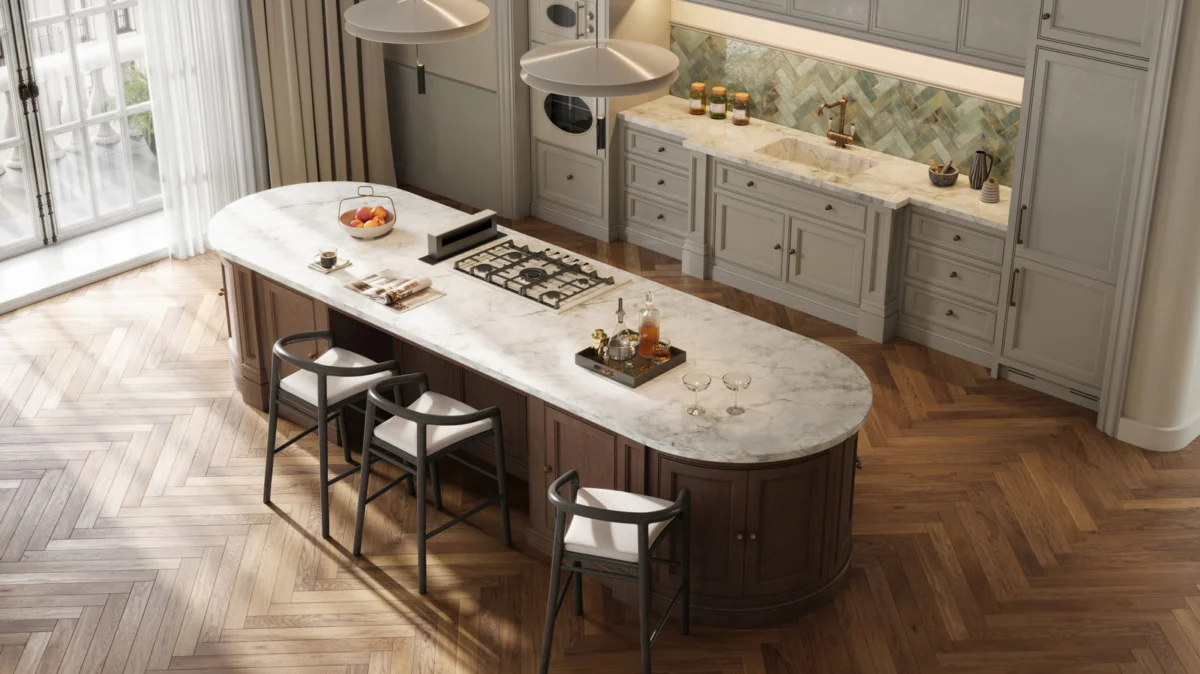
The kitchen is widely considered the heart of the home, a multi-functional space where culinary artistry meets social connection. Among the myriad of decisions homeowners face during a renovation—from cabinetry profiles to lighting fixtures—the selection of countertop materials remains one of the most consequential. A particularly modern dilemma has emerged: Should the kitchen island, often the centerpiece of the room, feature the same countertop material as the surrounding perimeter, or should it serve as a bold, standalone feature?
To navigate this design crossroads, we consulted with renowned interior designer Beth Diana Smith, owner of Beth Diana Smith Interior Design, to understand the balance between aesthetic cohesion and individual expression.
The Core Design Dilemma: Cohesion vs. Contrast
For many, the default choice is uniformity—a continuous flow of stone or composite that wraps the entire kitchen in a single, calming visual language. However, the rise of the "statement island" has challenged this traditional approach.
"It’s really a matter of aesthetic preference, not a hard design rule," Smith explains. "It’s less about whether they should match and more about whether they could make a statement. Both approaches can work beautifully depending on the overall vision for the kitchen."
The decision-making process should begin with an honest assessment of your home’s architectural DNA and your personal tolerance for visual complexity. If a kitchen already feels prone to clutter, introducing competing patterns through mismatched countertops can exacerbate a sense of chaos. Conversely, in a sprawling, minimalist space, a contrasting island can act as a grounding anchor, effectively "zoning" the kitchen into distinct areas for preparation and dining.
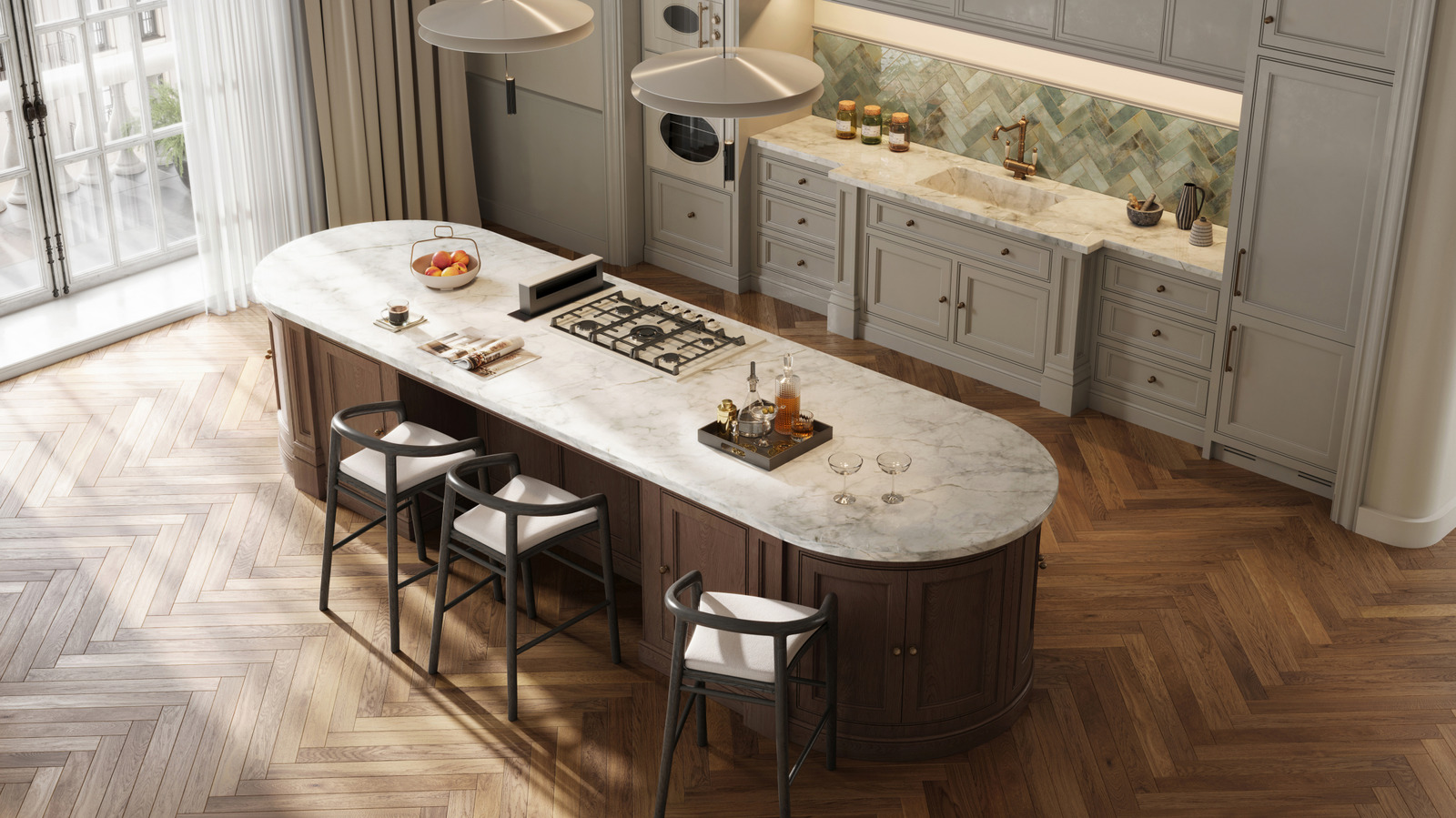
A Chronology of Kitchen Trends
The evolution of the kitchen island reflects broader shifts in domestic lifestyle. Historically, islands were utilitarian worktables, often freestanding and distinct from the cabinetry. As the 20th century progressed, the "fitted" kitchen became the gold standard, prioritizing integrated, built-in cabinetry and matching surfaces to promote a clean, streamlined look.
In the early 2000s, the "all-white kitchen" dominated, characterized by seamless quartz or marble surfaces that spanned every available inch of counter space. This trend emphasized hygiene and brightness. However, the post-2020 design landscape has seen a pivot toward "curated character." Homeowners are increasingly moving away from "catalog-perfect" uniformity, favoring designs that feel collected, layered, and deeply personal. The contemporary trend of mixing materials is a direct response to the desire for homes that feel like they have evolved over time rather than being installed in a single weekend.
Expert Strategies for Mixing Materials
When you decide to break the mold and introduce a contrasting material for your island, the risk of visual dissonance is real. How does one achieve a look that feels deliberate rather than accidental?
1. The Rule of Balance
"The key is making sure the materials complement each other rather than compete," says Smith. To avoid a jarring transition, she advises against pairing two high-activity surfaces. If you have selected a dramatic, heavily veined Calacatta marble for your perimeter, placing a busy, flecked granite on the island will likely lead to "visual noise."
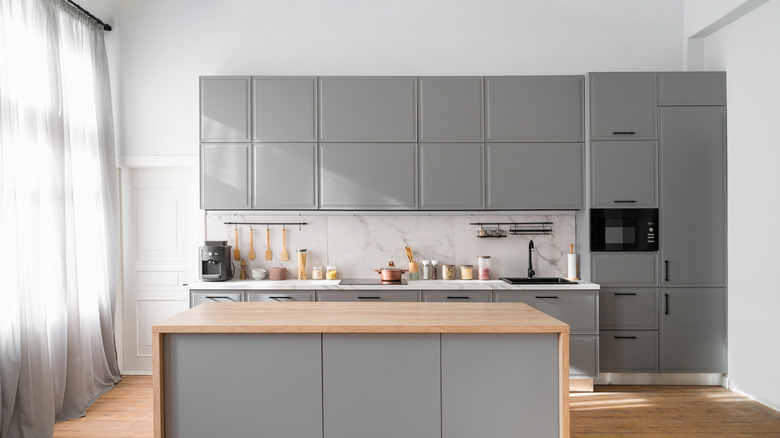
Instead, prioritize a "hero" surface. If the perimeter is bold, the island should offer a moment of visual rest, such as a solid, honed quartz or a warm butcher block. If the perimeter is minimalist, the island can serve as the canvas for a more dramatic, veined stone.
2. The Texture Factor
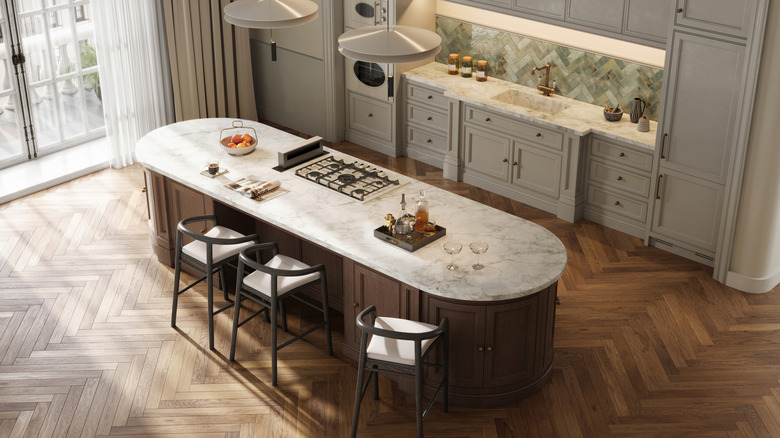
Contrast isn’t just about color; it is about tactile experience. Pairing a cool, smooth stone countertop on the perimeter with a warm, organic wood surface on the island creates a "layered" feel that is both sophisticated and inviting. This intersection of materials—stone and wood—is a classic design move that bridges the gap between the functional laboratory of the kitchen and the comfort of the living room.
3. Intentionality
According to Smith, the most successful designs are those that feel intentional. If you are mixing materials, ensure that the choice feels supported by other elements in the room. For example, if you choose a walnut wood top for the island, consider incorporating walnut shelves or accent trim elsewhere in the kitchen to create a "thread" of consistency that ties the disparate elements together.
Maintaining Cohesion with Matching Surfaces
Choosing to match your countertops does not mean resigning yourself to a boring kitchen. In fact, uniform countertops can provide a powerful, expansive canvas that makes a smaller kitchen appear significantly larger.
If you opt for a unified surface, the "statement" must migrate to other design elements. Smith notes that there are infinite ways to inject personality into a space without altering the countertop material:
- Cabinetry Color: Painting the island base a contrasting color—such as a deep navy, forest green, or even a bold charcoal—against white perimeter cabinets is a timeless way to create a focal point.
- Hardware and Metals: The jewelry of the kitchen, hardware, can be used to delineate the island. Mixing metals, such as brass pulls on the island and matte black on the perimeter, creates a subtle, modern contrast.
- Lighting as Art: A matching countertop allows you to take more risks with overhead lighting. Oversized, sculptural pendant lights above the island act as a vertical statement, drawing the eye up and centering the space without creating horizontal "clutter."
- Artistic Accents: The use of curated accessories, such as a large ceramic bowl or a collection of high-end wooden cutting boards, can bring texture and color to a uniform countertop, providing a "living" element that can be swapped out with the seasons.
The Implications: Practicality and Resale
Beyond aesthetics, homeowners must consider the long-term implications of their choices.
Maintenance Requirements: Different materials require different levels of care. A marble island might look stunning, but if it is the primary spot for homework and casual dining, the inevitable etching and staining may become a source of frustration. Conversely, butcher block requires regular oiling to maintain its integrity. When mixing materials, ensure you are prepared for the maintenance profile of each.
Resale Value: While trends fluctuate, a "cohesive" kitchen is generally considered a safer bet for resale. A neutral, unified look appeals to the widest range of potential buyers. However, a well-executed, high-end mixed material design can actually increase property value by signaling a custom, luxury renovation. The danger lies in "DIY-style" mixing—where disparate materials are chosen without regard for color temperature, scale, or undertones. If you decide to go bold, ensure the execution is professional to avoid the perception of a "patchwork" kitchen.
Conclusion: Designing for Your Life
The ultimate takeaway from Smith’s professional assessment is that there is no "correct" answer—only the answer that fits your lifestyle. If you are a chef who needs a sprawling, consistent surface for rolling out dough, a uniform countertop may be the superior functional choice. If you view your kitchen as an extension of your living room’s design, where texture and warmth are paramount, mixing materials can provide the character you crave.
As you embark on your design journey, remember that the most successful kitchens are those that reflect the people who use them. Whether you choose to match or to contrast, the most important design rule is to ensure that every material and color choice feels like an intentional reflection of your personal vision. By focusing on balance, scale, and the interplay of textures, you can create a space that is as beautiful as it is functional—a true centerpiece for your home.
