

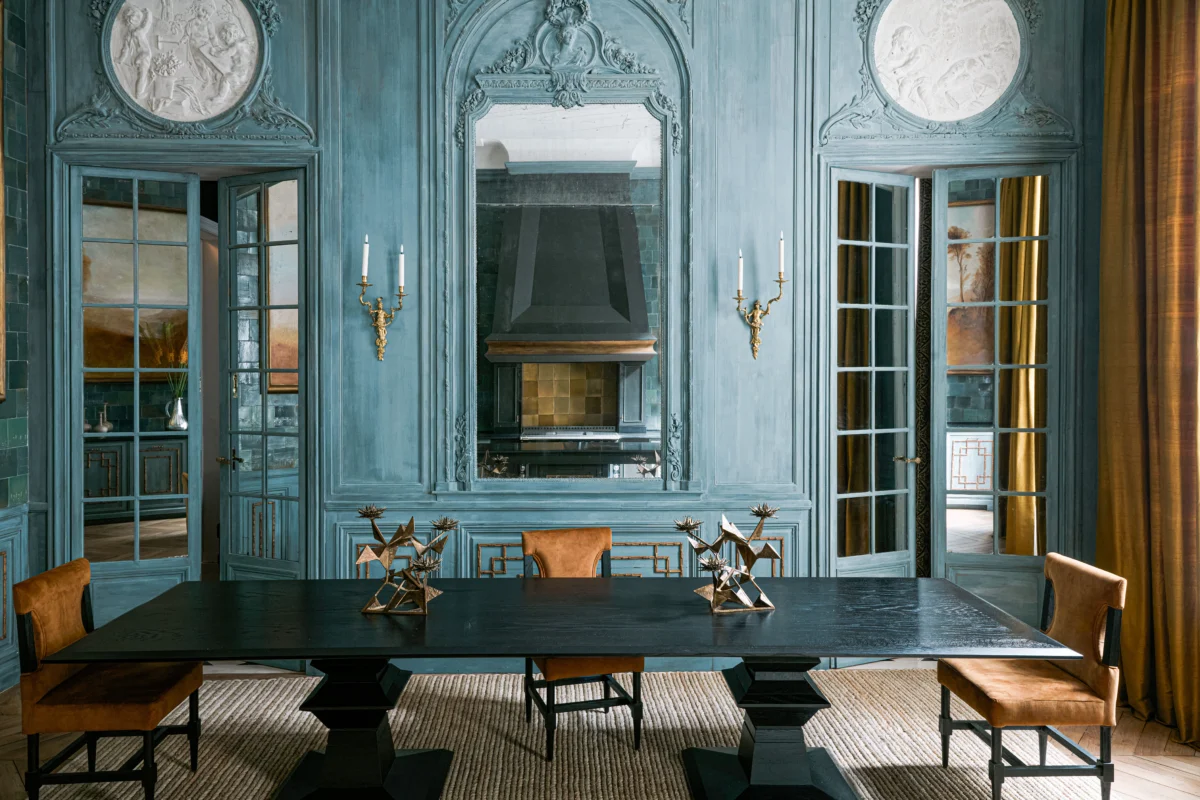
In the heart of Paris, where the echoes of history permeate the very foundations of the city’s architecture, a singular apartment stands as a testament to the intersection of heritage and high-concept design. This residence, masterfully reimagined by the renowned gallerists and designers Maylis and Charles Tassin, is not merely a home; it is a meticulously curated dialogue between the grandeur of the 18th century and the functional exigencies of contemporary living.
For the Tassins, who operate the esteemed Galerie May in the 6th arrondissement, this project represents the zenith of their philosophy: that design should be a "compromise between classicism and modernism." By stripping away layers of neglect and breathing new life into historical bones, the pair has created a sanctuary that feels both timeless and startlingly fresh.
The Architecture of Theatricality: A Design Manifesto
The Tassins are celebrated for their innate sense of theatricality, an aesthetic that treats every room as a stage and every piece of furniture as an actor. Upon entering the apartment, one is immediately struck by a bold, monochromatic introduction. Darkly lacquered walls provide a somber, sophisticated backdrop that creates a stark, dramatic contrast against two bright-white wardrobes. These pieces, structured with the geometric precision characteristic of Emilio Terry’s influence, set a tone of high-contrast elegance.

This black-and-white color scheme, which recurs throughout the residence, evokes the chiaroscuro intensity of Flemish painting. It is an unapologetic design choice that signals to the visitor that this home is not a place of comfort for the timid; it is a space of discovery, where every corner hides a surprise, and every texture invites inspection.
Chronology of a Transformation: Reclaiming History
The building housing this apartment is steeped in the noble history of Paris. Its walls have sheltered aristocrats and administrators alike; notably, the Duke of Choiseul once utilized this very floor for his administrative offices. However, the space had evolved over centuries, often in fragmented ways. The kitchen, for instance, was not an original interior component but a later adaptation of an outdoor courtyard.
The Restoration Timeline:
- 18th Century Origins: The foundational architecture and spatial layout, reflecting the prestige of the era.
- 19th Century Expansion: A period of significant structural addition, during which the original salon and a dedicated library were integrated into the floor plan.
- The Modern Intervention: Under the guidance of the Tassins and architect Olivier Bachelet, the project began with a total gut renovation of the infrastructure. Because previous renovations had compromised the building’s integrity, the team had to reconstruct the essential framework from the ground up, ensuring the home could meet the requirements of a 21st-century family.
The Tassins’ approach to this restoration was one of "archaeological design." They did not seek to erase the past but to honor it, ensuring that the infrastructure was modernized while the aesthetic surface remained firmly rooted in historical reverence.

The Kitchen-Dining Room: A Masterclass in Texture
Perhaps the most spectacular transformation within the apartment is the kitchen-dining room. Here, the Tassins have moved away from the clinical, stainless-steel aesthetic that dominates modern culinary spaces, favoring instead a warmth derived from artisanal materials.
The walls are clad in bespoke, patinated tiles created by Suzanne Moreau. These tiles possess a depth of color and a tactile quality that mirror the richness of antique ceramics, catching the light in a way that suggests age and provenance. To complement these, the decorative painters Nicolas and Sébastien Reese—the same duo responsible for the recent restoration of the historic Hôtel de la Marine—were commissioned to apply azure tones throughout the space.
Adding a final layer of historical intrigue are the cabinet fronts, which feature bamboo-shaped moldings. This choice is a direct nod to the 18th-century "Chinoiserie" craze, during which European designers were obsessed with the exotic and the far-flung. The result is a room that feels like a dining hall from a forgotten era, yet functions with the seamless efficiency of a high-end modern kitchen.

Supporting Data: The Craftsmanship Behind the Design
The success of the Tassin project lies in their reliance on an extensive network of artisans and their own dedication to custom fabrication. Unlike many contemporary designers who source entirely from catalogs, the Tassins treat the apartment as a canvas for original creation.
Key Elements of Design:
- The Fireplace: A monumental structure designed by Charles Tassin, built to mimic the scale and presence of an ancient château hearth.
- The Lighting: Custom-engineered fixtures that illuminate bas-reliefs, giving them a porcelain-like glow. The use of crystal bulbs in the living room chandelier adds a layer of refractive brilliance.
- The Flooring/Textiles: The custom carpet in the living room, woven in Iran, utilizes patterns lifted directly from the Topkapi Palace in Istanbul, bridging the gap between Ottoman opulence and Parisian chic.
- Marquetry: The console tables feature intricate marquetry work by Aliette de Montlaur, a testament to the revival of traditional French craft.
Official Responses and Philosophy
When asked about their process, Maylis and Charles Tassin are quick to emphasize that their work is not dictated by the fleeting whims of the design market.
"For us, design is a compromise between classicism and modernism," Charles explains. "Our inspiration comes as much from the history of decorative arts as from everyday life, and more specifically from literature, theater, opera, and cinema."

This multidisciplinary approach is what distinguishes their work. By drawing from the narrative power of the performing arts, they inject a sense of movement and drama into static objects. Maylis adds that their commitment to heritage is a form of activism against the "throwaway" culture of modern interior design.
"Not following the latest trends is part of our commitment to preserving heritage," she notes. "Respecting a site and its history is just as important as giving each project its own identity."
The Challenge of Functionality: The Modern Parlor
A recurring question in the renovation of historic homes is how to reconcile the formality of the past with the practical needs of a modern family. Parlors, which were historically designated for reception and display, are often considered impractical in the 2020s.

Collaborating with architect Olivier Bachelet, the Tassins sought to prove that "elegance and functionality" are not mutually exclusive. They achieved this by creating multi-use zones. For example, the living room is anchored by the "Martt" sofa—a Tassin-designed piece—which manages to look grand enough for a formal salon while providing the comfort required for family relaxation. Similarly, the principal bedroom features a 1970s Italian bench and custom-designed furniture that marries modern ergonomics with the classical aesthetic of the room.
Implications: The Future of Heritage Design
The Tassin project serves as a compelling case study for the future of urban design in cities like Paris. As property values soar and historic apartments are often gutted to make way for generic, open-concept floor plans, the work of the Tassins stands as a reminder of the value of continuity.
By investing in the restoration of woodwork, the preservation of original bas-reliefs, and the commissioning of local artisans to create pieces that respect the architectural lineage of a building, the Tassins are not just designing homes; they are acting as custodians of cultural heritage.

Their project implies a growing shift in the interior design landscape—a move away from the "Instagrammable" trend-chasing of the early 2010s toward a more intellectual, research-based approach. The apartment is not meant to be a static showroom; it is a living, breathing environment that acknowledges the ghosts of the past while providing a stage for the future.
In conclusion, the Parisian residence of Maylis and Charles Tassin is a triumph of vision. It proves that when designers move beyond the surface level and engage deeply with the narrative of a space, they create environments that do more than just accommodate their inhabitants—they elevate the human experience. Through their careful balance of the dramatic and the domestic, the Tassins have crafted a masterpiece that will undoubtedly stand the test of time, much like the history it so eloquently preserves.
