

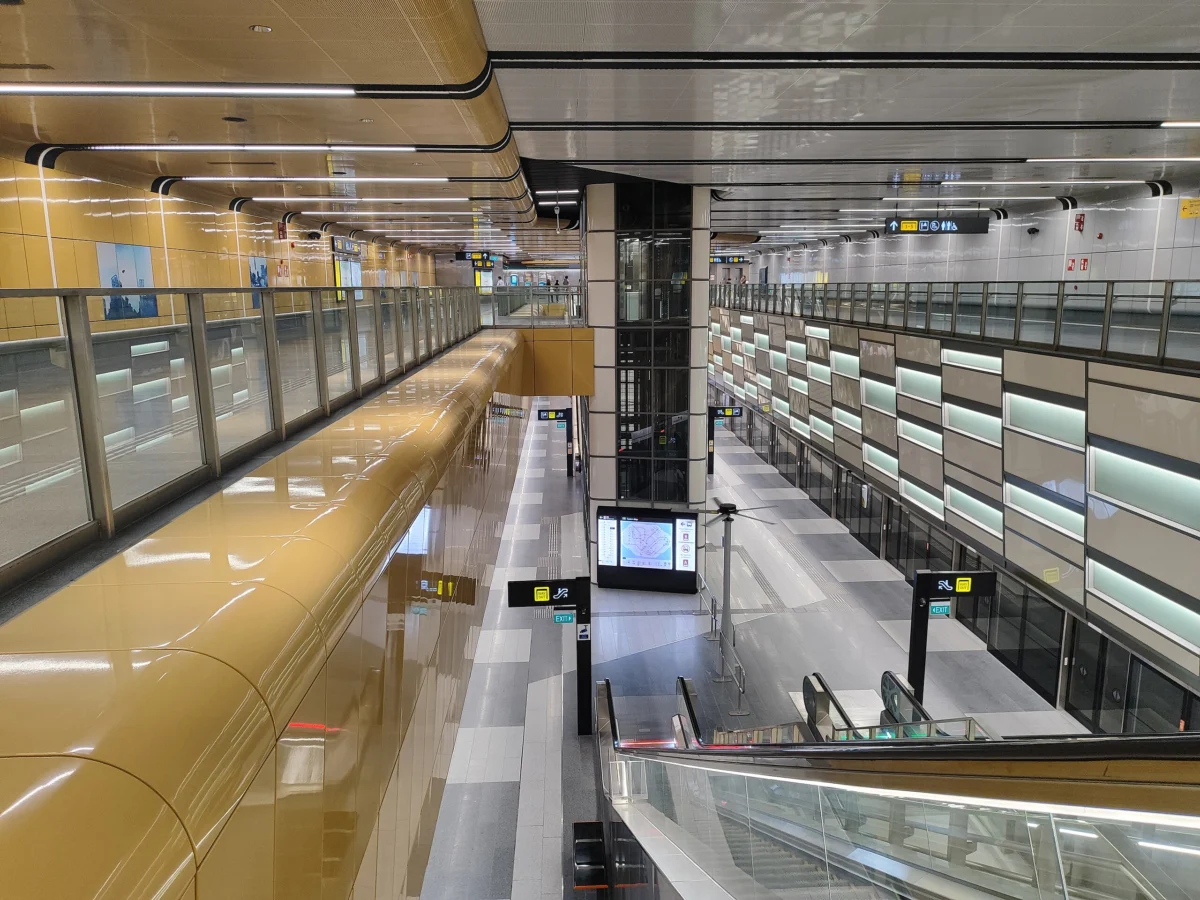
The year 2024 marked a significant milestone in the evolution of global urban mobility. Across the planet, approximately 1,300 kilometers of new metro lines were inaugurated, representing a 6% increase in the global transit network’s total capacity. By the close of 2023, the world boasted over 22,400 kilometers of operational metro track; this year’s expansion continues a blistering trend that has seen the total global line length triple since the turn of the millennium.
Beyond heavy rail, the urban landscape also saw the introduction of 120 kilometers of new light rail, tramway, or streetcar infrastructure, alongside 170 kilometers of Bus Rapid Transit (BRT) corridors. While transit expansion remains a truly global endeavor, the pace and scale of these projects vary wildly by region, with China continuing to dominate the statistical landscape.
The State of Global Infrastructure: 2024 in Review
The expansion of urban transit is no longer merely a byproduct of industrial growth; it is a fundamental strategy for climate mitigation and economic integration. In 2024, the epicenter of this growth remained firmly in Asia, with Chinese cities accounting for approximately two-thirds of all new line openings. Major Chinese metropolitan areas, such as Guangzhou and Xi’an, successfully integrated new loop lines—a critical infrastructure development that allows for more flexible, decentralized transit flow.

However, the progress was not confined to East Asia. The global map of mobility shifted in several key areas:
- Saudi Arabia: The long-awaited Riyadh Metro network began operations in late 2024, with five of its six lines opening to the public by December. This project stands as one of the most significant infrastructure undertakings in the Middle East.
- Australia: Sydney continued its transit transformation with the opening of a new metro rail tunnel and an expanded light rail network, further cementing its commitment to rail-led urban density.
- Europe: Paris saw a multi-pronged expansion, including critical extensions to its metro, regional rail, and tramway networks. Meanwhile, Istanbul continued its aggressive transit growth, adding to four existing metro lines and debuting a new tramway.
- Southeast Asia: Ho Chi Minh City reached a historic milestone by inaugurating its very first metro line, signaling a new era of modernization for Vietnam’s economic hub.
- India: Seven cities across the country launched new metro services, reflecting India’s rapid urbanization and the government’s push for efficient intra-city connectivity.
The Shifting Geography of Transit Leaders
The rankings of the world’s longest metro systems have undergone a dramatic reconfiguration since 2000. Legacy systems like London and New York City, which were once the undisputed benchmarks of urban rail, have seen their global rankings slide to 12th and 15th, respectively.
The new giants of rail are almost exclusively located in China. The Pearl River Delta, an urban megalopolis encompassing cities like Guangzhou, Shenzhen, and Hong Kong, now operates an staggering 1,667 kilometers of metro track. To put this in perspective, that single region now possesses more transit infrastructure than the entirety of the United States, which sits at approximately 1,365 kilometers.

This shift underscores a broader trend: the decoupling of "transit maturity" from "transit length." While older systems in the West grapple with maintenance backlogs and the exorbitant costs of legacy infrastructure upgrades, rapidly developing regions are installing state-of-the-art, automated, and highly efficient networks from the ground up.
Looking Ahead: The 2025 Pipeline
If 2024 was a year of consolidation, 2025 is shaping up to be a year of acceleration. Projections indicate that the total number of line kilometers scheduled for completion in 2025 will be nearly double that of the previous year.
China remains the primary driver, with plans for over 1,500 new kilometers of metro service. Cities such as Chengdu, Nanjing, Tianjin, and Xiamen are slated for massive network additions. India is similarly poised for a transformative year; Mumbai is expected to bring 116 kilometers of new lines into service, while the highly anticipated Delhi-Meerut Regional Rapid Transit System (RRTS)—an 82-kilometer high-speed link—is expected to be finalized.

Other notable projects globally include:
- Canada: Toronto’s Line 5 Eglinton Crosstown is finally scheduled to open, alongside the majority of Montreal’s automated REM light metro system.
- Malaysia: Kuala Lumpur is set to unveil Line 11, further expanding one of Southeast Asia’s most robust transit networks.
- Portugal: Porto’s new "Linha Rosa" will provide essential subterranean light rail access to the city center.
- United Kingdom: Birmingham is set to see the completion of two significant light rail extensions, continuing the U.K.’s efforts to revitalize regional connectivity.
The United States: A Persistent Laggard
Despite the global momentum, the United States remains a glaring outlier in transit investment. 2024 was characterized by "modest" progress, with rail expansions largely confined to Seattle, and BRT improvements in Indianapolis and Madison.
The contrast between the U.S. and its international peers is often attributed to the high costs of construction, complex regulatory environments, and a political culture that often views transit as a social service rather than an economic engine. While the U.S. looks toward 2025 with the planned opening of the first phase of the Los Angeles Purple Line extension and a light rail connection between Seattle and Bellevue, these projects are viewed by transit advocates as islands of progress in an otherwise stagnant landscape of national infrastructure development.

Official Responses and Strategic Implications
Urban planners and municipal governments are increasingly vocal about the necessity of these projects. The consensus among international development banks and city planners is that mass transit is no longer a luxury but a survival requirement for the modern city.
"We are seeing a shift from ‘building for traffic’ to ‘building for accessibility,’" says an urban planning expert familiar with the current data. "The success of cities like Seoul or the Pearl River Delta is not just about the length of the track, but the integration of land use. These systems are designed to foster transit-oriented development (TOD), which fundamentally changes how people live, work, and interact with their environment."
The economic implications are clear: cities with robust, high-frequency rail networks are more resilient to fuel price volatility and provide better social mobility for lower-income populations. Conversely, cities that fail to invest in these networks face increasing congestion, economic stratification, and a higher carbon footprint.

Challenges to Future Growth
Despite the optimistic forecasts for 2025, the industry faces significant headwinds. The article’s data assumes that all projects will open on schedule, a notoriously optimistic assumption in the world of heavy construction.
- Fiscal Volatility: Rising interest rates and inflation have significantly increased the cost of capital for transit projects. Many municipalities are finding that original budgets are insufficient to cover the cost of labor and raw materials.
- Regulatory Delays: Environmental impact assessments and bureaucratic hurdles continue to extend project timelines, often by years.
- Labor Shortages: The specialized skills required for tunneling, track laying, and signal system integration are in short supply globally, leading to intense competition for human capital.
- Technological Integration: As cities move toward automated, driverless systems, the integration of legacy technology with new, high-tech signaling creates significant technical challenges.
Conclusion
The global expansion of metro and light rail transit is a testament to the enduring importance of public mobility. As the world continues to urbanize, the ability to move millions of people efficiently will be the defining characteristic of successful, livable cities.
While the "transit gap" between Asia and the West continues to widen, the data provided by platforms like Transit Explorer serves as a crucial metric for accountability and policy development. Whether through the massive, state-led investments in China or the incremental, hard-fought gains in North America, the message is uniform: the future of the global city is built on tracks. For 2025, the world will be watching to see if these ambitious plans can be converted into operational realities, keeping the world moving toward a more connected, sustainable future.
