

By Political Correspondent
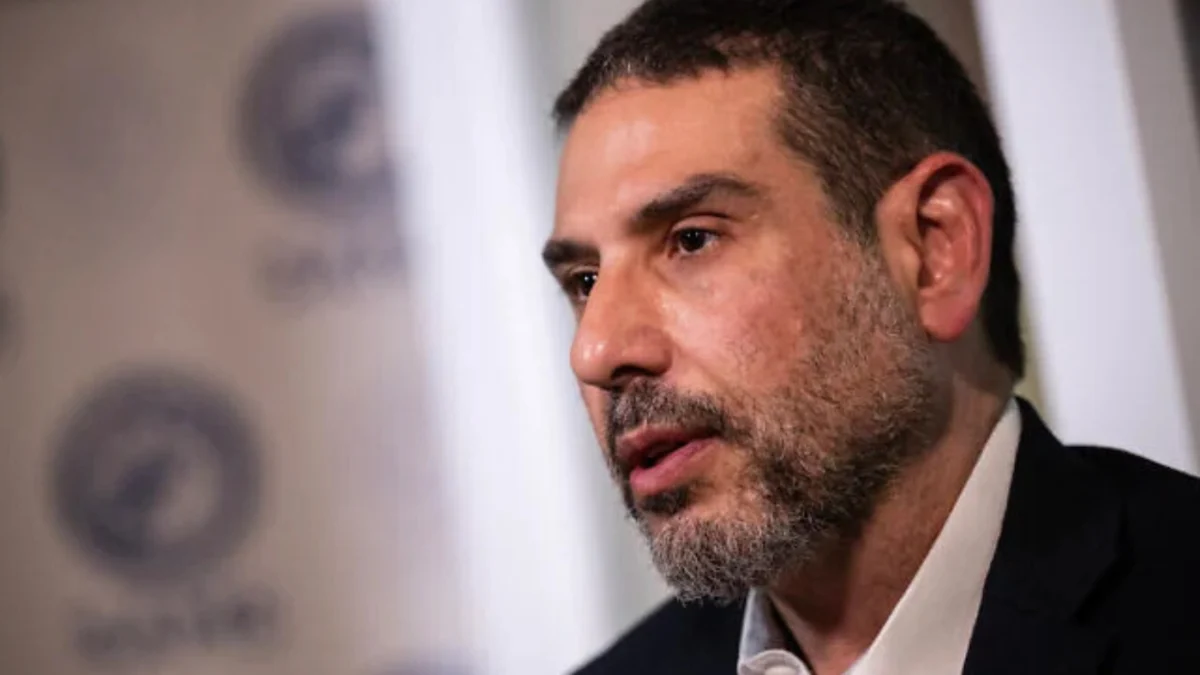
In a significant shakeup for New Jersey’s political landscape, Adam Hamawy, a distinguished combat trauma surgeon and military veteran, has emerged as the projected winner of the Democratic primary in the state’s 12th Congressional District. According to projections by Decision Desk HQ, Hamawy’s victory marks a pivotal transition for a seat that has been under the steady stewardship of outgoing Representative Bonnie Watson Coleman since 2015.
The primary race, which spanned a diverse geographic swath from the state capital of Trenton to the bustling suburban hub of Plainfield, saw Hamawy capture 28.1 percent of the vote. His performance effectively sidelined a crowded field of contenders, including his nearest rival, East Brunswick Mayor Brad Cohen, who secured 14.9 percent of the vote. Hamawy’s victory is being interpreted by political analysts as a testament to the potency of his unique biography—a blend of front-line military service and specialized medical expertise—coupled with a coalition of high-profile progressive support.
The Path to Victory: A Chronology of the Primary Campaign
The journey to the Democratic nomination was not a foregone conclusion. For months, the 12th District was viewed as a battleground for the soul of the local party, balancing the legacy of Watson Coleman’s tenure against a new wave of progressive energy.
Early Mobilization
Hamawy’s campaign began with a focus on his service in the New Jersey Army National Guard. By emphasizing his time in Iraq as a combat trauma surgeon, he established an immediate rapport with voters concerned with national security and the efficacy of government institutions. His narrative was not merely one of policy, but of crisis management—a skill set he argued was sorely needed in the halls of Congress.
The Progressive Surge
As the campaign progressed, Hamawy moved beyond the veteran demographic, actively seeking the endorsement of national progressive heavyweights. His alignment with figures like Senator Bernie Sanders (I-Vt.) and Representative Alexandria Ocasio-Cortez (D-N.Y.) signaled to the electorate that his platform—focused on healthcare reform, economic equity, and foreign policy restraint—was firmly rooted in the party’s left-leaning wing.
Final Weeks and Visibility
In the final stretch of the primary, the campaign utilized non-traditional media channels to reach younger, more digitally engaged voters. A high-profile appearance on the popular left-wing streaming show hosted by Hasan Piker provided Hamawy with a national platform. During the broadcast, Hamawy visited the Delaney Hall immigration detention center, using the site visit to frame his critique of current immigration policies through the lens of human rights and medical ethics. This move solidified his standing among progressive activists and differentiated him from the more traditional local candidates like Mayor Cohen.
Supporting Data: Understanding the Vote
The electoral map of the 12th District is complex, encompassing urban centers, suburban townships, and rural fringes. Hamawy’s victory margin of nearly double his closest opponent suggests a broad appeal that transcended the standard party-establishment lines.
- Hamawy (28.1%): His success relied on high turnout in areas where he emphasized his "servant-leader" background. His ability to consolidate the progressive vote while appealing to moderate voters who value military service provided the necessary cushion to defeat Cohen.
- Cohen (14.9%): The East Brunswick Mayor represented the more traditional, municipal-focused wing of the party. His inability to scale his local name recognition to a district-wide level highlights the growing influence of ideological branding over local governance experience in modern primary politics.
- District Composition: The 12th District has long been a Democratic stronghold. The primary results indicate that the base remains highly engaged, with turnout figures reflecting the high stakes of replacing a long-term incumbent like Watson Coleman.
Official Responses and Endorsements
The endorsements received by Hamawy were not merely symbolic; they served as the backbone of his campaign strategy. Perhaps most poignant was the public support from Senator Tammy Duckworth (D-Ill.).
Duckworth, a combat veteran herself, shares a unique history with Hamawy. As a patient of the then-surgeon during his time in Iraq, her endorsement carried a level of authenticity that resonated deeply with both voters and the media. Following the announcement of the primary results, Duckworth took to the social platform X (formerly Twitter) to laud the winner: "Army Veteran. Former combat surgeon. The leader New Jersey deserves. Congratulations, @HamawyForNJ!"
These endorsements served a dual purpose: they neutralized potential attacks from opponents regarding Hamawy’s political experience while simultaneously signaling to the national party that he was an asset to the Democratic brand.
The Legacy of Bonnie Watson Coleman
The shadow of outgoing Representative Bonnie Watson Coleman looms large over this transition. Having served in Congress since 2015, Watson Coleman built a reputation as a stalwart champion of civil rights and economic justice. Her decision not to seek reelection created a power vacuum that Hamawy has now filled.
Political observers note that while Hamawy shares the progressive leanings of his predecessor, his background as a surgeon provides a distinct thematic shift for the district. Where Watson Coleman focused heavily on legislative advocacy and committee work, Hamawy has campaigned on the "emergency room" model of politics—treating the nation’s problems as immediate, clinical crises that require decisive, data-driven intervention.
Implications for the 2026 Midterm Elections
The victory of Adam Hamawy is a bellwether for the broader Democratic strategy heading into the 2026 midterm elections. Several key takeaways emerge from this primary:
1. The Rise of the "Professional-Veteran"
Hamawy’s success validates a growing trend where candidates with high-stakes professional backgrounds—medicine, law enforcement, or military command—are successfully challenging career politicians. Voters appear increasingly drawn to candidates who can demonstrate they have "done the job" in high-pressure environments.
2. The Progressive-Establishment Synthesis
While Hamawy ran with the backing of the progressive wing, his appeal was not limited to that base. His campaign suggests that the "progressive" label is becoming more fluid, incorporating military-industrial critiques with traditional social welfare goals. This synthesis could prove lethal to Republican challengers in the general election, as it bridges the gap between different factions of the Democratic coalition.
3. Media Transformation
The success of his appearance on Hasan Piker’s streaming channel highlights the declining relevance of traditional cable news in the context of primary mobilization. By engaging with audiences directly through long-form digital media, Hamawy bypassed traditional gatekeepers, a strategy that is likely to be replicated by insurgent campaigns across the country in the coming months.
4. Foreign Policy and Domestic Priorities
Hamawy’s background as a combat surgeon makes him a uniquely qualified voice on foreign policy. In an era where the United States is navigating complex geopolitical challenges, his presence in Congress will likely shift the conversation toward the human costs of military intervention. Voters in the 12th District have effectively chosen a representative who is expected to bring a physician’s precision to the debate over war, peace, and humanitarian aid.
Conclusion
As Adam Hamawy pivots toward the general election, the focus will shift from internal party dynamics to the challenges of the 12th District at large. He enters the race with significant momentum, a clear, compelling biography, and the backing of some of the most influential voices in the Democratic Party.
Whether he can translate this primary success into a broader mandate for the general electorate remains to be seen. However, one thing is clear: the 12th Congressional District has opted for a change in leadership style, trading the seasoned legislative hand of a long-term incumbent for the urgent, clinical, and battle-tested perspective of a combat surgeon. For the Democratic Party, Hamawy represents a potential new archetype—a candidate who speaks the language of the base while maintaining the gravitas of a national security veteran. The 2026 campaign season in New Jersey is set to be one of the most closely watched in the nation.
