

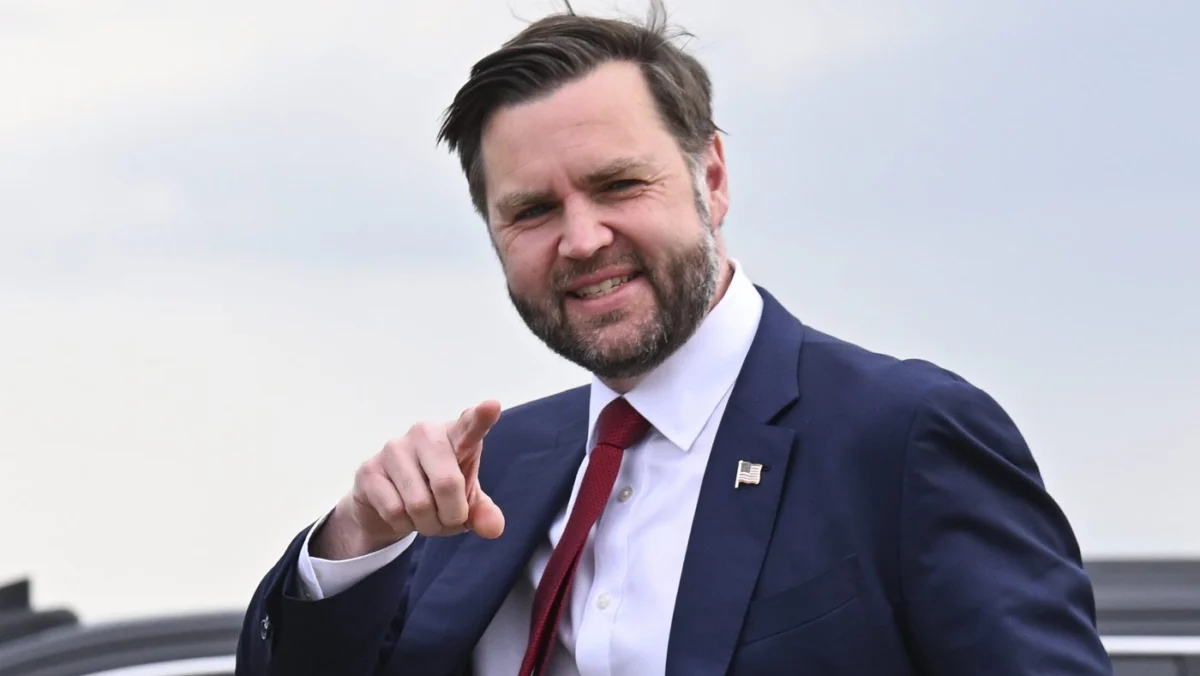
WASHINGTON — In an unconventional display of administrative fluidity, Vice President JD Vance is set to command the White House press briefing room this Tuesday. This appearance follows a recent trend of high-profile administration officials rotating into the podium role during Press Secretary Karoline Leavitt’s ongoing maternity leave. While the logistical necessity of filling the vacancy is clear, the political optics are increasingly complex, as both Vance and Secretary of State Marco Rubio find themselves at the center of a burgeoning national conversation regarding the 2028 presidential election.
Main Facts: A Shift in Briefing Dynamics
The White House briefing room, historically the domain of the press secretary, has recently become a showcase for the administration’s most prominent figures. Following Secretary of State Marco Rubio’s widely lauded debut at the podium earlier this month, the decision to have Vice President Vance take the lead suggests a strategy to keep the administration’s top-tier talent in the spotlight.
This rotating cast of characters—necessitated by Leavitt’s temporary absence—has provided a unique platform for both Vance and Rubio. For the Vice President, Tuesday’s briefing serves as an opportunity to project a sense of continuity and administrative command, balancing his executive duties with an aggressive, nationwide political outreach schedule that has kept him in the headlines throughout the month.
Chronology: The Road to the Podium
The path to this Tuesday’s briefing has been paved with significant travel and strategic maneuvering by both men. To understand the current climate, one must look at the events of the last several weeks:
- Early Month: Secretary of State Marco Rubio makes his debut at the White House podium. His performance was met with unexpected praise, garnering support not only from the Republican base but also drawing quiet nods of approval from some Democratic observers for his measured tone and policy depth.
- Mid-Month: Rubio accompanies President Trump on a high-stakes diplomatic mission to China, a move that solidified his status as a key architect of the administration’s foreign policy and placed him firmly on the international stage.
- Last Week: Vance embarks on a whirlwind tour of the American heartland. He traveled to Maine to discuss domestic policy, followed by a trip to his home state of Ohio to cast his ballot in the Republican primary. His travel schedule concluded with stops in Oklahoma for high-dollar fundraisers and a campaign rally in Iowa, where he stumped for incumbent Rep. Zach Nunn (R-Iowa).
- Monday: Vance appears in Kansas City, Mo., attending a Republican National Committee (RNC) fundraiser before delivering a policy-focused address at a local manufacturing facility.
- Tuesday: Vance is scheduled to take the podium at the White House, marking a pivot from campaign-style rhetoric to the formal environment of the Executive Mansion.
Supporting Data: The "Dream Team" Narrative
President Trump has consistently fueled the 2028 fire by publicly referring to a potential Vance-Rubio ticket as a "dream team." This label, while ostensibly supportive, has added a layer of intensity to every move both men make. The data points suggest an administration clearly preparing for the post-Trump era, even if the primary parties are hesitant to engage in the discourse.
Public polling and internal donor sentiment suggest that the Republican electorate is currently split between the "America First" populism represented by Vance and the traditionalist-conservative foreign policy expertise brought to the table by Rubio. The synergy between these two archetypes is precisely why the "dream team" narrative has gained such traction in media circles.
However, political analysts note that the dynamic between a Vice President and a Secretary of State often leads to friction when both are viewed as equals in a future primary. While both men currently serve the administration with apparent loyalty, their independent political bases are growing. Vance’s strength remains his connection to the working-class voters of the Rust Belt, while Rubio’s strength lies in his established reputation as a sophisticated institutionalist capable of navigating complex geopolitical waters.
Official Responses and Political Posturing
When pressed on the 2028 speculation, the responses from both camps have been a study in disciplined deflection.
Vance, in particular, has sought to dampen the rumors, characterizing them as distractions from the work at hand. During a recent interview, he brushed aside questions regarding his future political ambitions, stating, "There are few topics that I want to talk about less than what office I’m going to run for years down the road when I’m having a good time and trying to do good work in the job that the American people already elected me to do."
The sentiment is clear: both men are aware that the quickest way to lose the favor of the current administration is to appear too focused on the next one. Yet, their actions—Vance’s persistent travel to battleground states and Rubio’s frequent high-profile appearances alongside the President—speak to a desire to maintain relevance that goes beyond their current titles.
Behind the scenes, allies of both men suggest that while neither is currently plotting a campaign, they are not discouraging the "dream team" talk either. It is a classic political hedge: keep the door open, keep the donor network warm, and remain the most visible figures in the party.
Implications: The 2028 Primaries Begin Now
The implications of Tuesday’s briefing go far beyond the immediate news cycle. By placing the Vice President in the briefing room, the White House is signaling that it is comfortable with its top officials acting as the face of the administration.
1. The Challenge of the "No. 2" Position
One of the greatest hurdles for any sitting Vice President is the transition from being a supporting character to the lead. Vance’s current trajectory suggests he is attempting to carve out an identity that is distinct from, yet complementary to, President Trump. By engaging in retail politics—manufacturing plant visits, congressional rallies—he is building a base that is uniquely "Vance," distinct from the Trump brand.
2. The Foreign Policy Advantage
Rubio’s recent performance and the successful China trip have arguably shifted the internal balance of power. Foreign policy has traditionally been a weak point for the populist wing of the GOP, and Rubio’s ability to handle the podium with ease has effectively bridged that gap. For the 2028 cycle, this makes him an formidable contender, particularly if the geopolitical climate remains volatile.
3. The Midterm Test
Vance’s heavy involvement in the midterm elections is a critical stress test. By campaigning for candidates like Rep. Zach Nunn, Vance is building a network of political IOUs. If the Republicans perform well in the midterms, Vance will be able to claim a significant share of the credit, further strengthening his potential candidacy.
4. The Institutional Risk
The primary risk for both men is the danger of being "too visible." A briefing room appearance is a high-wire act; one misstep, one controversial answer, or one failed policy defense can be weaponized by political opponents. Rubio’s success at the podium was a result of his practiced, disciplined approach. Whether Vance can replicate that performance—without appearing to be campaigning—will be the defining question of his Tuesday briefing.
Conclusion: A New Era of Visibility
As the administration moves toward the latter half of its term, the spotlight on the White House podium is unlikely to dim. With the Vice President stepping into the role, the administration is leaning into the idea that its leaders are best equipped to tell their own story.
Whether this ultimately leads to a fractured primary in 2028 or a unified "dream team" remains to be seen. What is certain, however, is that both JD Vance and Marco Rubio are utilizing every opportunity to demonstrate their readiness for the highest office. The briefing room, once a place for dry policy updates, has become the stage upon which the next act of the American political drama is being written. Tuesday’s briefing will be a critical chapter in that ongoing story, testing not just the Vice President’s speaking ability, but his readiness to navigate the intense scrutiny that accompanies a presidential frontrunner.
