

By Staff Reports
After months of anticipation, speculation, and repeated delays, Trump Mobile—the telecommunications venture spearheaded by Donald Trump Jr. and Eric Trump—has officially announced that its signature handset, the T1 Phone, has entered the shipping phase. The announcement, delivered via the company’s official social media channels on Wednesday, marks a significant milestone for a project that has faced intense scrutiny regarding its manufacturing origins, delivery timelines, and ultimate commercial viability.
For the thousands of customers who placed $100 deposits as early as June 2025, the news comes as a long-awaited relief. However, the path to this release has been fraught with uncertainty, raising broader questions about the intersection of political branding and consumer electronics.
The Chronology of a Delayed Launch
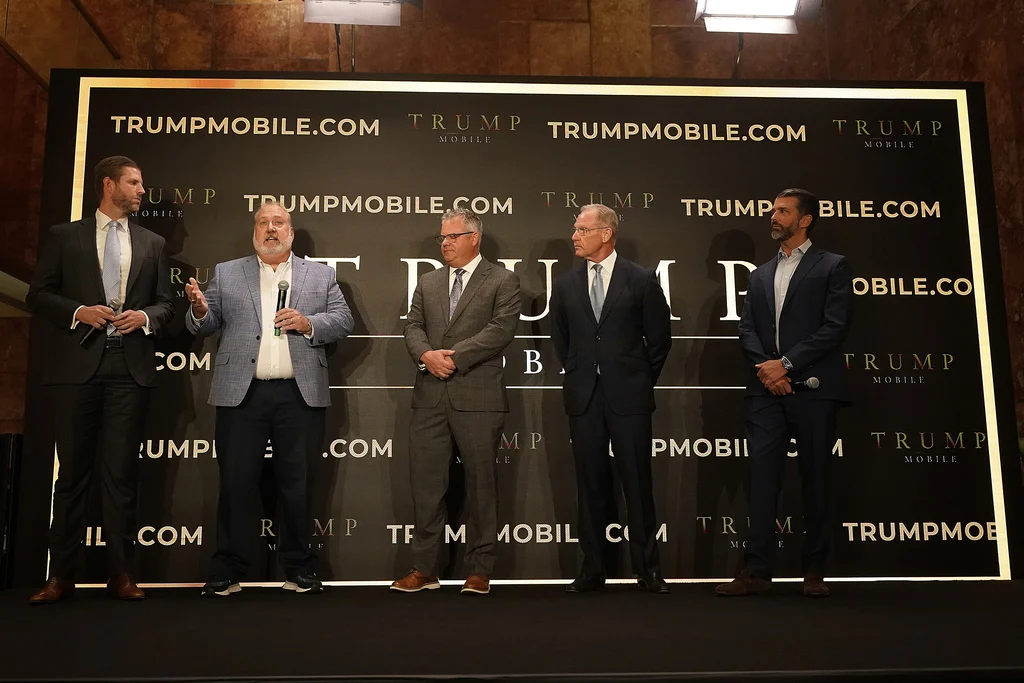
The saga of the T1 Phone began in June 2025, when Donald Jr. and Eric Trump unveiled the device at a high-profile event at Trump Tower in New York. Positioned as a “patriotic” alternative to major smartphone manufacturers, the phone was initially marketed with a promise of domestic assembly and a projected August 2025 shipping date.
As that summer deadline passed, communication from the company grew sparse. Official launch dates were quietly removed from the website, and the lack of updates fueled mounting frustration among early adopters.
- June 2025: The T1 Phone is announced; pre-order deposits of $100 are opened.
- August 2025: The initial target shipping date passes with no product release.
- Late 2025 – Early 2026: The company remains largely silent, while the website undergoes subtle branding changes, removing explicit claims regarding domestic manufacturing.
- May 2026: Trump Mobile officially announces via Instagram and Facebook that the T1 Phone has “arrived” and that units are beginning to ship to those who placed pre-orders.
The company has stated that the phones will be shipped in the order that pre-orders were received. Despite the announcement, customer service representatives reached by Nexstar were unable to provide specific delivery windows, leaving many consumers waiting to see when their devices will actually land on their doorsteps.
Shifting Messaging: The "Made in USA" Debate
One of the most contentious aspects of the T1 Phone’s development has been its manufacturing provenance. During the initial June 2025 rollout, the promotional material leaned heavily into the claim that the phones were "proudly designed and built in the United States." This was a key selling point for a target demographic that prioritizes American-made goods.
However, as production timelines slipped, that specific language began to vanish from the Trump Mobile website. By early 2026, the rhetoric had shifted from "built in the U.S." to more abstract claims, such as the phone being "designed with American values in mind" and "shaped by American innovation."
This pivot sparked widespread speculation regarding supply chain issues and potential outsourcing. When pressed for clarity, Trump Mobile CEO Pat O’Brien addressed the situation in an email to USA Today. O’Brien confirmed that there had been significant production delays, framing them as a necessary evil to ensure the delivery of "an amazing product." Regarding the manufacturing origin, O’Brien maintained that the phones would be made with "components primarily manufactured in America," and noted that an initial production run had indeed been assembled domestically.
However, the company has remained notably vague regarding where the final assembly is currently taking place, leading critics and industry analysts to question the sustainability of the "Made in USA" branding.
Hardware Specifications and Market Positioning
The T1 Phone enters a crowded and highly competitive market. According to current specifications listed on the Trump Mobile website, the device features:
- Display: A 6.78-inch touchscreen display.
- Imaging: A 50-megapixel main camera system.
- Battery: A quick-charge battery mechanism.
- Security: A standard biometric fingerprint sensor.
- Software: The device runs on the Android 15 operating system.
Visually, the phone is distinguished by a gold-colored chassis featuring an American flag inscription on the back, situated above the "Trump Mobile" wordmark. The promotional price is currently set at $499, though the company’s terms and conditions suggest this price is not strictly locked in, stating that final offers will be disclosed at the time of purchase.
The T1 Phone is intended to be the flagship device for the broader Trump Mobile wireless service. Since its inception, the company has been onboarding customers using other hardware, including refurbished Apple and Samsung devices, while customers await their T1 units.
The Legal and Financial Fine Print
Perhaps the most cautious element of the Trump Mobile operation is the fine print. The company’s legal disclosures are unusually transparent about the potential for failure, which has served as a lightning rod for criticism.
The terms and conditions on the company’s website include a header explicitly titled, "No Guarantee of Release, Delivery or Timing." The text clarifies that:
- Non-binding estimates: Any provided shipping dates or production schedules are non-binding.
- Commercial release: The company does not guarantee that the device will ever be commercially released, nor that it will secure necessary FCC authorization or carrier certification.
- Pricing volatility: Customers are warned that the $499 promotional price may change and that they will have the chance to accept or reject final terms once the phone is ready for purchase.
While the $100 deposits are refundable, the existence of such language in a consumer contract is rare in the tech industry, where companies typically offer firm delivery dates. Recent reports, including analysis from the International Business Times, have estimated the number of pre-orders at approximately 600,000, suggesting that a significant volume of capital has been tied up in a project with very few concrete guarantees.
Implications: A Political Brand in the Tech Space
The release of the T1 Phone represents a fascinating, albeit controversial, test case for the viability of political branding in consumer technology. Trump Mobile is attempting to bridge the gap between a political movement and a lifestyle brand. By tying the product to "American values," the company has cultivated a loyal, mission-driven customer base.
However, the tech industry is notoriously unforgiving of logistical failures. The delays faced by the T1 Phone demonstrate that even with high-profile backing, the complexities of global supply chains and regulatory hurdles are difficult to circumvent.
Broader Industry Impact
For industry observers, the primary question is whether the T1 Phone will provide a user experience that justifies the wait. If the phone meets the technical specifications promised and performs well on the network, it may solidify Trump Mobile as a niche but permanent player in the wireless space. If, conversely, the hardware proves to be rebranded generic technology with software optimization issues, it could lead to a significant loss of consumer trust.
Political Branding and Consumer Loyalty
The Trump family has successfully monetized their brand across real estate, media, and hospitality. Expanding into telecommunications is a logical step in building an ecosystem that keeps their supporters within a closed loop of services. Yet, unlike a hotel stay or a book purchase, a smartphone is an essential, daily-use tool. Users are often less forgiving of "patriotic" branding if the core utility of the device is compromised.
As the first units begin to ship this week, the spotlight will shift from the company’s marketing claims to the reality of the hardware. For the Trump Mobile team, the focus will now turn to the logistics of distribution and the challenge of keeping those 600,000 potential customers satisfied. For the consumers, the wait is finally over, but the final verdict on whether the T1 Phone is a revolutionary device or a symbolic gesture remains to be seen.
As of Wednesday, representatives for the company’s media team were not available to comment further on the status of the rollout, leaving the public to rely on the company’s social media updates for news on the next wave of shipments.
