

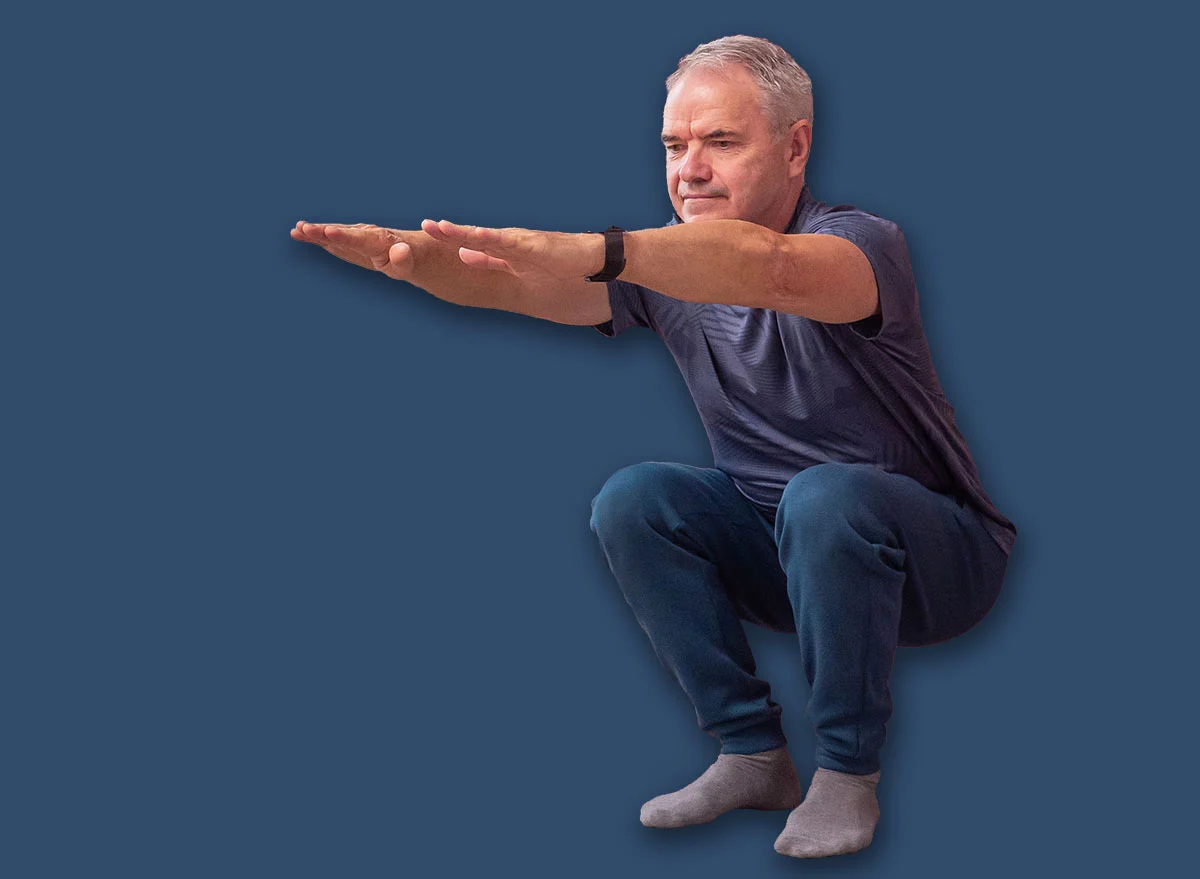
For many men, the milestone of turning 60 brings a period of reflection and a renewed focus on longevity. However, as the candles on the birthday cake multiply, there is a physiological reality that cannot be ignored: the gradual decline of musculoskeletal integrity. Specifically, lower body strength—the engine that powers our independence—begins to wane.
According to the National Institutes of Health (NIH), the culprit is sarcopenia, a natural, age-related loss of muscle mass and function. As this process accelerates, the tasks that once seemed trivial—navigating a flight of stairs, rising from a deep armchair, or walking uphill—begin to feel like significant physical hurdles. But this decline is not an inevitable sentence of frailty. By integrating strategic, functional movements into your morning routine, you can effectively counteract these trends.
To understand how to turn the tide, we spoke with James Brady, CPT, a certified personal trainer at OriGym. Brady emphasizes that you don’t need an expensive gym membership or heavy iron to build a robust foundation. Instead, the secret lies in consistency and the timing of your physical activity.
The Science of Morning Movement: Why Timing Matters
Scientific literature increasingly suggests that the window immediately following waking is a prime time to address muscle maintenance. After hours of sedentary rest, our muscles are effectively "off-line." Engaging in structured movement early in the day helps wake up the nervous system, stimulates blood flow, and jumpstarts metabolic processes.
Research indicates that consistent functional training—movements that mimic real-life actions—is superior to isolated exercises for long-term health in older adults. By priming your muscles first thing in the morning, you not only improve immediate mobility but also set a protective tone for the rest of your day, reducing the risk of falls and improving overall postural alignment.
1. Bodyweight Squats: The Gold Standard of Functional Fitness
The bodyweight squat is the cornerstone of human movement. It is the action we perform every time we sit down to work, use the restroom, or climb into a car. Because it engages the quadriceps, glutes, hamstrings, and the deep core simultaneously, it is, as Brady puts it, "the most effective morning exercise for building foundational leg strength."
How to perform a bodyweight squat:
- Stand with your feet shoulder-width apart, toes pointed slightly outward.
- Maintain a tall spine, engaging your core as if you are bracing for a gentle punch.
- Initiate the movement by pushing your hips back, as if you are reaching for a chair behind you.
- Keep your chest up and ensure your knees track in line with your toes.
- Lower yourself until your thighs are parallel to the floor (or as low as your current mobility allows).
- Drive through your heels to return to a standing position, squeezing your glutes at the top.
2. Step-Ups: Enhancing Stability and Stair-Climbing Power
If you have ever felt winded or wobbly while climbing stairs, the step-up is your best corrective tool. This movement is highly functional, replicating the exact mechanics required for navigating elevation changes. By isolating one leg at a time, you eliminate strength imbalances, ensuring that both the left and right sides of your body are equally capable.
How to perform a step-up:
- Find a sturdy chair, bench, or step that is at a comfortable height (knee height or slightly lower).
- Step your entire right foot onto the platform, ensuring your heel is secure.
- Push through the right heel, engaging your glute to lift your body weight up.
- Bring your left foot to meet the right on the platform.
- Step back down with control, keeping your core tight throughout the descent.
- Complete all repetitions on one side before switching to the left leg.
3. Glute Bridges: Protecting the Posterior Chain
The glutes are the largest muscles in the body, yet for many men over 60, they become "dormant" due to prolonged sitting. The glute bridge is a low-impact exercise that targets the posterior chain—the hamstrings and glutes—without putting excessive strain on the lower back. This movement is essential for walking power and maintaining an upright posture.
How to perform a glute bridge:
- Lie flat on your back with your knees bent and feet flat on the floor, hip-width apart.
- Place your arms at your sides, palms facing down.
- Engage your core and glutes, then push through your heels to lift your hips toward the ceiling.
- At the top of the movement, your body should form a straight line from your shoulders to your knees.
- Hold for a one-second squeeze at the peak.
- Lower your hips back to the floor with control, without letting your glutes fully "rest" between reps.
4. Calf Raises: The Secret to Balance and Gait
Often overlooked, the calf muscles (the gastrocnemius and soleus) are the "second heart" of the lower body. They facilitate blood flow and provide the push-off power necessary for a confident, steady gait. Stronger calves directly correlate to better balance, which is the most critical factor in preventing falls as we age.
How to perform a calf raise:
- Stand near a wall or the back of a sturdy chair for support.
- Keep your feet hip-width apart and your posture upright.
- Slowly rise onto the balls of your feet, lifting your heels as high as possible.
- Pause for a moment at the top, focusing on the contraction in your lower leg.
- Lower your heels back to the floor with a slow, controlled tempo.
- To increase difficulty, perform these on a step, allowing your heels to drop slightly below the step level for a deeper stretch.
5. Reverse Lunges: Knee-Friendly Leg Development
Many men avoid lunges due to fear of knee pain. However, the reverse lunge—stepping backward rather than forward—places significantly less shear force on the knee joint while still providing a robust workout for the hips and quads. This movement also introduces a balance challenge, forcing the stabilizing muscles around the ankle and hip to work in harmony.
How to perform a reverse lunge:
- Stand tall with your feet together.
- Take a controlled step backward with your right foot.
- Lower your hips so that both knees form roughly 90-degree angles. Ensure your front knee does not cave inward.
- Keep your torso vertical; avoid leaning too far forward.
- Push off the ball of your back foot to return to the starting position.
- Alternate legs with each repetition to maintain balance.
Implications for Longevity and Independence
The implications of adopting this routine extend far beyond "leg strength." By dedicating just 10 to 15 minutes each morning to these movements, you are investing in your long-term independence.
Chronology of Progress
- Weeks 1-4 (The Adaptation Phase): Focus on form rather than volume. You may feel slight soreness as your muscles wake up.
- Weeks 5-8 (The Strength Phase): You will notice daily tasks become easier. Climbing stairs will feel less taxing, and your balance will improve significantly.
- Month 3 and Beyond (The Maintenance Phase): These movements should feel like second nature. At this point, you can add light resistance, such as holding a water bottle or wearing a light backpack, to continue challenging your muscles.
Supporting Data
According to recent studies, men who maintain lower-body strength post-60 show a 30% reduction in mortality risk associated with falls and frailty. The neurological benefit is also noteworthy: the act of performing these exercises improves proprioception—the body’s ability to sense its position in space—which is a key neurological defense against age-related decline.
Expert Conclusion
James Brady’s advice is clear: "Don’t let the simplicity of these moves fool you. The most powerful tools for health are often the ones we can perform anywhere, at any time." By committing to this morning ritual, you aren’t just exercising; you are building a biological insurance policy that will serve you for decades to come.
As you progress, remember that listening to your body is paramount. If a movement causes sharp pain, stop and adjust your range of motion. Consistency is the primary driver of results. Start slow, maintain your form, and watch as your physical confidence returns, one squat at a time.
