


In the world of fitness, we often obsess over dynamic movements—the squat, the lunge, the deadlift. Yet, some of the most profound physiological transformations occur in stillness. For those navigating their sixth, seventh, and eighth decades, the "wall sit" has emerged as a cornerstone exercise that bridges the gap between basic mobility and elite lower-body power.
As we age, the ability to generate and sustain force—not just once, but repeatedly throughout the day—becomes the primary metric of independence. The wall sit, a seemingly simple isometric exercise, acts as both a potent diagnostic tool and a foundational building block for functional longevity.
The Mechanics of Power: Why Static Holds Matter
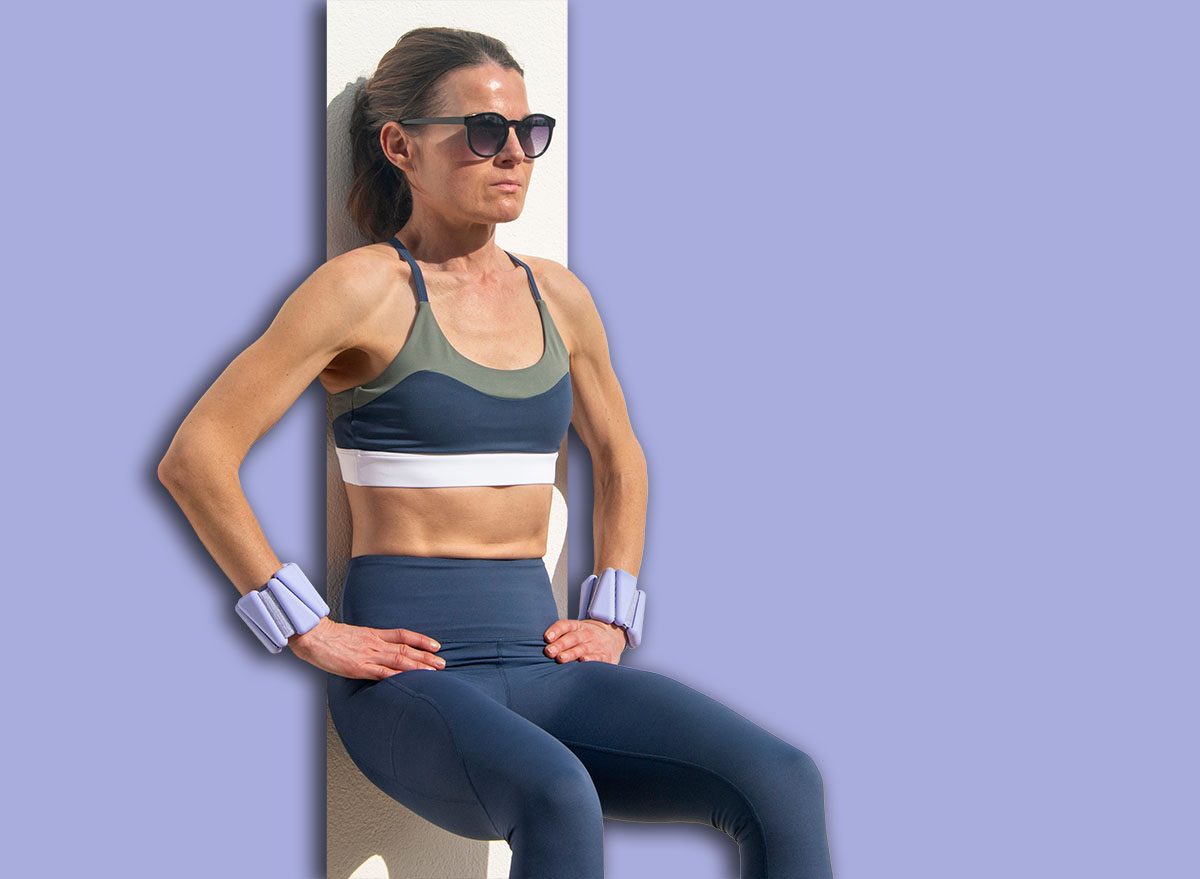
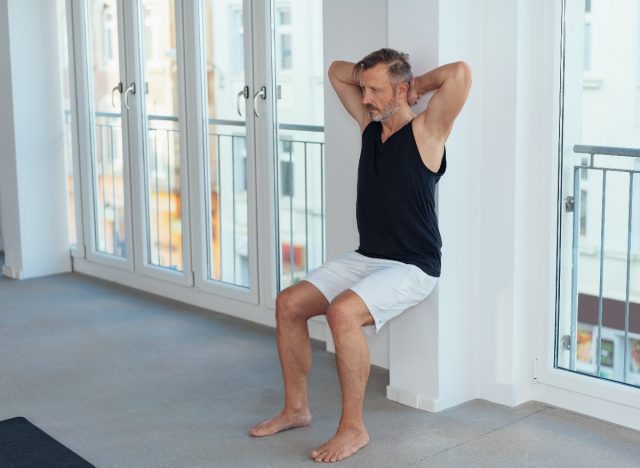
A wall sit is deceptive in its simplicity. You slide your back against a wall, descend until your thighs are parallel to the floor, and hold. There is no momentum to lean on, no bouncing to assist the movement, and no room for compensation. Your quadriceps, glutes, and core are forced into a state of "time under tension"—a stimulus that is highly effective for building both muscular endurance and structural integrity.
The Physiology of Aging Muscles
After the age of 60, the body naturally experiences a shift in muscle fiber composition. Sarcopenia, or age-related muscle loss, primarily targets type II (fast-twitch) muscle fibers, which are responsible for quick bursts of power. By engaging in isometric holds like the wall sit, you are training the nervous system to keep these muscles "switched on."
When you hold a wall sit, you are not merely burning calories; you are teaching your neuromuscular system to maintain a braced, stable position. This directly translates to "real-world" strength: rising from a deep armchair, climbing a flight of stairs with groceries, or maintaining balance on uneven terrain during a morning walk.
Chronology: Building a Foundation
For the uninitiated, jumping into a long-duration wall sit is not the goal. Building lower-body resilience after 60 is a process of progressive adaptation.
Phase 1: Establishing the Baseline (Weeks 1–4)
The initial phase focuses on form. Beginners should start with "High Wall Sits," where the knees are bent at a 45-degree angle rather than the full 90. This reduces the shear force on the knee joints while activating the quads. Aim for three sets of 20–30 seconds.
Phase 2: Building Time Under Tension (Weeks 5–8)
Once the high-angle hold feels comfortable, gradually increase the depth. The goal is to reach a 90-degree angle, where the thighs are parallel to the floor. Focus on "active tension"—squeezing your glutes and pressing your feet into the floor as if you are trying to slide them away from the wall.
Phase 3: The Integration of Dynamic Strength (Weeks 9+)
Once you can hold a 90-degree wall sit for 60 seconds, you have built a sufficient base to integrate dynamic movements. Now, you can rotate the wall sit with weighted squats or step-ups. The wall sit acts as the "anchor" for your routine, ensuring that your muscles are conditioned to handle the load of more complex movements.
Supporting Data: What the Science Says
Recent research into isometric training has revolutionized how we view muscle maintenance in older adults. According to data published in the Journal of Strength and Conditioning Research, isometric exercises like the wall sit are remarkably effective at reducing blood pressure and improving arterial stiffness, providing cardiovascular benefits alongside musculoskeletal ones.

The "Power" Metric
A study featured in PubMed highlights that lower-body power is the strongest predictor of physical independence in the elderly. The ability to produce force quickly—and sustain it—is what prevents falls. By training the legs to hold a position under fatigue, the wall sit improves "motor unit recruitment." This means that when you stumble, your muscles are faster to react and stronger to recover, providing an essential safety net for daily life.
Professional Insights: The Trainer’s Perspective
We spoke with senior fitness consultants who specialize in "Longevity Training" for the 60+ demographic. Their consensus is clear: the wall sit is the ultimate "low-impact, high-reward" move.
"When I see a client struggle to get up from a floor, it’s rarely a lack of motivation; it’s a lack of sustained force production in the quads," says one lead trainer. "The wall sit is the most honest exercise. You can’t cheat a wall. If your muscles aren’t firing, you simply won’t be able to hold the position. It provides instant, objective feedback."
Common Misconceptions
A common error is allowing the knees to cave inward or the lower back to arch away from the wall. Professionals emphasize that the wall sit is a full-body engagement. Your head, shoulders, and lower back should be in contact with the wall at all times. If you feel your lower back pulling away, it is a sign that your core needs more engagement, or that you should rise to a higher, more manageable depth.
Implications: Your Score and Your Future
What does your wall sit time actually tell you? Consider this a snapshot of your current lower-body vitality:
- 0–30 Seconds (The Starting Point): You are in the early stages of building endurance. Focus on consistency over duration. Three short, perfect sets are better than one long, shaky one.
- 30–60 Seconds (The Functional Baseline): You possess enough strength to navigate most daily activities with confidence. You are well-positioned to move into more challenging strength training.
- 60–90 Seconds (The Strength Pillar): You have achieved excellent muscular endurance. Your hips and knees are well-supported, which significantly lowers your risk of injury during active daily living.
- 90+ Seconds (The Elite Tier): This is an exceptional score for any age. Your legs demonstrate high-level force production and the ability to stabilize under fatigue—a hallmark of an active, healthy, and resilient body.
How to Optimize Your Routine
To maximize the benefits of the wall sit after 60, follow these three rules of thumb:
- Prioritize Alignment: Your feet should be shoulder-width apart. Your knees should be directly over your ankles. Never let your knees track past your toes, as this places unnecessary stress on the patellar tendon.
- Control Your Breath: As the "burn" sets in, the natural tendency is to hold your breath. Do not do this. Rhythmic, deep breathing keeps your blood pressure stable and helps your muscles flush out metabolic waste, allowing you to hold the position longer.
- Frequency is Key: Unlike heavy weightlifting, which requires long recovery times, the wall sit can be performed 3–4 times per week. It is a "greasing the groove" exercise—the more often you perform it with good form, the faster your brain learns to recruit the necessary muscle fibers.
Expanding the Horizon
Once the standard wall sit becomes easy, you can introduce variations to keep the progress moving:
- The Heels-Elevated Sit: Placing your heels on a small wedge or block increases the demand on your quadriceps.
- The Banded Sit: Place a resistance band around your knees to force your gluteus medius to work harder to keep your knees aligned.
- The Single-Leg Hold: Only for advanced trainees, this is the pinnacle of stability training and should be approached with caution and professional supervision.
Conclusion: A Lifetime of Movement
The journey toward "stronger legs after 60" isn’t about setting records in a gym; it’s about reclaiming the ease with which you move through your home, your garden, and your community. The wall sit provides a simple, measurable, and highly effective way to ensure that your legs remain the reliable foundation they were always meant to be.
By integrating this practice into your weekly routine, you are not just building muscle; you are investing in the most important asset you have: your mobility. As you push through those final seconds of a hold, remember that the burn you feel is simply the feeling of your body becoming more capable, more stable, and more prepared for whatever the day may bring.
