

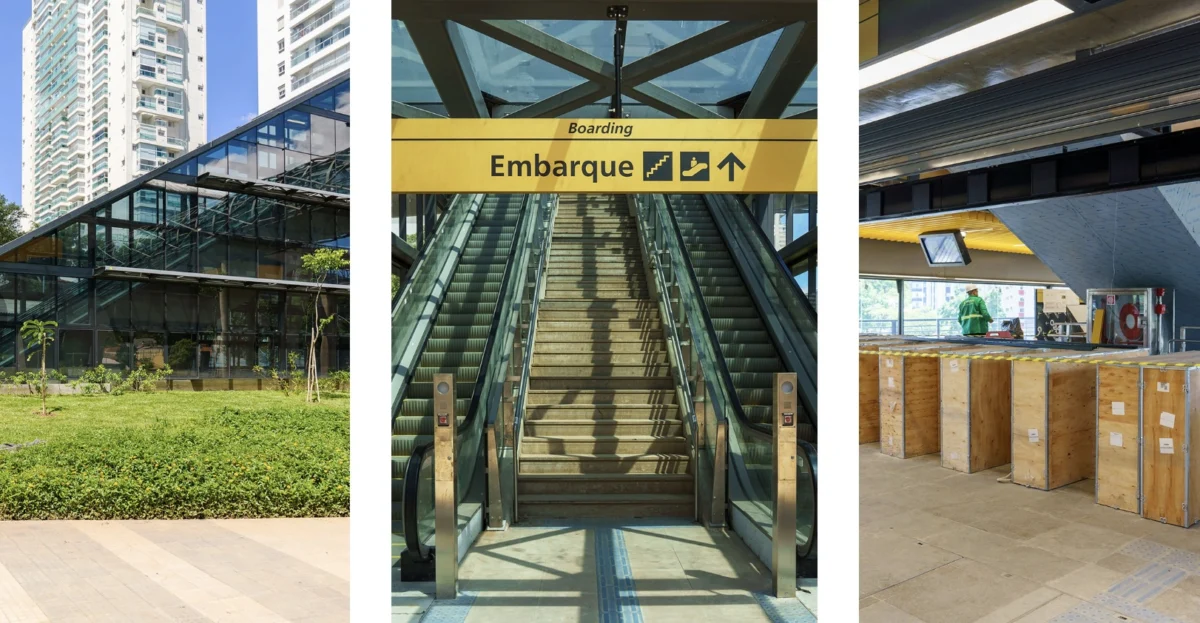
The global landscape of urban mobility is undergoing its most significant transformation in a century. As urbanization accelerates and the demand for sustainable, high-capacity transport solutions intensifies, nations across the globe are pouring unprecedented capital into rail-based infrastructure. From the massive, rapid-fire expansion of Chinese metro systems to the targeted light rail investments in Europe and the burgeoning transit corridors of India, the "Age of the Rail" is firmly upon us.
In 2025, the world saw the successful inauguration of over 1,000 kilometers of new urban rail lines, spanning metros, light rail, and tramway systems. This momentum is showing no signs of slowing; projections for 2026 indicate a similar, if not greater, scale of infrastructure deployment. This report serves as an exhaustive examination of these developments, synthesizing data from global transit authorities to provide a comprehensive look at how our cities are moving.

The Global State of Play: Trends in Transit Expansion
The defining characteristic of modern transit expansion remains the sheer scale of the Chinese contribution. For over a decade, China has dominated the global landscape, and 2025 was no exception. Out of the 1,300 kilometers of new metro and light rail routes that opened globally last year, 930 kilometers—roughly 72 percent—were located within China.
The Chinese Dominance
The concentration of this growth is staggering. Twenty-three distinct urban regions in China added to their rail capacity in 2025. Perhaps most notable is the Pearl River Delta, a sprawling megacity region encompassing Dongguan, Foshan, Guangzhou, and Shenzhen. In a single year, this region alone brought 179 kilometers of new lines online. To put this into perspective, that single year of construction in the Pearl River Delta resulted in a network expansion larger than the entire "L" system in Chicago.

Current data suggests this pace will be maintained in 2026. Plans are already finalized for the rollout of an additional 1,100 kilometers of new track, almost exclusively in the form of high-capacity metro systems. China’s total operating metro network now stands at approximately 12,500 kilometers—a figure five times larger than that of the entire European Union and nine times that of the United States.
Emerging Leaders: India’s Rapid Ascent
While China leads in absolute volume, India has emerged as the most aggressive challenger in the sector. Cities such as Chennai, Delhi, and Mumbai are currently executing massive build-outs of their metropolitan rail networks. Strategic policy shifts and increased federal funding have placed India on a trajectory to potentially surpass the total length of the United States’ combined metro systems by the end of 2026.

Regional Chronology and Notable Projects
The following sections break down the monumental shift in transit infrastructure by region, highlighting both the completions of 2025 and the ambitious targets for 2026.
North America: A Focus on Connectivity
North American transit projects are frequently characterized by long lead times and high costs, yet 2025 saw several critical links completed. In cities like Los Angeles and Seattle, the emphasis has been on extending existing light rail lines to suburban hubs, aiming to reduce car dependency. The 2026 agenda focuses on infill projects and the integration of bus rapid transit (BRT) systems, which provide a lower-cost alternative for mid-sized cities.

Europe: The Tramway Revival
Unlike the "big-bore" metro projects common in Asia, European cities are increasingly focusing on the efficiency of surface-level light rail and tramways. In 2026, cities like Bologna, Italy, are launching entirely new tram networks, while established systems in French cities like Lyon, Marseille, and Brest are adding significant line extensions. This approach emphasizes urban integration and pedestrianization, as seen in the recent developments in the Geneva-Annemasse cross-border corridor.
The Middle East and North Africa
Egypt and Turkey are current hotbeds of activity. Istanbul continues its aggressive expansion of the M4/M10 lines, aiming to alleviate the immense pressure on the city’s historic transport corridors. In the Gulf, Riyadh is finalizing its ambitious metro infrastructure, signaling a broader regional pivot toward mass transit as a pillar of economic diversification.

Supporting Data: A Shifting Global Hierarchy
The shift in global transit power is best understood through a historical comparison. In 1990, the world’s longest metro networks were dominated by European and North American cities. At that time, four U.S. cities and ten European cities held spots in the top 20 rankings. China did not have a single city represented in that group.
Today, the map has been completely redrawn. Of the 20 largest metro systems in the world, 13 are located in China. The remainder of the list is shared between Tokyo, Osaka (Kansai), Delhi, Moscow, Seoul, London, and New York. When we look at projects currently under construction, this trend is solidified. By 2032, Paris is expected to enter the top 20, potentially overtaking New York City in total length, but the dominance of the Asian megacity remains unchallenged.

Comparative Metrics (Total Length)
- China: ~12,500 km
- European Union: ~2,500 km
- United States: ~1,400 km
- India: Approaching US parity by late 2026.
Official Perspectives and Strategic Implications
The rapid expansion of these networks is not merely a matter of construction; it is a fundamental shift in economic geography. Transit-Oriented Development (TOD) has become the gold standard for urban planners. By centering high-density housing and commercial zones around transit hubs, cities are able to maximize the return on their infrastructure investments.
The Sustainability Mandate
Government officials in the EU and Asia cite decarbonization as the primary driver for these projects. As urban populations swell, the capacity to move millions of people daily without relying on fossil-fuel-powered private vehicles is viewed as a prerequisite for meeting climate goals.

Funding and Implementation Challenges
Despite the progress, the "Transit Explorer" data highlights a growing disparity. While state-backed systems in Asia move with relative speed, Western transit agencies continue to grapple with ballooning costs and bureaucratic delays. There is a growing consensus among international policy experts that the cost of transit construction in North America and parts of Europe must be addressed through modular design and streamlined procurement if these regions are to keep pace with global urbanization trends.
The Future: What Lies Beyond 2026?
As we look past the 2026 completions, the focus of global transit is expected to shift from "new line creation" to "system optimization." Many Chinese cities are nearing the saturation point of their primary networks, leading to a new focus on automated train operations (ATO) and the integration of feeder systems like high-frequency electric bus networks.

For the rest of the world, the goal remains basic capacity. With India and Southeast Asia projected to lead the next wave of urbanization, we can expect the focus of global transit investment to migrate toward these regions throughout the 2030s.
The data is clear: the global transit renaissance is not slowing down. Whether through the massive, state-directed metro builds of China or the incremental, community-focused light rail projects of Europe, the world is choosing the rail. As these networks expand, they are not only changing how we move; they are fundamentally reshaping the definition of the modern, connected, and sustainable city.

For detailed maps and specific project data, readers are encouraged to consult the Transit Explorer database, which provides comprehensive tracking of every line, station, and route completion globally. Data is available for researchers and urban planners in Shapefile, GeoJSON, and CSV formats.
