

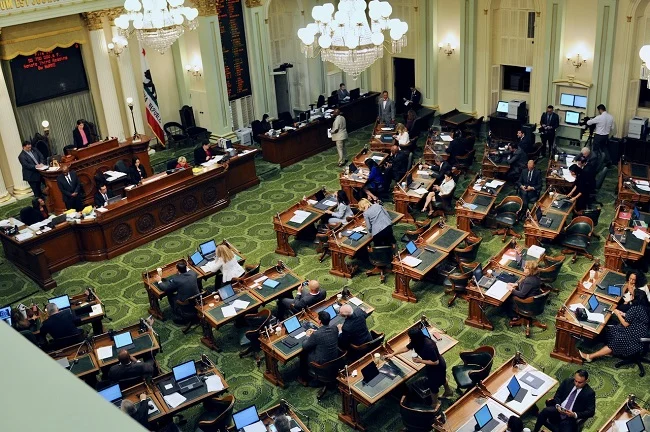
SACRAMENTO, CA — In a significant victory for wildfire survivors and consumer advocates, two pieces of legislation aimed at holding insurance companies accountable for systemic payout delays and deceptive claim practices have cleared the Assembly Insurance Committee with rare bipartisan support.
Senate Bills (SB) 877 and 878, authored by Senator Sasha Renée Pérez (D-Pasadena), represent a direct legislative response to a mounting crisis in California. Following the devastating Los Angeles fires, hundreds of survivors stepped forward with harrowing accounts of "stonewalling," intentional underpayment, and bureaucratic red tape that effectively stalled their recovery efforts. By mandating transparency and imposing strict penalties for delays, these bills aim to fundamentally alter the power dynamic between multi-billion-dollar insurance providers and the families they are contractually obligated to protect.
The Core Legislation: Restoring the "Promise" of Insurance
The legislative package—sponsored by the Every Fire Survivor’s Network (EFSN) and the non-profit organization Consumer Watchdog—seeks to rectify a landscape where policyholders feel increasingly abandoned by their providers.
SB 877: Transparency in Loss Estimates
SB 877 targets a sophisticated and often invisible tactic used by insurers to minimize payouts. The bill mandates that insurance companies disclose all original loss estimates alongside any subsequent revisions. This requirement is designed to prevent "lowballing"—a practice where adjusters artificially deflate the cost of damages to pressure policyholders into accepting insufficient settlements.
SB 878: Accountability for Payout Delays
SB 878 serves as the "teeth" of the reform package. It strengthens existing statutes regarding claim timelines by requiring insurers to communicate all decisions in writing. Crucially, the bill mandates that:
- Insurers pay the "actual cash value" of a home declared a total loss within 30 days of the disaster.
- Undisputed portions of replacement costs must be paid within 30 days of a homeowner signing a reconstruction contract or securing a new residence.
- Financial penalties are imposed on insurers for failure to adhere to these strict, time-sensitive deadlines.
Chronology of a Crisis: From Disaster to Legislative Action
The impetus for this legislative push did not emerge in a vacuum. It was the culmination of years of mounting frustration following a series of climate-driven disasters.
2023–2024: The Los Angeles Fires and the Emergence of Patterns
As the Eaton and Palisades fires tore through communities, survivors began sharing their stories online and through support networks. While the physical damage to homes was catastrophic, survivors quickly realized that the "second disaster"—the battle with insurance adjusters—was arguably more traumatic. Families reported having their cases handed off to a rotation of different adjusters, each requiring the homeowner to start the process from scratch.
2025: The Whistleblower Revelations
The call for reform gained national urgency following a May 2025 hearing before the U.S. Senate. Whistleblower adjusters testified that the systematic slashing of loss estimates was not an isolated incident but a pervasive industry strategy used to exhaust survivors and protect corporate margins. This testimony mirrored investigative reporting by CBS 60 Minutes regarding industry practices following Hurricane Ian, where internal documents revealed a corporate culture incentivizing the suppression of legitimate claims.
2026: Legislative Momentum in Sacramento
With the weight of this evidence, Senator Pérez introduced SB 877 and 878. Throughout the early months of 2026, the bills navigated the Senate before arriving at the Assembly Insurance Committee this week. The unanimous, bipartisan committee vote signals a shift in political consensus: even conservative-leaning lawmakers are increasingly wary of an insurance industry that is failing to provide basic service to constituents.
Supporting Data: The Anatomy of "Stonewalling"
The case for these reforms is built on a foundation of documented abuses. Investigative reports, most notably by the San Francisco Chronicle, have provided a window into the "hidden rules" that govern insurance claims.
The Training Manuals of Deception
Leaked insurance company training manuals obtained by journalists reveal explicit instructions to adjusters: avoid putting claim decisions in writing at all costs. By keeping denials verbal, insurance companies effectively bypass the legal protections that allow consumers to appeal a decision or present evidence of bad faith.
Survivor Testimony: The Human Cost
During the recent Assembly hearing, survivors provided emotional testimony that grounded the technical language of the bills in reality:
- Sam Strgacich, a survivor whose Pasadena home was left uninhabitable due to toxic contamination, testified that the current system lacks the most basic requirement of fairness. "SB 877 is simple," Strgacich stated. "It requires insurers to show homeowners the original loss estimates so we can see any changes. After losing so much, simple transparency is the least we deserve."
- Damon Blount, who lost his home and his livelihood in the Eaton fire, highlighted the financial exhaustion caused by the industry. "Families who have already lost everything should not be forced to fight month after month just to receive the payments we are owed," Blount said.
The Every Fire Survivor’s Network has collected thousands of accounts documenting a consistent set of "delay mechanisms," including partial disputes used to hold up the payment of undisputed amounts, the intentional rotation of adjusters to stall progress, and the use of prolonged, open-ended claim cycles that force survivors into financial desperation.
Official Responses and Political Implications
The legislative effort has been met with broad support from consumer advocacy groups and local representatives, though industry lobbyists continue to mount quiet resistance.
Legislative Perspectives
Senator Sasha Renée Pérez, the architect of the bills, framed the issue as a fundamental matter of public trust. "Today, we moved another step closer to helping fire survivors recover by requiring transparency and accountability for the insurance industry," she said. "Insurance is a promise, and these bills will prevent the industry from being a roadblock to recovery."
The Consumer Advocacy View
Joy Chen, Executive Director of the Every Fire Survivor’s Network, emphasized the systemic nature of the problem. "Today’s vote brings every Californian who pays insurance premiums one step closer to protection against the systemic delays and underpayments that have hindered recovery for too many families."
Carmen Balber, executive director of Consumer Watchdog, echoed this sentiment, adding: "Consumers paid their premiums for decades, sometimes generations, only to be stonewalled by their insurance when they needed it most. These bills will speed payouts that homeowners are owed and expose insurance claim lowballing to the light of day."
Future Outlook: Implications for California’s Insurance Market
The advancement of SB 877 and 878 is part of a broader, three-pronged effort to stabilize California’s insurance landscape. A third bill, SB 1301, authored by Senator Ben Allen, is scheduled for a committee vote next Wednesday. This bill focuses on consumer protection by helping policyholders maintain their existing coverage, addressing fears of mass non-renewals that have plagued the state.
Moving Forward
With the bills having cleared the Senate and now passing the Assembly Insurance Committee, they are slated for review by the Assembly Appropriations Committee. If they survive the fiscal review and reach the Governor’s desk, California will set a new, high bar for consumer protection in the insurance sector.
The implications are far-reaching. If these reforms succeed, they could serve as a model for other fire-prone states—such as Oregon, Washington, and Colorado—that are grappling with the same insurance industry practices. For Californians, however, the focus remains local: ending the "second disaster" of the claims process and ensuring that when a home is lost, the insurance company honors the contract that families have spent a lifetime funding.
For more information on the ongoing legislative efforts or to view the press conference footage, visit www.fixinsurance.org.
