

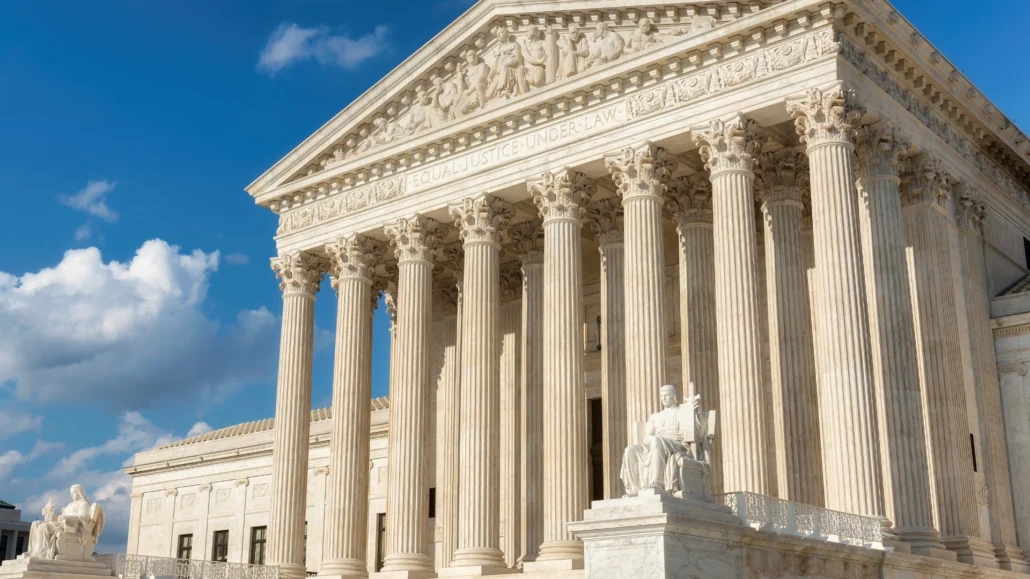
WASHINGTON, DC – In a landmark decision that has sent shockwaves through the federal government and advocacy communities alike, the U.S. Supreme Court has issued a ruling that effectively dismantles nearly a century of legal precedent designed to protect the independence of federal regulatory agencies. By empowering the President to terminate agency heads and commissioners at will, the Court has fundamentally altered the balance of power within the administrative state, handing President Trump significant, consolidated control over institutions historically shielded from partisan political interference.
The decision has drawn immediate and fierce condemnation from the National Consumers League (NCL), which argues that the ruling removes a critical bulwark against the politicization of essential public services.
The Core Ruling: A Reversal of Precedent
At the heart of the controversy is the Court’s determination that the President’s executive authority includes the unchecked power to dismiss commissioners and heads of independent agencies without cause. For decades, the prevailing legal standard—stemming from the 1935 Humphrey’s Executor case—held that Congress could, and did, create independent agencies whose leaders were protected from arbitrary removal to ensure they could perform their duties without fear of political retribution.
The Supreme Court’s latest ruling erodes this barrier, signaling a new era of executive dominance. By removing the “for-cause” requirement, the Court has effectively collapsed the wall between the White House and the independent regulatory bodies tasked with overseeing industries ranging from consumer finance and product safety to nuclear energy and labor relations.
Chronology of a Regulatory Shift
The path to this decision was paved by a series of high-profile, preemptive actions taken by the Trump administration.
- Initial Nominations: In 2018, President Trump nominated figures such as Rebecca Slaughter to the Federal Trade Commission (FTC), signaling an initial willingness to engage with the independent agency structure.
- The Pivot to Removal: As the current administration’s agenda took shape, the White House began a systematic process of sidelining regulators who proved resistant to deregulation efforts. Commissioners at the FTC—including Rebecca Slaughter and Alvaro Bedoya—and the Consumer Product Safety Commission (CPSC)—including Alex Hoehn-Saric, Richard Trumka Jr., and Mary Boyle—were dismissed without specific cause.
- Legal Challenges: These dismissals triggered a series of legal battles, questioning whether the Executive Branch had the authority to ignore the statutory protections that Congress had explicitly written into the founding charters of these agencies.
- The High Court Intervention: The case ultimately reached the Supreme Court, which chose to prioritize the broad, unitary view of executive power over the long-standing model of decentralized, expert-led regulation.
Supporting Data: Who Was Impacted?
The reach of this decision extends far beyond political rhetoric; it impacts specific, highly qualified public servants who have spent their careers in the trenches of consumer protection. The list of those removed underscores the scope of the shift:
- FTC Commissioners: Rebecca Slaughter and Alvaro Bedoya. Both are recognized experts in antitrust law and consumer privacy, having led initiatives against monopolistic tech practices and deceptive data mining.
- CPSC Commissioners: Alex Hoehn-Saric, Richard Trumka Jr., and Mary Boyle. These officials were at the forefront of implementing stricter safety standards for household products, children’s toys, and hazardous materials.
The dismissal of these individuals represents a profound "brain drain" from the federal government. These commissioners were not mere political appointees; they were subject-matter experts who operated under the assumption that their tenure was based on performance and adherence to their agency’s mission, rather than political alignment with the sitting president.
Official Responses: The NCL’s Stance
Sally Greenberg, CEO of the National Consumers League, was swift in her denunciation of the Court’s decision. In a formal statement, she framed the ruling as a direct assault on the consumer interest.
"Today’s Supreme Court decision struck down a key barrier to the implementation of this administration’s radically anti-consumer agenda," Greenberg stated. "Never before has a president systematically removed pro-consumer regulators with complete disregard to the letter or spirit of the law."
Greenberg emphasized the danger of concentrating power in a single office: "By building the legal framework to support this White House’s firings, the Court has granted President Trump unprecedented power over the administrative state. We’ve already seen this president’s willingness to misuse his authorities for personal and partisan gain. This ruling is a loss for anyone who believes the government works for the people, not just one person."
The NCL, founded in 1899, maintains that the function of these agencies is to provide a neutral, evidence-based check on corporate power. With that check now effectively under the thumb of the Executive Branch, the League warns that the "referee" of the American economy has been compromised.
Implications: A New Administrative Landscape
The fallout from this decision will likely be felt for decades. Legal scholars and policy analysts are already highlighting several critical areas of concern.
The Death of Independent Oversight
The primary function of agencies like the FTC and the CPSC is to act as neutral arbiters. When these agencies can be "purged" of dissenters, their output—whether it be investigations into corporate fraud, recalls of dangerous products, or the drafting of new safety rules—becomes a political product rather than an evidence-based one.
The Shift in Congressional Authority
By nullifying nearly a century of protections, the Court has effectively stripped Congress of its ability to shield agencies from executive overreach. When Congress passes a law establishing an agency, it does so with the intent that the agency will operate independently. The Supreme Court’s decision suggests that Congress may no longer have the constitutional power to "insulate" its agencies from the President, essentially rendering the legislative branch’s oversight authority moot in the context of administrative personnel.
Impact on Vital Sectors
The implications are sector-specific and severe:
- Consumer Protection: With the FTC’s leadership now subject to political whims, large-scale antitrust enforcement against major corporations may be stifled or redirected to favor preferred political donors.
- Labor Rights: The removal of independent oversight at labor-focused agencies could lead to the reversal of workplace safety standards and collective bargaining protections.
- Environmental and Energy Policy: Independent bodies overseeing nuclear energy and chemical regulation are now vulnerable to influence from industries they are meant to oversee, potentially leading to laxer safety standards and increased environmental risk.
The Path Forward: What Happens Now?
As the federal government adjusts to this new reality, the question remains: what can be done to restore balance?
Legal experts suggest that the only remaining path is through explicit constitutional amendment or a fundamental restructuring of how these agencies are funded and empowered—a task that seems increasingly difficult in a hyper-partisan Congress. Meanwhile, consumer advocates are calling for a national conversation about the role of the administrative state and the importance of expertise in government.
The National Consumers League has signaled that it will continue to fight for the rights of everyday Americans, even as the regulatory environment becomes more hostile. "Our mission to protect and promote social and economic justice for consumers and workers remains unchanged," said Greenberg. "If the government is no longer willing to serve as a check on the powerful, then organizations like ours must become even more vigilant."
For the time being, the American public is left with a government where the "independent" regulator is a relic of the past, and the executive branch’s reach has expanded to the very corners of the administrative state.
About the National Consumers League (NCL):
The National Consumers League, founded in 1899, is America’s pioneer consumer organization. Our mission is to protect and promote social and economic justice for consumers and workers in the United States and abroad. For more information, visit www.nclnet.org.
