

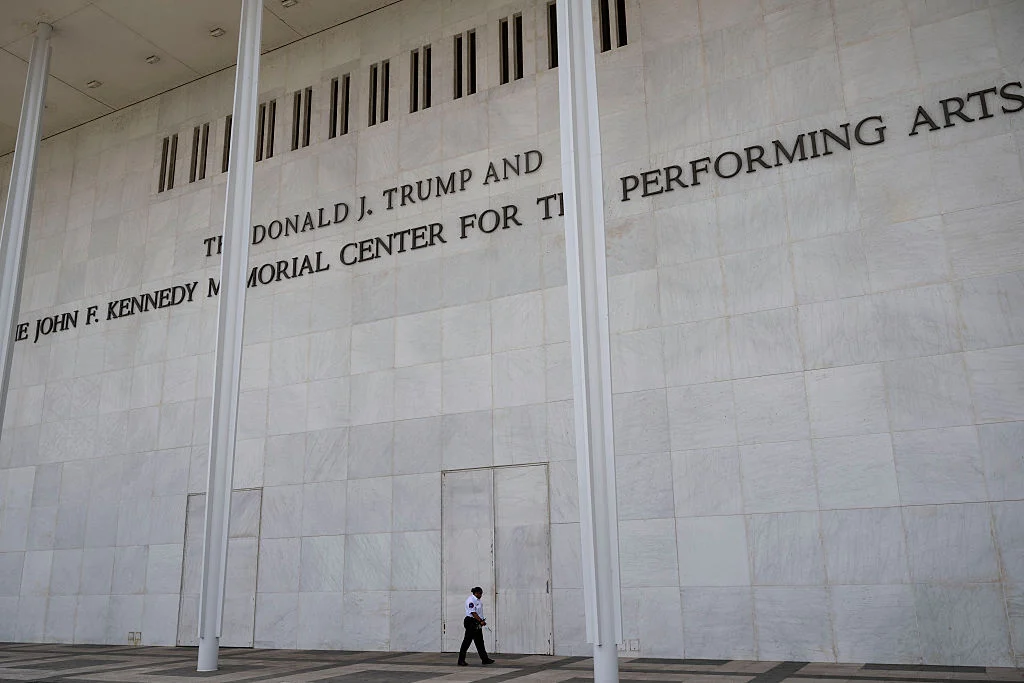
In a significant legal blow to the Trump administration, a federal appeals court on Wednesday denied a motion to restore the president’s name to the exterior of the John F. Kennedy Center for the Performing Arts. The ruling, handed down by a three-judge panel from the U.S. Court of Appeals for the District of Columbia Circuit, marks the latest chapter in a protracted and high-stakes battle over the branding of one of the nation’s most prestigious cultural institutions.
The panel’s decision centered on a lack of evidence regarding the "irreparable injury" claimed by the administration. While attorneys for the president argued that the removal of the name would cause significant financial and reputational harm, the judges were unconvinced, noting that the physical removal had already taken place, rendering a stay of the original order moot.
A Chronology of a Contested Rebranding
The controversy began in December, when a board of directors comprised primarily of Trump-appointed allies voted to rebrand the historic institution, affixing the president’s name to the iconic marble facade. This move, which bypassed traditional congressional oversight, immediately sparked a firestorm of protest from historians, arts advocates, and Democratic lawmakers.
Key Milestones in the Dispute:
- December: The board officially rebrands the center, installing the president’s name on the exterior marble.
- May 29: U.S. District Judge Christopher Cooper rules that the board acted unlawfully, determining that only Congress possesses the authority to rename an institution established as a memorial to President John F. Kennedy.
- June 13: Facing a court-ordered deadline, the center removes the letters spelling out the president’s name. Hours prior, the administration had filed an emergency motion to stay the ruling, which was summarily denied.
- Late June: While digital branding, letterheads, and website references are scrubbed, the facade remains hidden behind industrial tarps and scaffolding, leading to further judicial scrutiny.
- July 31: The current deadline for the administration to justify why the building’s original legal name remains obscured by the remaining construction materials.
Legal Precedents and Judicial Overreach
The core of the legal dispute rests on the separation of powers. Judge Christopher Cooper’s May 29 ruling was unambiguous: the Kennedy Center is a federal entity, and its dedication to the 35th president is a matter of statutory law. By unilaterally deciding to alter the name, the board essentially attempted to override the legislative will of Congress.
Furthermore, Judge Cooper found the board’s decision to mandate a two-year closure of the facility for "renovations" to be equally unlawful. The court characterized these actions as an overreach of executive authority, noting that the board’s mandate was to oversee operations, not to redefine the institutional identity or status of a congressionally protected monument.
When the Trump administration filed its emergency motion to suspend the removal of the name, it cited "irreparable harm" to the institution’s finances and operations. Specifically, the administration’s legal team argued that the reversal of the name change would create a "chaotic back-and-forth" that would waste taxpayer dollars and confuse the public. However, the appeals court panel was unmoved, succinctly noting in their Wednesday ruling: "Since that removal has already occurred, a stay would not avert those harms."
Financial Implications and Donor Relations
The conflict has extended far beyond the courtroom, creating what many insiders describe as an existential and financial crisis for the organization. The institution has previously argued in legal filings that the presence of the "Trump" name was a primary condition for several major gifts. According to the administration’s court filings, certain donors explicitly stated they were "only willing to do so with the name ‘Trump’ on the building."
The potential loss of these funds comes at a time when the arts sector is already reeling from the broader economic pressures of the pandemic and changing philanthropic landscapes. The center now faces the complex task of reconciling its financial dependence on a specific donor base with its mandate as a non-partisan, congressionally funded memorial.
The reputational damage has been equally palpable. More than two dozen world-renowned performers canceled their scheduled appearances in protest of the renaming. Among those who withdrew was the acclaimed composer Philip Glass, who had been slated to premiere a new symphony at the center. The loss of such high-caliber talent not only undermines the center’s artistic mission but also diminishes its prestige in the international cultural community.
The "Tarp Controversy" and Ongoing Compliance
Despite the removal of the physical letters, the facade of the Kennedy Center has remained a site of contention. Currently, the area where the name once stood is obscured by tarps and scaffolding, a situation that has prompted further judicial intervention.
The court has ordered the administration to appear by July 31 to explain why, more than a month after the removal, the building’s restored, legal name has not been fully revealed. Critics argue that the continued use of tarps is a "delaying tactic" intended to keep the site in a state of limbo, while the administration maintains that the measures are necessary for the structural maintenance and restoration of the marble after the signage removal.
Official Responses and Public Sentiment
The backlash against the renaming has been swift and vocal. Democratic lawmakers have been particularly critical, with several members of Congress calling the move a "blatant act of historical revisionism."
"The Kennedy Center belongs to the American people, not to the whims of an administration," said one prominent critic on Capitol Hill. "The courts have rightfully affirmed that you cannot simply rename a national monument to suit a political agenda."
On the other side of the aisle, supporters of the administration have framed the issue as one of executive management, arguing that the board had the right to modernize and rebrand the facility to attract new capital and engagement. However, this argument has gained little traction in the federal courts, which have consistently focused on the statutory limitations of the board’s authority.
The Path Forward: Restoring the Institutional Mission
As the July 31 deadline approaches, the Kennedy Center faces a difficult transition period. Beyond the immediate legal hurdles, the board and the administration must address the long-term damage to the center’s relationship with the artistic community and the public.
The primary challenge will be to restore trust. The center is currently operating under a cloud of uncertainty, with donors, performers, and patrons watching to see how the board will navigate the remaining legal requirements. The decision to remove the name was a victory for those who viewed the renaming as an infringement on the center’s legacy, but the financial and operational consequences are likely to be felt for years.
In conclusion, the U.S. Court of Appeals’ refusal to intervene is a definitive signal that the judiciary will not support the administration’s attempt to assert ownership over a national memorial. As the tarps eventually come down and the legal proceedings conclude, the institution will be tasked with reclaiming its role as a sanctuary for the arts, free from the political controversy that has defined its recent history. The focus now shifts to whether the board can stabilize the center’s finances and repair the cultural bridges burned during this contentious period. For now, the Kennedy Center remains, by law and by title, a monument to the legacy of John F. Kennedy—a fact that has been reaffirmed by the highest levels of the American judicial system.
