

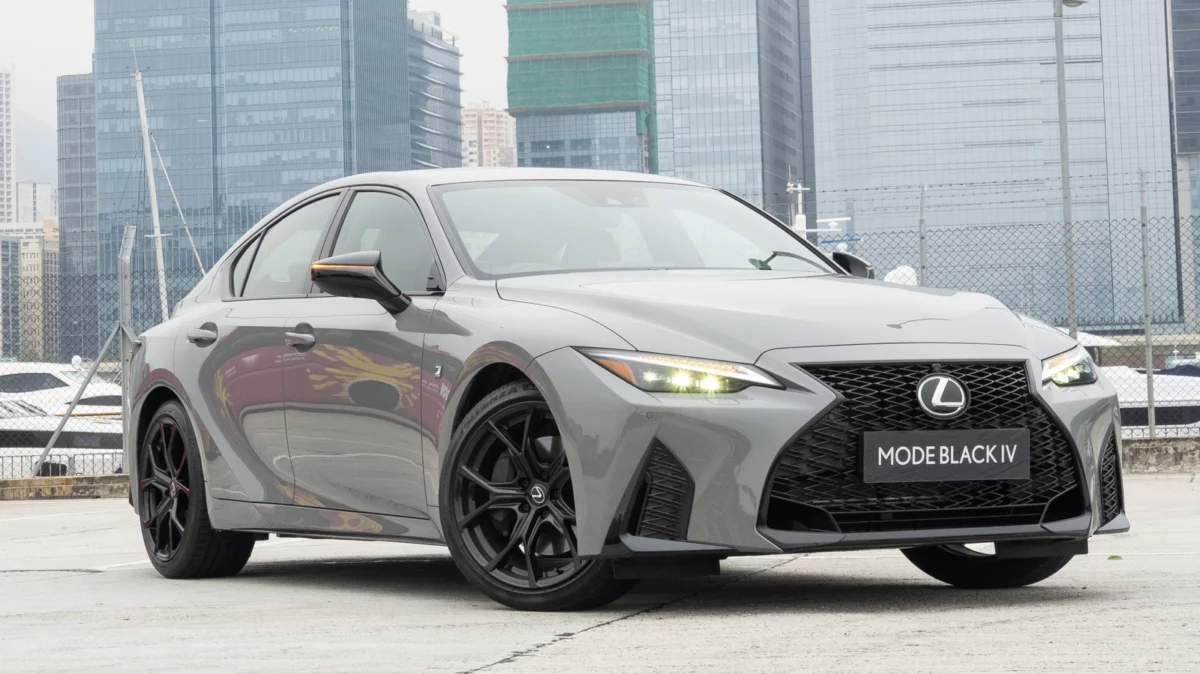
In the world of luxury automotive branding, few monikers have sparked as much consumer debate as Lexus’s "F Sport." Originally conceived as a bridge between the comfort-oriented standard luxury lineup and the track-ready, V8-powered "F" models, the F Sport badge has grown into a sprawling, multi-tiered ecosystem. Today, it represents a strategic pillar of the Lexus brand, yet for the average buyer, it is arguably the most confusing element of the company’s current catalog.
Is it a suspension upgrade? A trim level? A performance package? Depending on which model sits on the showroom floor, the answer is often a resounding "all of the above." As Lexus continues to refine its identity in an era of electrification and high-tech convenience, understanding the F Sport hierarchy is essential for enthusiasts and daily drivers alike.
Main Facts: What is F Sport?
At its core, the F Sport designation is designed to provide "sharper handling and more aggressive styling" to the standard Lexus fleet. Unlike the brand’s flagship performance machines—such as the formidable RC F or the legacy IS F, which feature high-output V8 engines and track-tuned chassis—F Sport vehicles are, by and large, lifestyle-oriented performance variants.
The primary distinction of an F Sport vehicle, according to Lexus’s long-standing engineering philosophy, is its factory-installed suspension calibration. These systems are tuned to offer a firmer, more responsive feel, bridging the gap between the soft, dampened comfort typical of a luxury cruiser and the rigid feedback of a sports car. Beyond the chassis, the F Sport badge serves as a visual identifier. Exterior updates usually include signature mesh grilles, sport-oriented bumper designs, and unique wheel patterns. Inside, the cabin is treated to high-bolstered seats, aluminum pedals, and specialized steering wheels.
However, the "F Sport" label is not a singular product; it is a fluid branding strategy. In some instances, it is a basic trim level; in others, it functions as a comprehensive handling or performance package. This lack of uniformity has led to a fragmented experience where the "F Sport" badge on a compact crossover may offer a vastly different ownership experience than the same badge on a three-row family hauler.
Chronology: A History of Performance Tiers
The genesis of the F Sport lineage can be traced back to the introduction of the IS F in 2008. At that time, Lexus was making a concerted effort to shed its "boring" reputation and compete directly with BMW’s M Division and Mercedes-AMG. The IS F was a roaring success, proving that the Japanese automaker could build a high-performance V8 sedan.
Realizing that not every buyer required the raw power and uncompromising suspension of an "F" model, Lexus introduced the "F Sport" brand in 2010. Initially, it was marketed as a line of factory-approved accessories and a specific trim level that brought the aesthetic and subtle handling benefits of the IS F to the mainstream market.
Over the next decade, the program expanded aggressively. By 2013, Lexus formalized the branding in its press materials, defining the distinct categories of suspension calibration and styling. As the brand’s SUV lineup grew, so too did the F Sport portfolio. By the early 2020s, the badge had infiltrated nearly every corner of the showroom, leading to the current state of "F Sport" tiers—including Handling, Performance, and Design—which have served to both broaden the brand’s appeal and, inadvertently, complicate the consumer’s decision-making process.
Supporting Data: Dissecting the Tiers
To navigate the modern Lexus landscape, one must understand how the F Sport badge translates across different vehicle segments. The variance is significant.
The Sedan Strategy: The IS 350
In the mid-size sedan segment, the IS 350 F Sport offers a balanced approach. It pairs the proven 311-horsepower V6 engine with All-Wheel Drive (AWD) and a modern 12.3-inch touchscreen interface. Lexus often utilizes these models as a canvas for limited-edition packages, such as the 2026 Special Appearance Package. Limited to only 350 units in North America, this variant adds exclusive Hakugin Matte White paint, black BBS forged alloy wheels, and a premium Mark Levinson audio system, proving that F Sport is often as much about exclusivity as it is about performance.
The Three-Row SUV Hierarchy: The TX
The most complex application of the badge is found in the new TX three-row SUV. Here, Lexus has introduced three distinct tiers:
- F Sport Handling: Available on the TX 350, this trim prioritizes agility through adaptive variable suspension and standard AWD.
- F Sport Performance Premium: Found on the 366-hp hybrid TX 500h, this adds a layer of power and sophistication.
- F Sport Performance Luxury: The pinnacle of the TX range, which incorporates dynamic rear steering for enhanced maneuverability in such a large vehicle.
Mid-Size and Flagship Utility
The RX SUV follows a similar tripartite structure (Handling, Performance, and Design), ensuring that buyers can choose their level of sportiness based on the powertrain—specifically the high-torque RX 500h. Meanwhile, the LX flagship SUV has adopted the "F Sport Handling" nomenclature, signaling that even the most expensive, off-road-capable vehicles in the lineup are not exempt from the F Sport treatment.
Official Responses and Strategic Positioning
Lexus executives have consistently defended the complexity of the F Sport lineup as a response to the evolving demands of the luxury market. From a corporate perspective, the strategy is about "choice architecture." By offering different levels of F Sport, Lexus ensures that a buyer who wants a sportier look (the Design trim) isn’t forced to pay for a sportier suspension (the Handling trim) they might find too firm for their daily commute.
However, the brand has been careful to maintain a clear distinction between these models and its "pure" performance lineage. When pressed on why certain models—like the LC 500 grand tourer or the rugged GX—do not feature an F Sport trim, the company emphasizes the importance of brand purity. The LC 500, for instance, is considered a performance-first machine by default, making an F Sport badge redundant. Similarly, the GX is positioned as an off-roader, where "F Sport" would conflict with the vehicle’s core competency of trail-ready utility.
Implications: The Future of the Brand
What does this mean for the future of Lexus? The proliferation of the F Sport badge suggests that the brand is moving toward a future where "performance" is a spectrum rather than a binary state. In an industry transitioning toward electrification, the "F Sport" badge may eventually evolve to signify different levels of electric powertrain output and regenerative braking responsiveness.
For the consumer, the implications are twofold. First, the buyer must perform significantly more research than they would with other luxury brands. While a BMW "M Sport" package is relatively uniform, a Lexus "F Sport" badge is a variable that requires checking the specific technical specifications of the trim.
Second, the F Sport badge serves as a vital revenue stream and a gateway to the brand. By offering a high-style, high-handling trim across almost every model, Lexus keeps its lineup feeling fresh and relevant to a younger, more design-conscious demographic. The strategy is clearly working: the presence of F Sport variants has helped keep aging platforms competitive against newer rivals.
Ultimately, the F Sport badge remains a masterclass in modern automotive marketing. It is a chameleon, capable of being an entry-level cosmetic upgrade or a sophisticated handling package. As long as the distinction between the "F Sport" lifestyle trims and the true "F" performance cars remains clear, Lexus will likely continue to lean into this complex, multi-tiered approach. For the enthusiast, the "F" still represents the gold standard of power, but for the rest of the world, the "F Sport" badge has become the new, multifaceted face of the brand. Whether this complexity is a hurdle or a benefit is for the driver to decide, but one thing is certain: Lexus is not slowing down in its mission to offer a sport-inspired experience for every type of luxury buyer.
