

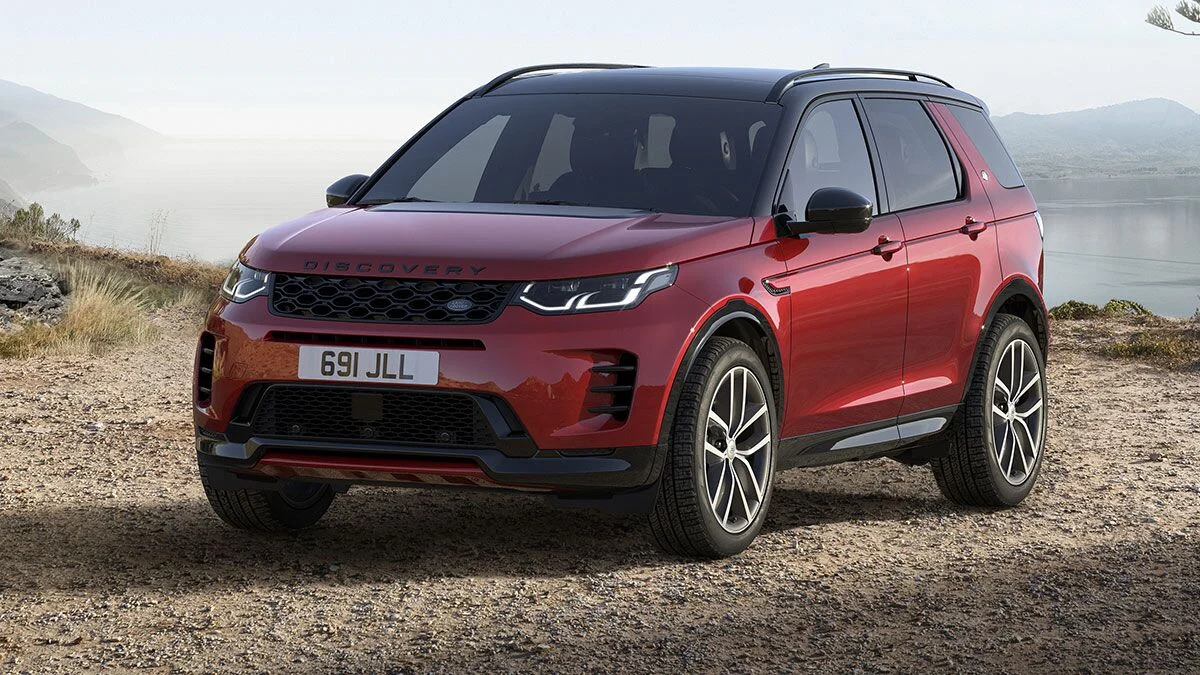
The automotive landscape is shifting, and iconic nameplates are feeling the pressure of a market obsessed with electrification, upmarket positioning, and brand consolidation. In a move that signals a significant pivot for the British luxury manufacturer, Jaguar Land Rover (JLR) has confirmed that the Land Rover Discovery Sport—once a cornerstone of the brand’s entry-level strategy—will be discontinued following the 2026 model year.
This decision marks the close of an eleven-year chapter for the compact luxury SUV, which arrived with much fanfare in 2015 as the successor to the venerable LR2. As JLR continues to refine its "House of Brands" strategy, the Discovery Sport has become a casualty of changing consumer preferences and the manufacturer’s aggressive push toward higher-margin, ultra-luxury vehicles.
The Chronology: From Launch to Sunset
The Discovery Sport entered the global market in 2015, tasked with a difficult objective: to modernize the entry-level Land Rover experience while maintaining the off-road capability that the brand is world-renowned for. At the time, it was hailed for its versatility, offering an optional third row in a compact footprint—a rarity in the segment.
For the first few years of its production, the Discovery Sport was a volume driver. It provided a gateway for younger, affluent buyers into the Land Rover ecosystem. However, as the decade progressed, the competitive landscape underwent a radical transformation. Rivals such as the BMW X3, Audi Q5, and Volvo XC60 evolved rapidly, introducing sophisticated mild-hybrid powertrains, superior infotainment interfaces, and a level of interior refinement that began to outpace the aging Discovery Sport platform.
By the early 2020s, the Discovery Sport began to see its market share erode. Despite consistent updates to its infotainment and design language, the vehicle’s aging architecture made it difficult to compete with newer, purpose-built electric and hybrid platforms from German and Scandinavian competitors. The final nail in the coffin came as JLR leadership began drafting the company’s "Reimagine" strategy, which prioritizes profit margins over sheer unit volume.
Supporting Data: A Struggle for Market Relevance
The decline of the Discovery Sport is not merely a matter of branding; it is a story told through raw sales data. According to the company’s annual report released in May, JLR faced a challenging fiscal year, with sales in North America—its most lucrative market—dropping by 16.9%.
When analyzing the internal performance of the Land Rover portfolio, the Discovery Sport consistently lagged behind its siblings. Last year, it was outsold by nearly every other vehicle in the lineup. While the Defender series saw explosive growth following its 2020 redesign, and the Range Rover family continued to command high transaction prices, the Discovery Sport struggled to justify its place on the showroom floor.
Industry analysts point to a "segment saturation" issue. Luxury buyers today are increasingly gravitating toward either entry-level electric vehicles or high-performance, large-format SUVs. The compact, gas-powered, middle-of-the-road SUV segment—where the Discovery Sport sits—has become a "no-man’s land" for legacy brands that are trying to move upmarket to compete with the likes of Porsche and Bentley.
Official Responses and Strategic Rationale
In an official statement provided to Kelley Blue Book, a spokesperson for Jaguar Land Rover struck a balanced tone, acknowledging the vehicle’s historical significance while justifying its departure.
"Discovery Sport has been one of our best-selling vehicles and has an important place in the global SUV market," the spokesperson stated via email. This acknowledgement serves as a nod to the model’s loyal customer base, which appreciated the vehicle for its unique blend of practical utility and Land Rover’s signature "go-anywhere" capability.
However, the company’s silence on the vehicle’s future is as telling as its confirmation of the discontinuation. The decision is deeply rooted in the broader objectives set forth by JLR and its parent company, Tata Motors. The conglomerate has made no secret of its desire to expand its footprint in North America, with a goal of making the regional operation as massive as the current global business. To achieve this, JLR is ruthlessly pruning its product tree. By eliminating the Discovery Sport, JLR is streamlining its manufacturing processes, reducing complexity in its supply chain, and refocusing its marketing budget on high-margin products like the Range Rover and the upcoming electric performance vehicles.
The "House of Brands" Philosophy
To understand why the Discovery Sport is being retired, one must look at how Land Rover has restructured its identity. The company has moved away from the "Land Rover" monolith, instead operating as three distinct sub-brands: Range Rover, Defender, and Discovery.
- Range Rover: Positioned as the ultra-luxury pinnacle, this sub-brand ranges from the stylish, urban-focused Range Rover Evoque (starting around $51,000) to the flagship Range Rover, which can command prices well into six figures.
- Defender: Re-established in 2020, this sub-brand focuses on rugged, adventure-ready aesthetics. It currently offers a diverse array of sizes, from the agile 2-door Defender 90 to the cavernous 3-row Defender 130.
- Discovery: This is the most precarious arm of the company. With the impending loss of the Discovery Sport, the Discovery sub-brand will be reduced to a single offering: the 3-row Discovery SUV.
This consolidation indicates that JLR is comfortable with a smaller, more premium portfolio. They are betting that buyers who previously considered a Discovery Sport will either stretch their budgets for a Range Rover Evoque or transition into the more rugged, trendy Defender 90.
Implications: The Shift Toward Electrification
The discontinuation of the Discovery Sport also highlights the massive, often painful, transition to electrification that JLR is currently undergoing. Last week’s debut of the Range Rover GT—an electric performance vehicle that blurs the lines between a traditional SUV and a wagon—is the clearest indicator of where the company’s engineering resources are going.
Meanwhile, the Jaguar brand is undergoing an even more dramatic transformation. After ceasing production of its current internal-combustion fleet, Jaguar is positioning itself as a bespoke electric luxury brand. The introduction of the Type 01 electric grand tourer, designed to rival the likes of the Bentley Flying Spur, confirms that the company is abandoning the entry-level luxury market entirely.
The implication for the industry is clear: the era of the "accessible" luxury SUV is fading. Manufacturers are finding that it is no longer sustainable to produce high-volume, low-margin luxury vehicles when the costs of R&D for electric powertrains, autonomous safety systems, and digital connectivity continue to skyrocket.
What Lies Ahead: The "Defender Sport" Rumors
As the Discovery Sport exits the stage, speculation is already mounting regarding its successor. Industry insiders and enthusiasts have been buzzing about a potential "Defender Sport."
The logic behind a Defender Sport is sound: the Defender brand is currently the "halo" of the JLR portfolio in terms of brand heat and consumer interest. A smaller, more accessible version of the Defender would capitalize on the sub-brand’s immense popularity, effectively replacing the Discovery Sport’s volume without devaluing the brand with an "entry-level" label.
However, JLR faces a naming challenge. With the Range Rover Sport already firmly established at a $79,450 price point, introducing a "Defender Sport" could lead to brand confusion. Yet, in an automotive market where "adventure-lifestyle" marketing wins, a compact, rugged vehicle is likely a much stronger seller than the current, somewhat ambiguous Discovery Sport.
Conclusion: A Necessary Pivot?
The retirement of the Land Rover Discovery Sport is a poignant reminder of how quickly the automotive industry moves. What was a modern, innovative solution in 2015 is, by 2026, an obsolete asset in the eyes of corporate planners.
For current owners and fans of the Discovery Sport, the next two years represent a final opportunity to purchase a vehicle that sits at the intersection of traditional Land Rover design and compact versatility. For Jaguar Land Rover, the move is a cold, calculated step toward a future defined by luxury, electrification, and a refined, exclusive brand identity. Whether this strategy will pay off in the long term remains to be seen, but one thing is certain: the face of the British SUV is changing, and the Discovery Sport will be remembered as the vehicle that bridged the gap between Land Rover’s past and its electrified, upmarket future.
